254 Area Code: Killeen, Waco & Central Texas Complete Guide (2026)
Complete guide to 254 area code covering Killeen, Waco, Temple, and Central Texas. Learn about Fort Hood, Dr Pepper's Waco origin, Baylor University, SpaceX McGregor, and how to identify scam calls.
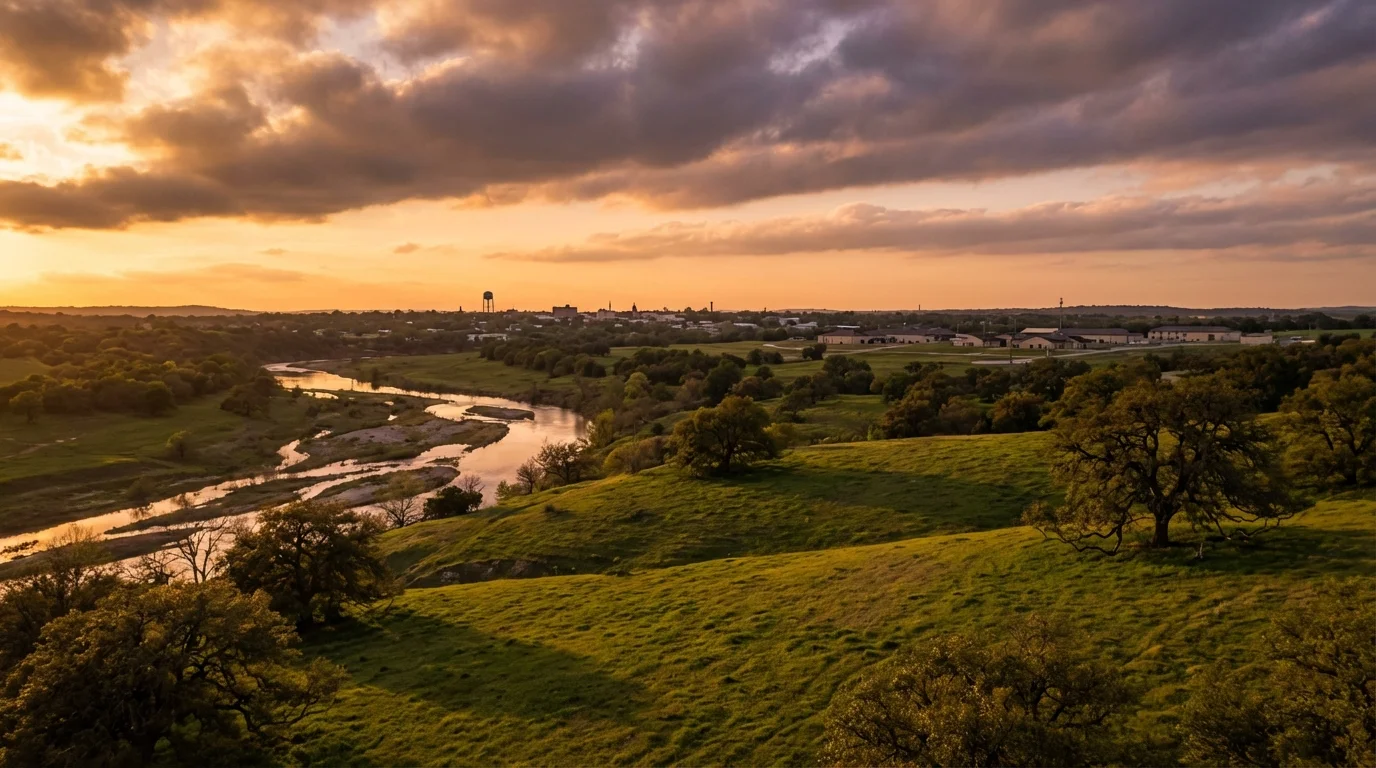
The 254 area code covers Central Texas, serving cities including Killeen, Waco, Temple, Belton, Copperas Cove, and Harker Heights. Created on May 25, 1997, by splitting from area code 817, it spans approximately 24 counties and is home to over 800,000 people across two major metro areas.
This is the region where a pharmacist invented America's oldest major soft drink in a drugstore that doubled as a soda fountain, where the largest active-duty armored military post in the United States drives a $28.8 billion annual economic impact, where two teenagers stumbled onto a 65,000-year-old nursery herd of Columbian mammoths while hiking along a creek bed, where SpaceX test-fires every Raptor engine before it leaves the atmosphere, and where the oldest continuously operating university in Texas sits on the banks of the Brazos River. Central Texas is where military muscle, academic ambition, and frontier history collide along the I-35 corridor.
254 Area Code Quick Facts
254 Area Code: How Central Texas Got Its Own Code
Area code 817 originally covered a massive swath of north-central Texas from Fort Worth to Waco to Wichita Falls. By the mid-1990s, population growth between the DFW metroplex and Austin exhausted available numbers.
Created May 25, 1997 as the 12th Texas area code and 194th in the US. Covers the Killeen-Temple and Waco metros plus surrounding rural counties — from Stephenville in the west to Mexia in the east, Hillsboro in the north to Lampasas in the south.
Created the same day as 254, covering the northern portion of old 817 territory: Denton, Wichita Falls, and surrounding counties. The remaining 817 kept the Fort Worth metropolitan area.
Fort Hood: The Largest Active-Duty Armored Post in America
Fort Hood sprawls across 218,000 acres of Bell and Coryell County ranchland — roughly the size of 340 square miles. It is the largest active-duty armored military post in the United States, home to approximately 40,000 soldiers and a total of over 60,000 military and civilian personnel.
The post was established in 1942 as Camp Hood, a tank destroyer training center during World War II. It became a permanent installation in 1950. Today it serves as headquarters for III Armored Corps, the 1st Cavalry Division, and the 3rd Cavalry Regiment. The base has its own airfield (Robert Gray Army Airfield), hospital (Carl R. Darnall Army Medical Center), and school system.
The installation was originally named after Confederate General John Bell Hood. In May 2023, it was renamed Fort Cavazos after General Richard E. Cavazos — the first Hispanic four-star general in US Army history, a Korean and Vietnam War veteran born in Texas to Mexican-American parents. In June 2025, the base was renamed back to Fort Hood, this time honoring Colonel Robert B. Hood, a WWI officer from Kansas.
The economic impact is staggering: Fort Hood contributed $28.8 billion to the Texas economy in 2021, supported nearly 202,000 jobs statewide, and generated $12.2 billion in disposable personal income. It is Texas's largest single-site employer. The city of Killeen essentially exists because of the base — from a population of 1,263 in 1940 to over 163,000 today.
Dr Pepper: America's Oldest Major Soft Drink Was Born in Waco
In 1885, pharmacist Charles Alderton was working at Morrison's Old Corner Drug Store at 329 Austin Avenue in downtown Waco. Alderton noticed customers were growing tired of the same old sarsaparilla, lemon, and vanilla flavors. He began experimenting with combinations of fruit syrups and phosphoric acid, eventually settling on a blend of 23 flavors.
Customers at Morrison's drugstore started asking for "a Waco." Store owner Wade Morrison gave the drink its permanent name — Dr Pepper — with the official creation date recorded as December 1, 1885. That's one year before Coca-Cola's introduction, making Dr Pepper America's oldest major soft drink brand.
The Dr Pepper Museum at 300 South Fifth Street in Waco occupies the 1906 Artesian Manufacturing and Bottling Company building. Opened in 1991, it features three floors of exhibits, a working old-fashioned soda fountain where visitors can taste the original formula, and the history of how a Waco drugstore concoction became a $9 billion brand.
Baylor University: Chartered by the Republic of Texas
Baylor University was chartered on February 1, 1845, by the last Congress of the Republic of Texas — signed by President Anson Jones before Texas even became a US state. It is the oldest continuously operating university in Texas and the largest Baptist university in the world.
Founded by Judge Robert E.B. Baylor, missionaries James Huckins and William Milton Tryon, the university originally operated in Independence, Texas. It moved to Waco in 1885 after merging with Waco University. Today Baylor's 1,000-acre campus sits on the banks of the Brazos River, with approximately 20,626 students (Fall 2024) and over 140 undergraduate programs.
The campus includes McLane Stadium, the Bears' $266 million football stadium that opened in 2014 directly on the banks of the Brazos — one of the few college stadiums in America where fans can arrive by boat.
Waco Mammoth National Monument: A 65,000-Year-Old Nursery Herd
In 1978, Paul Barron and Eddie Bufkin were hiking along a dry creek bed between the Brazos and Bosque rivers when they spotted large bones protruding from the earth. What they had found was the nation's first and only recorded nursery herd of ice age Columbian mammoths.
Formal excavations from 1978 to 1990 revealed remains of at least 24 Columbian mammoths, plus a camel and the tooth of a juvenile saber-toothed cat. Nineteen of the mammoths — a nursery herd of females and young — were trapped by a flash flood approximately 65,000 years ago. These Columbian mammoths stood over 14 feet tall and weighed up to 20,000 pounds, with tusks growing up to 16 feet long.
President Barack Obama designated the site as Waco Mammoth National Monument on July 10, 2015, under the Antiquities Act. Managed by the National Park Service in collaboration with the City of Waco and Baylor University, visitors can view the in-situ fossils inside a climate-controlled dig shelter at 6220 Steinbeck Bend Road.
SpaceX McGregor: Where Every Rocket Engine Gets Tested
In McGregor, Texas — a town of roughly 5,200 people, 20 miles west of Waco — sits SpaceX's 4,300-acre rocket engine test facility at 1 Rocket Road. The site was originally the Bluebonnet Ordnance Plant, established in 1942 for manufacturing TNT during World War II. After Beal Aerospace folded in 2000, SpaceX leased the facility in 2003.
Today, every single rocket engine manufactured by SpaceX — every Merlin, every Raptor — must pass through McGregor for qualification testing before being cleared for flight. The facility operates 16 specialized test stands for long-duration burns and stress simulations. Current work includes Raptor 3 development for Starship.
SpaceX entered a $150 million expansion agreement with the City of Waco: $100 million in Phase I improvements with 250 new jobs, followed by $50 million in Phase II with 150 additional jobs — totaling 400 new positions plus retention of 578 existing jobs. The expansion supports a second Raptor engine factory. When McGregor residents hear what sounds like thunder on a clear day, it's a Raptor engine being tested.
The Waco Siege: 51 Days That Changed Federal Law Enforcement
On February 28, 1993, the Bureau of Alcohol, Tobacco and Firearms (ATF) attempted to execute search and arrest warrants at the Mount Carmel Center, a compound 13 miles northeast of Waco occupied by the Branch Davidians, a religious sect led by David Koresh. The ATF suspected the group of stockpiling illegal weapons. An intense gunfight erupted — 4 ATF agents and 6 Branch Davidians were killed in the initial raid.
The FBI took over and a 51-day standoff followed, with ongoing negotiations that secured the release of 44 people. On April 19, 1993, the FBI launched a CS gas assault. The compound became engulfed in flames. 76 Branch Davidians died, including Koresh and between 20 and 28 children. The origin of the fire remains disputed.
The siege led to major reforms in federal law enforcement tactics and became a defining event in American political culture. It directly influenced the Oklahoma City bombing on April 19, 1995 — Timothy McVeigh chose the second anniversary of the Waco fire for his attack.
The 1953 Waco Tornado: Downtown Destroyed in 12 Minutes
On May 11, 1953, an F5 tornado — the maximum intensity on the Fujita scale — tore through downtown Waco with winds exceeding 260 mph. In approximately 12 minutes, the tornado killed 114 people, injured 597, destroyed or damaged 600 businesses and homes, and caused $41 million in damage (roughly $470 million in today's dollars).
The R.T. Dennis Building, a six-story furniture store on Austin Avenue, collapsed entirely — 26 people inside were crushed. The tornado devastated a 23-block stretch of downtown Waco, destroying buildings that included the original Dr Pepper drugstore location and bottling plant. The disaster became one of the catalysts for the creation of modern tornado warning systems — the National Weather Service began issuing tornado watches and warnings shortly after the Waco disaster.
254 Area Code Tools
Related Area Codes
254 Area Code vs. Kenya Country Code +254
US area code 254 (Central Texas) and international country code +254 (Kenya) share the same digits but are completely different. Here's how to tell them apart:
US Area Code 254
Dial: +1-254-XXX-XXXX
Location: Killeen, Waco, Temple, TX
Kenya Country Code +254
Dial: +254-XXX-XXX-XXXX
Location: Nairobi, Mombasa, Kenya
The leading +1 (US country code) is what distinguishes US area code 254 from Kenya's +254. Read our Kenya country code guide for calling Kenya.
Need to Call Central Texas?
Make affordable calls to Killeen, Waco, Temple, and the entire 254 area code with BubblyPhone. Crystal-clear VoIP calls at a fraction of traditional rates.