279 Area Code: Sacramento CA Location, Time Zone & Scam Check (2026)
The 279 area code is an overlay for 916 covering Sacramento, CA — California's capital. Learn about coverage area, time zone, scam protection, and the history behind the only original area code to lose all its territory.
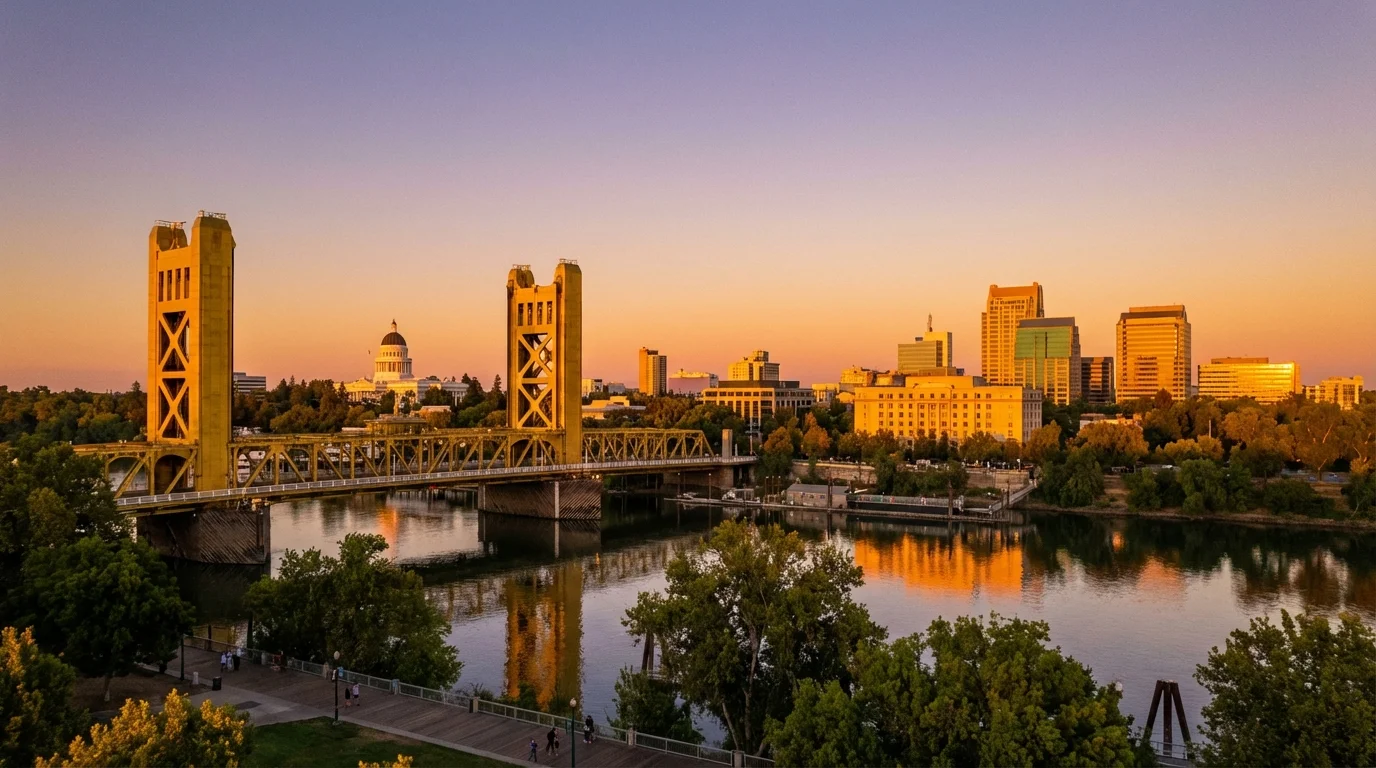
The 279 area code is an overlay for 916, covering the greater Sacramento metropolitan area — California's capital and one of the most diverse cities in the United States. Activated on March 10, 2018, it serves approximately 2.4 million people across Sacramento, Elk Grove, Roseville, Folsom, Davis, and surrounding communities.
Sacramento's 916 holds a distinction no other original area code can claim: it's the only one of the original 86 codes from 1947 that lost every square mile of its original territory to splits, then had an overlay added to what was left. This is a region that survived the Gold Rush, physically raised its streets by 15 feet after a biblical flood, and has a ghost town sitting at the bottom of a reservoir.
279 Area Code Quick Facts
Cities in the 279 / 916 Area Code
| City | Population | County |
|---|---|---|
| Sacramento | 524,000 | Sacramento |
| Elk Grove | 176,000 | Sacramento |
| Roseville | 147,000 | Placer |
| Folsom | 82,000 | Sacramento |
| Rancho Cordova | 79,000 | Sacramento |
| Citrus Heights | 87,000 | Sacramento |
| Rocklin | 70,000 | Placer |
| Lincoln | 49,000 | Placer |
| Davis | 66,000 | Yolo |
| Woodland | 62,000 | Yolo |
| West Sacramento | 53,000 | Yolo |
| Auburn | 14,000 | Placer |
916/279 Area Code Timeline
One of the original 86 area codes in the North American Numbering Plan. Covered the entire northeastern half of California — Sacramento to the Oregon border.
November 1 — Northern California counties (Chico, Redding, Lake Tahoe, Yuba City) split off. 916 shrinks to the Sacramento metro area.
March 10 — Overlay activated for the 916 service area. Mandatory 10-digit dialing required for all calls.
The Only Original Area Code to Lose All Its Territory
In 1947, the North American Numbering Plan created 86 original area codes. California received three: 213 (Southern California), 415 (San Francisco Bay Area), and 916 (the entire northeastern half of the state — from Sacramento to the Oregon border, including the Sierra Nevada, Shasta, and the upper Central Valley).
Then the splits started. Area code 209 took the San Joaquin Valley in 1958. Area code 707 carved off the North Coast in 1959. Area code 530 claimed everything north of Sacramento in 1997 — Redding, Chico, Lake Tahoe, Yuba City. After three splits, 916 had shrunk from covering half of California to just the Sacramento metro area.
That makes 916 the only one of the original 86 area codes that no longer serves any part of its original geographic footprint outside its core city. Every other original code — from 212 (Manhattan) to 312 (Chicago) — still covers at least some of its 1947 territory. Then in 2018, even the remaining 916 territory needed an overlay: 279.
California's Wandering Capital
Sacramento wasn't California's first capital — it was the fourth. After the 1849 Constitutional Convention in Monterey, the state legislature met in San Jose (1850), moved to Vallejo (1852, lasting only 7 days because the building leaked), then to Benicia (1853), before finally settling in Sacramento on February 25, 1854.
The Capitol building itself has a dark footnote. Architect Reuben Clark designed the Renaissance Revival structure starting in 1860. Construction dragged on for 14 years, plagued by budget overruns and political battles. Clark suffered a mental breakdown during the project and was committed to the Stockton State Asylum, where he died. The building he designed stands to this day — one of the most photographed landmarks in California.
Today the Capitol sits in a 40-acre park with trees from every continent except Antarctica. The building underwent a $349 million annex renovation completed in 2023, creating a new underground visitor center beneath the Capitol grounds.
Gold Rush Gateway: Sutter's Tragedy
On January 24, 1848, James W. Marshall discovered gold at Sutter's Mill in Coloma — about 50 miles northeast of Sacramento. The irony: John Sutter, who owned the land, was ruined by the discovery. Squatters overran his property, butchered his cattle, and occupied his land. He spent decades petitioning Congress for compensation and died in Washington, D.C. in 1880 — broke.
Sacramento became the gateway to the Gold Country. Its population exploded from a few hundred in 1848 to over 10,000 by 1849. The city's location at the confluence of the Sacramento and American Rivers made it the natural supply hub for miners heading into the Sierra Nevada foothills.
One Gold Rush settlement tells a particularly haunting story. Mormon Island, a mining camp 25 miles east of Sacramento, once held 2,500 residents and produced millions in gold. In 1955, the federal government built Folsom Dam and the town was submerged under Folsom Lake. During droughts, the ghost town's stone foundations re-emerge from the water — a literal sunken city visible from shore.
The Great Flood of 1862: A City Raised From the Mud
In January 1862, California experienced the worst flood in its recorded history. Forty-three days of continuous rain turned the Central Valley into an inland sea 300 miles long and 20 miles wide. Sacramento was submerged under 10 feet of water. Governor Leland Stanford had to take a rowboat to his own inauguration at the Capitol building.
The state legislature temporarily relocated to San Francisco. When they returned, Sacramento made an extraordinary decision: rather than accept life in a floodplain, they would physically raise the entire city. Over the next two decades, buildings were jacked up and streets were filled in, raising the ground level by 10 to 15 feet. The old ground floors became basements, creating a network of underground spaces.
You can still walk through parts of this buried city today. The Sacramento Underground Tours take visitors through the hollow sidewalks and entombed storefronts of Old Sacramento — a subterranean time capsule from the 1860s.
"Crazy Judah" and the Transcontinental Railroad
Engineer Theodore Judah was obsessed with building a railroad over the Sierra Nevada. His relentless lobbying in Washington earned him the nickname "Crazy Judah." He found funding from four Sacramento shopkeepers — Leland Stanford (grocer), Collis Huntington (hardware), Mark Hopkins (hardware partner), and Charles Crocker (dry goods) — who became the "Big Four" of the Central Pacific Railroad.
On January 8, 1863, ground was broken at Front and K Streets in Sacramento — the western terminus of the Transcontinental Railroad. The Big Four, who started as modest merchants, became the wealthiest men in California. Stanford founded Stanford University. Huntington built what became the Huntington Library.
Judah never saw it completed. After a dispute with the Big Four over construction profits, he traveled east to find new investors. He contracted yellow fever crossing Panama and died on November 2, 1863 — eight months after breaking ground, six years before the golden spike was driven at Promontory Summit. He was 37.
The Tower Bridge Color Wars
Sacramento's Tower Bridge, a vertical-lift bridge completed in 1935, connects Sacramento to West Sacramento across the Sacramento River. It's one of the most recognizable landmarks in the city — and its color has been a source of civic debate for decades.
The bridge was originally painted bare aluminum silver. In 2002, Caltrans repainted it gold to honor the Gold Rush heritage, but residents were divided. Some loved the golden hue; others compared it to mustard. When it was time for another repaint, officials held a public vote — and gold won again, though the shade was adjusted to be less yellow.
Today the Tower Bridge serves as the backdrop for Sacramento's signature events: the annual Farm-to-Fork Festival dinner sets a 700-person banquet table across the bridge, and New Year's Eve fireworks launch from its towers.
The Sacramento Kings: Basketball's Most Traveled Franchise
The Sacramento Kings have lived in more cities than any other NBA franchise. They started as the Rochester Royals (1945, New York), moved to Cincinnati (1957), then Kansas City-Omaha (1972), then just Kansas City (1975), before finally landing in Sacramento in 1985.
The franchise's darkest moment in Sacramento came during the 2002 Western Conference Finals against the Los Angeles Lakers. Game 6 remains one of the most controversial games in NBA history — the Lakers shot 27 free throws in the fourth quarter alone compared to the Kings' 9. Referee Tim Donaghy later alleged the game was fixed, though the NBA denied it. The Kings lost the series in seven games.
In 2013, the team nearly relocated to Seattle. A Sacramento-led ownership group headed by Vivek Ranadivé outbid the Seattle group $534 million to $525 million, keeping the Kings in Sacramento. The $557 million Golden 1 Center opened in 2016 — the first arena in the world powered entirely by solar energy.
America's Farm-to-Fork Capital
Sacramento officially branded itself "America's Farm-to-Fork Capital" — and it's not marketing spin. The Sacramento Valley and surrounding Central Valley produce over $12 billion in agricultural output annually, growing more than 150 different crops. Sacramento County alone ranks among the top 20 agricultural counties in the nation.
The Central Valley produces roughly 25% of America's food on less than 1% of its farmland. Specific numbers: 80% of the world's almonds, 95% of U.S. processing tomatoes, and nearly all U.S.-grown walnuts, pistachios, figs, and olives. Sacramento restaurants sit within a 90-minute drive of all of it.
The Sacramento-San Joaquin River Delta — 1,100 miles of waterways east of the city — is the largest estuary on the Pacific Coast of the Americas. It supplies water to 25 million Californians and irrigates 3 million acres of farmland. It's also one of the most ecologically endangered places in the state.
City of Trees and Diversity
Sacramento is nicknamed the "City of Trees" — and the data backs it up. The city has an estimated 5 million trees within the urban area, giving it more tree canopy per capita than Paris. The canopy was largely planted in the early 1900s and includes over 100 species of trees.
It's also one of the most diverse cities in America. A 2020 WalletHub study ranked Sacramento the #1 most diverse large city in the country, measuring racial, income, and household diversity. The city's Hmong population is one of the largest in the United States, and the Little Saigon district on Stockton Boulevard is a vibrant Vietnamese-American community.
Sacramento's diversity also shaped its literary and music scenes. Writer Joan Didion grew up in Sacramento's Land Park neighborhood — her essays on California's Central Valley defined a generation of Western American writing. The city produced Deftones (Sacramento natives who became one of the defining bands of alternative metal) and DJ Shadow, whose 1996 album Endtroducing..... was the first album made entirely from samples.
End of the Line: Pony Express Terminus
Sacramento was the western terminus of the Pony Express, which operated from April 1860 to October 1861. Riders covered 1,900 miles from St. Joseph, Missouri to Sacramento in about 10 days — a remarkable feat given the route crossed the Great Plains, Rocky Mountains, Great Basin, and Sierra Nevada.
The Pony Express lasted only 18 months before the transcontinental telegraph made it obsolete. The business was a financial disaster — it never turned a profit and its parent company, Russell, Majors and Waddell, went bankrupt. But it became one of the most mythologized enterprises in American history. The B.F. Hastings Building on 2nd Street, where Pony Express riders arrived, still stands in Old Sacramento.
279 Area Code Tools
Related Area Codes
Sacramento Region
- 279 — Sacramento overlay (2018) — this article
- 916 — Sacramento (original 1947 code)
- 530 — Northern California (1997 split from 916)
- 209 — Central Valley / Stockton
- 707 — North Coast / Napa
Need a Sacramento Area Number?
Get a Sacramento area code number with BubblyPhone. Make affordable international calls, keep your existing number, and stay connected to the 279/916 region.