Wyoming Area Code 307: Complete Guide to the Equality State (2026)
Complete guide to Wyoming's only area code 307. Coverage map, time zone, history, and the stories behind the least populous state in America.
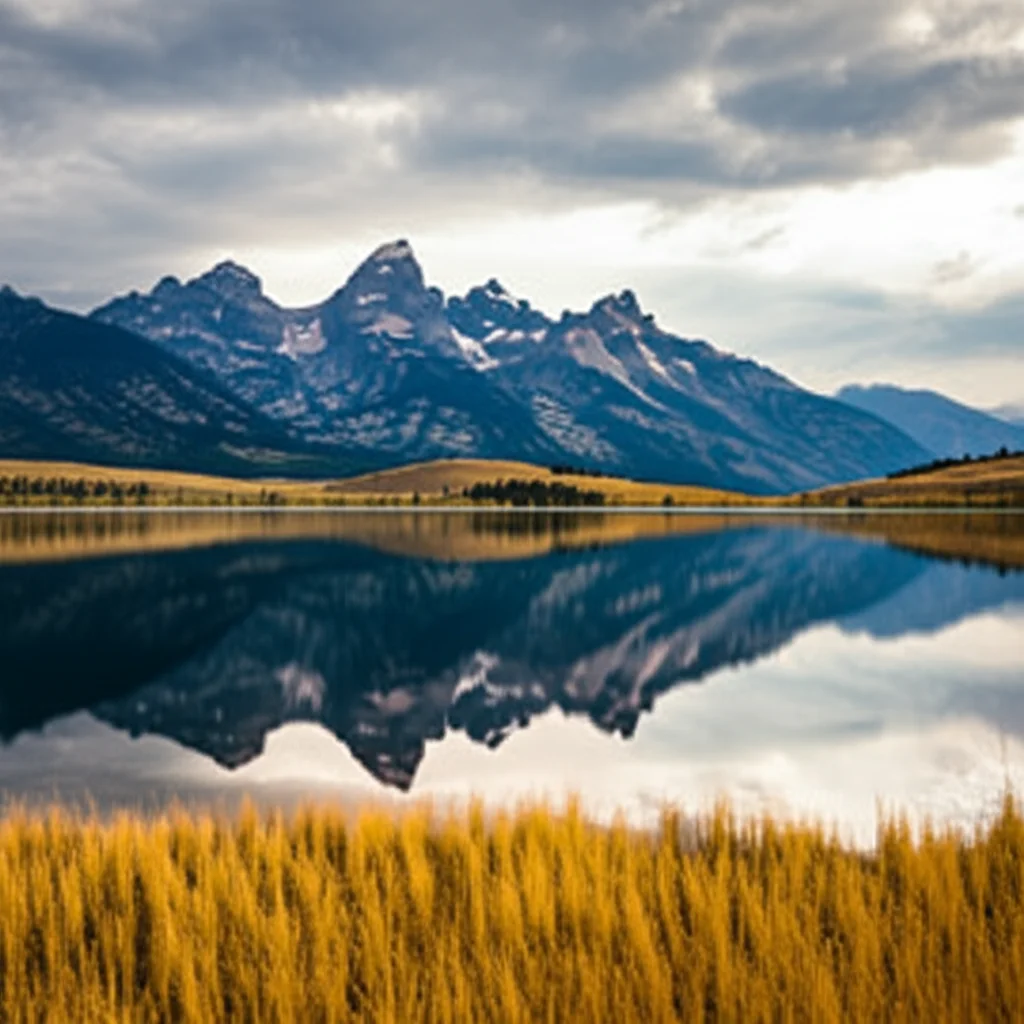
Wyoming has one area code — 307 — covering the entire state and its roughly 584,000 people across 23 counties. That's the least populous state in America, with fewer residents than many individual cities. Wyoming is so sparsely populated — about 5.8 people per square mile — that it has never needed a second area code since 307 was assigned in 1947.
But don't mistake small population for small history. This is the state that gave women the vote 51 years before the 19th Amendment and told Congress "we will remain out of the Union a hundred years rather than come in without our women," where the world's first national park sits atop a supervolcano with a magma chamber 55 miles long, where cattle barons hired Texas gunmen at $5 a day to assassinate settlers, where a daredevil parachuted onto Devils Tower to win a $50 bet and was stranded for six days, and where an estimated 400,000 pioneers crossed the Continental Divide through a 20-mile gap that made westward migration possible. Wyoming's motto is "Equal Rights" — and its story is anything but small.
Wyoming Area Code Quick Facts
Wyoming's Only Area Code: 307
307 (1947, original) — Cheyenne, Casper, Laramie, Gillette, Rock Springs, Sheridan, Jackson, Cody, Riverton, Lander, Evanston, Rawlins, Powell, Torrington, Thermopolis. One of the original 86 US area codes. Never split, never overlaid. March 7 is celebrated statewide as "307 Day."
Why just one? Wyoming is the 10th largest state by area (97,813 sq mi) but the least populous. With only ~584,000 residents, there are far more available phone numbers than people who need them. Wyoming is one of only 11 states with a single area code.
Wyoming Area Code Timeline
307 assigned to all of Wyoming — one of the original 86 US area codes
307 has never been split, overlaid, or modified — a rarity among original area codes. Wyoming's small population means number exhaustion is not a foreseeable concern
The Equality State: Women's Vote 51 Years Before the 19th Amendment
On December 10, 1869, the Wyoming territorial legislature passed the Women's Suffrage Act, making Wyoming the first government in the modern world to grant women the right to vote in all elections and hold public office — a full 51 years before the 19th Amendment was ratified in 1920. The bill was introduced by Col. William Bright, a 46-year-old saloonkeeper and miner who had never been to school.
In 1870, Esther Hobart Morris of South Pass City became the first woman to hold judicial office in the United States when she was appointed justice of the peace. When Wyoming applied for statehood, Congress objected to admitting a state where women could vote. Wyoming legislators sent back: "We will remain out of the Union a hundred years rather than come in without our women!" Wyoming was admitted on July 10, 1890 with suffrage intact. In 1925, Nellie Tayloe Ross became the first female governor in American history, then served 20 years as the first woman Director of the U.S. Mint.
Yellowstone: The World's First National Park on a Supervolcano
On March 1, 1872, President Grant signed the Yellowstone National Park Protection Act, creating the world's first national park — 2.2 million acres set aside as "a public park or pleasuring ground for the benefit and enjoyment of the people." Yellowstone contains more than 10,000 hydrothermal features and roughly half of all active geysers on Earth.
Beneath the park lies the Yellowstone Caldera — a supervolcano measuring 45 miles long and 30 miles wide. Three caldera-forming eruptions have occurred: 2.1 million years ago (2,500 times larger than Mount St. Helens), 1.3 million years ago, and 631,000 years ago. The magma chamber stretches 55 miles long and 25 miles wide, 3 to 10 miles below the surface. The park's first superintendent, Nathaniel Langford, was given no salary and no budget — poaching ran rampant until the U.S. Army took over management in 1886.
Devils Tower: America's First National Monument and a $50 Bet Gone Wrong
On September 24, 1906, President Theodore Roosevelt designated Devils Tower as the first National Monument in the United States. The tower rises 867 feet from its base to summit in Crook County, northeastern Wyoming. The Lakota name "Mato Tipila" means "Bear Lodge" — it remains sacred to Northern Plains tribes.
In October 1941, daredevil George Hopkins parachuted onto the summit to win a $50 bet. His descent plan — involving a Ford axle, sledgehammer, and rope — fell apart when the supply bundle bounced off the summit and snagged on bushes 50 feet below. Hopkins was stranded on top for six days before expert climbers from Dartmouth College guided him down, making national headlines. In 1977, Steven Spielberg immortalized the tower in Close Encounters of the Third Kind.
The Johnson County War: When Cattle Barons Hired an Army (1892)
On April 5, 1892, 52 armed men boarded a private, secret train in Cheyenne and rode north. The force included 11 executives of the Wyoming Stock Growers Association and 25 gunmen recruited from Texas, each promised $5 per day and a $50 bonus for every man killed. Their leader, Frank Wolcott, carried a hit list with 70 names.
Their first target: small rancher Nate Champion at the KC Ranch. On April 9, the invaders laid siege to his cabin. Champion, alone inside, held them off for hours and kept a diary. His final entry: "The house is all fired. Goodbye, boys, if I never see you again." He ran out with a revolver and a Winchester and was hit by 28 bullets. When 200+ armed settlers surrounded the invaders at the TA Ranch, Wyoming's governor telegraphed President Harrison, who sent the 6th Cavalry to "rescue" the invaders. None were ever convicted. The 1892 election was a Democratic landslide — in a deeply Republican state.
Cheyenne Frontier Days: "The Daddy of 'em All" Since 1897
Cheyenne Frontier Days was born in 1897 after Frederick W. Angier, a Union Pacific Railroad passenger agent, suggested a festival. The plans were formulated inside the Tivoli Saloon. The inaugural event drew 4,000 spectators; by the second year, attendance jumped to over 20,000.
Today it runs for 10 days centered on the last full week of July, draws approximately 200,000 attendees annually, and offers more than $1 million in prize money. It's the world's largest outdoor rodeo and was inducted into the ProRodeo Hall of Fame in 2008.
The Great Migration: 400,000 Pioneers Crossed Wyoming
The Oregon, California, and Mormon Pioneer trails all followed the same corridor through central Wyoming along the North Platte and Sweetwater rivers to South Pass. Between 1840 and 1860, an estimated 400,000-500,000 emigrants crossed the state. The 150-mile stretch from Casper to South Pass is the best-preserved section of the original trail route in the entire country.
South Pass — a gentle, 20-mile-wide gap through the Continental Divide at 7,500 feet — was the key that made westward migration possible. Without it, wagon trains could not have crossed the Rockies. The most tragic crossing: the Willie and Martin handcart disaster of 1856, when over 1,000 Mormon emigrants left too late in the season. At Rocky Ridge, 13 emigrants died in a single night crossing knee-deep snow in a blizzard. More than 210 of the 980 pioneers in the two companies perished.
Wind River: Two Rival Tribes, One Broken Promise
The Wind River Indian Reservation — 2.2 million acres (3,500 square miles) — is the 7th largest reservation in the US. Chief Washakie of the Eastern Shoshone negotiated the 1868 Treaty of Fort Bridger to claim the Wind River Valley, a reduction from an original 42-million-acre designation.
In the winter of 1878-79, the U.S. Army escorted the Northern Arapaho — traditional enemies of the Shoshone — to the reservation, claiming it was "temporary." The arrangement was supposed to last one winter. The Arapaho never left, and the government never provided them a separate reservation. It remains the only reservation in the US shared by two historically enemy tribes. Today approximately 3,900 Shoshone and 8,600 Arapaho live there. In 2016, wild buffalo were returned after a 130-year absence.
Buffalo Bill Cody: The Showman Who Built a Town
William Frederick "Buffalo Bill" Cody founded the town of Cody, Wyoming in 1895 after falling in love with the area on a horseback trip. He envisioned it as the gateway to Yellowstone National Park — and that vision proved prophetic.
In 1902, he built the Irma Hotel, naming it after his youngest daughter. Construction cost $80,000 (~$2.8 million today). Its most famous feature: a cherrywood back bar reportedly gifted by Queen Victoria. The hotel still operates today and is listed on the National Register of Historic Places. The road Cody championed to Yellowstone's east entrance — now the Buffalo Bill Cody Scenic Byway — remains a primary access route to the park.
Wyoming's Energy Empire: No Income Tax, $7 Billion Trust Fund
Wyoming has been the #1 coal-producing state since 1988, producing nearly two-fifths of all coal mined in the US. The North Antelope Rochelle Mine in Campbell County is the single largest coal mine in the world. Seven of the nation's 10 largest coal mines are in Wyoming's Powder River Basin.
This mineral wealth funds the state: Wyoming has no state income tax, with 60-80% of the state budget coming from mineral taxes and earnings. The Permanent Mineral Trust Fund is worth approximately $7 billion, generating nearly $400 million annually. Wyoming also supplies roughly 70% of the world's bentonite and holds the nation's largest recoverable uranium reserves.
Wyoming Area Code Tools
Related Area Code Guides
Nearby State Guides
- 720 Area Code — Denver, CO
- 406 — Montana
- 208 — Idaho
- 605 — South Dakota
Other State Guides
- Oregon — 4 area codes
- Arkansas — 4 area codes
- Indiana — 8 area codes
- North Carolina — 10 area codes
Need a Wyoming Phone Number?
Get a Wyoming 307 area code number with BubblyPhone. Affordable calls and flexible plans for the Equality State.