216 Area Code: Cleveland Ohio Location, Cities & Scam Guide (2026)
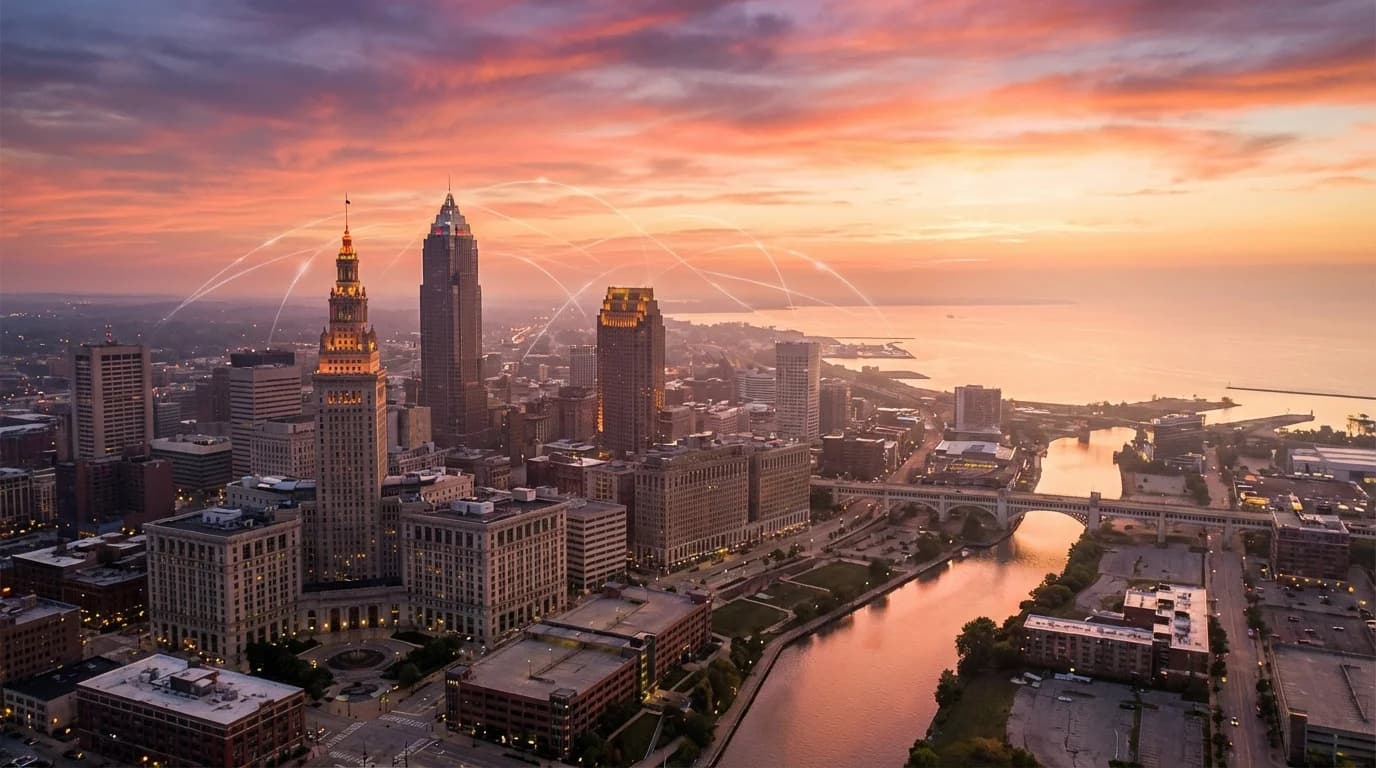
Table of Contents
- What Is the 216 Area Code?
- Where Is the 216 Area Code Located?
- Cities Covered by 216
- County Coverage
- What 216 Doesn't Cover
- Geographic Boundaries
- The History of the 216 Area Code
- 1947: Birth of an Original
- 1996: The First Split
- 1997: The Three-Way Split
- Today: Cleveland's Identity
- 216 Area Code Time Zone
- Is the 216 Area Code Legitimate? Scam Warnings
- Spam Statistics
- Most Common 216 Scams
- Call Types by Delivery Method
- How to Protect Yourself
- When 216 Calls ARE Legitimate
- Should You Get a 216 Phone Number?
- Pros of a 216 Number
- Cons of a 216 Number
- How to Get a 216 Number
- Major Landmarks and Institutions in 216
- Related Ohio Area Codes
- Frequently Asked Questions
- Is 216 a Cleveland area code?
- What area code is 216 in the USA?
- Is 216 a scam area code?
- What time zone is the 216 area code?
- Is Cleveland the only city with 216?
- When was the 216 area code created?
- What's the difference between 216 and 440?
- Do I need to dial 10 digits for 216?
- Can I get a 216 number if I don't live in Cleveland?
- Why is 216 important to Cleveland culture?
- Wrapping Up
What Is the 216 Area Code?
The 216 area code serves Cleveland and its inner-ring suburbs in Cuyahoga County, Ohio. It's one of the original 86 area codes established in 1947 when the North American Numbering Plan was created, making it a piece of American telecommunications history.
Originally covering all of northeastern Ohio from Lorain to Youngstown, today 216 is focused exclusively on the Cleveland metropolitan core. The area code serves approximately 1.26 million people and has become synonymous with Cleveland's identity—local sports fans even chant "216" as a rallying cry.
If you're receiving calls from 216 numbers or considering a Cleveland-area phone number, here's what you need to know.
Where Is the 216 Area Code Located?
The 216 area code covers Cleveland and its closest suburbs, all within Cuyahoga County. It's a compact but densely populated region along the shores of Lake Erie.
Cities Covered by 216
Cleveland (Population: 372,000+) Ohio's second-largest city and the cultural, economic, and healthcare hub of Northeast Ohio. Home to world-class institutions like the Cleveland Clinic, Cleveland Museum of Art, and the Rock & Roll Hall of Fame.
Lakewood (Population: 50,000+) A vibrant inner-ring suburb known for walkability, historic architecture, and a thriving local business scene.
Parma (Population: 81,000+) The largest suburb in Cuyahoga County, known for its strong Eastern European heritage and residential neighborhoods.
Other 216 Cities:
- Cleveland Heights
- East Cleveland
- Shaker Heights
- Euclid
- Maple Heights
- South Euclid
- Garfield Heights
- Rocky River
- Brook Park
- Bedford
- Lyndhurst
- Mayfield Heights
County Coverage
The 216 area code covers Cuyahoga County exclusively—Ohio's most populous county. This is unique among area codes, as most cover multiple counties. The compact geographic footprint reflects Cleveland's urban density.
What 216 Doesn't Cover
The outer suburbs of Greater Cleveland use different area codes:
- 440: Western and eastern outer suburbs (Elyria, Mentor, Strongsville)
- 330: Akron, Canton, Youngstown (southern suburbs transition here)
Geographic Boundaries
The 216 area code is roughly bounded by:
- North: Lake Erie shoreline
- South: Inner Cuyahoga County suburbs (Parma, Maple Heights)
- West: Rocky River, Lakewood
- East: East Cleveland, Cleveland Heights, Euclid
The area code essentially covers what locals call the "inner ring" of Greater Cleveland.
The History of the 216 Area Code
The 216 area code has a rich history that mirrors Cleveland's own story as an industrial powerhouse and modern reinvention.
1947: Birth of an Original
When the North American Numbering Plan launched on October 1, 1947, it created 86 original area codes. Ohio received 216 and 614 (Columbus). The 216 code covered the entire northeastern corner of the state—from Cleveland to Akron to Youngstown.
For nearly 50 years, 216 was the only area code for northeastern Ohio, serving millions of people across dozens of counties.
1996: The First Split
By the mid-1990s, demand for phone numbers was exploding due to:
- Cell phone adoption
- Fax machines and modems
- Pager devices
- Business expansion
On March 9, 1996, area code 330 was created, taking the southern portion of the original 216 territory. This gave Akron, Canton, and Youngstown their own area code. Mandatory 10-digit dialing began June 29, 1996.
This was Ohio's first new area code since 1947—a nearly 50-year span.
1997: The Three-Way Split
Just over a year later, on August 16, 1997, area code 440 was carved out. This gave the eastern and western suburbs their own code, leaving 216 to cover only Cleveland and its immediate neighbors.
The result: 216 became a compact, urban area code synonymous with Cleveland proper.
Today: Cleveland's Identity
Unlike many urban area codes that have been overlaid with additional codes, 216 remains the sole area code for its territory. It's become more than a phone prefix—it's a cultural symbol. You'll see "216" on Cleveland merchandise, in song lyrics, and shouted at sports events.
216 Area Code Time Zone
The 216 area code operates in the Eastern Time Zone (ET):
- Standard Time: UTC-5 (Eastern Standard Time/EST)
- Daylight Saving Time: UTC-4 (Eastern Daylight Time/EDT)
When planning calls to or from 216 numbers, keep these time differences in mind:
Ohio observes Daylight Saving Time, so the offset changes in spring and fall.
Is the 216 Area Code Legitimate? Scam Warnings
The 216 area code is completely legitimate, serving over a million real residents and businesses in Greater Cleveland. However, scammers frequently spoof 216 numbers because local-looking calls are more likely to be answered.
Spam Statistics
Like all major metropolitan area codes, 216 sees its share of spam calls. Scammers use "spoofing" technology to make any number appear on caller ID, including legitimate-looking 216 numbers.
Most Common 216 Scams
Based on consumer reports, here are the top scam types from spoofed 216 numbers:
Medicare/Medicaid Scams (9% of reports) Callers claim to offer new Medicare benefits, free medical equipment, or insurance updates. They're phishing for personal information or Medicare ID numbers.
Mortgage Loan Scams (9% of reports) Fraudulent offers for low-interest refinancing, loan modification, or "government programs" that don't exist.
Health Insurance Scams (9% of reports) Fake open enrollment calls or claims about affordable coverage. These often lead to identity theft or enrollment in fraudulent plans.
Political Call Scams (6% of reports) Especially common during election seasons, these calls may request donations to fake campaigns or use political talk to segue into other scams.
Auto Warranty Scams (4% of reports) The classic "your car's warranty is about to expire" robocall. These callers don't know what car you drive.
Call Types by Delivery Method
- Live Voice: 43% of spam reports (real person or AI)
- Prerecorded/Robocall: 41% of spam reports
- Text Message: 16% of spam reports
How to Protect Yourself
- Don't trust caller ID — Numbers can be spoofed to show any 216 number
- Never share sensitive information — Real businesses don't cold-call asking for Medicare numbers, SSN, or payments
- Hang up and call back — If a call seems legitimate, look up the official number yourself
- Use call blocking apps — Nomorobo, Hiya, or Truecaller can filter known scam numbers
- Register with Do Not Call — Visit donotcall.gov (though scammers ignore this)
- Report scam calls — File complaints at reportfraud.ftc.gov or with the Ohio Attorney General
When 216 Calls ARE Legitimate
Most 216 calls are perfectly legitimate. Expect real calls from:
- Cleveland-area businesses and employers
- Cleveland Clinic, University Hospitals, MetroHealth, and other healthcare providers
- City of Cleveland and Cuyahoga County government offices
- Local schools and universities (Case Western, Cleveland State)
- Friends and family in the Cleveland area
Should You Get a 216 Phone Number?
If you're establishing a presence in Northeast Ohio, here's what to consider:
Pros of a 216 Number
- Cleveland identity: 216 immediately signals Cleveland to anyone who sees it
- Local credibility: Ohio residents recognize and trust local numbers
- Business presence: Shows you serve the Cleveland metropolitan market
- Cultural cachet: The 216 is celebrated in Cleveland culture and sports
Cons of a 216 Number
- Spam association: Some spam activity makes people cautious of unknown callers
- Limited geography: Only covers inner Cleveland—outer suburbs are 440
- 7-digit dialing issues: Some systems still try 7-digit dialing which can cause confusion
How to Get a 216 Number
- Major carriers: Request when setting up service in Cuyahoga County
- VoIP providers: Google Voice, Grasshopper, or OpenPhone may have 216 numbers
- Business phone services: RingCentral, Nextiva, and similar providers offer local Cleveland numbers
For more on managing phone numbers and features, see our guide on call forwarding codes.
Major Landmarks and Institutions in 216
The 216 area code covers a region packed with cultural and economic significance:
Iconic Attractions:
- Rock & Roll Hall of Fame
- Cleveland Museum of Art
- Playhouse Square (largest performing arts center outside NYC)
- Great Lakes Science Center
- Cleveland Metroparks Zoo
Healthcare (World-Class):
- Cleveland Clinic (ranked #2 hospital in the US)
- University Hospitals Cleveland Medical Center
- MetroHealth Medical Center
- Louis Stokes Cleveland VA Medical Center
Education:
- Case Western Reserve University
- Cleveland State University
- Cuyahoga Community College
Sports:
- Progressive Field (Cleveland Guardians - MLB)
- Rocket Mortgage FieldHouse (Cleveland Cavaliers - NBA)
- Cleveland Browns Stadium (NFL)
Major Employers:
- Cleveland Clinic
- University Hospitals
- KeyBank
- Progressive Corporation
- Sherwin-Williams
- NASA Glenn Research Center
Related Ohio Area Codes
Understanding Ohio's area code landscape helps identify where callers are located:
Frequently Asked Questions
Is 216 a Cleveland area code?
Yes, 216 is the area code for Cleveland, Ohio and its inner-ring suburbs in Cuyahoga County. It's one of the original area codes from 1947 and is closely associated with Cleveland's identity.
What area code is 216 in the USA?
The 216 area code covers Cleveland, Ohio and surrounding cities like Lakewood, Parma, Cleveland Heights, and Euclid. It serves approximately 1.26 million people in Cuyahoga County.
Is 216 a scam area code?
No, 216 is a legitimate Ohio area code serving Cleveland. However, scammers spoof 216 numbers to appear local. Common scams include Medicare fraud, mortgage scams, and auto warranty calls. Always verify callers independently.
What time zone is the 216 area code?
The 216 area code is in the Eastern Time Zone (ET). That's UTC-5 during standard time and UTC-4 during daylight saving time—the same as New York and the rest of Ohio.
Is Cleveland the only city with 216?
No, the 216 area code covers Cleveland and its inner-ring suburbs, including Lakewood, Parma, Cleveland Heights, Shaker Heights, Euclid, and about a dozen other cities in Cuyahoga County.
When was the 216 area code created?
The 216 area code was created in 1947 as one of the original 86 area codes in the North American Numbering Plan. It originally covered all of northeastern Ohio before splitting in 1996 and 1997.
What's the difference between 216 and 440?
Both serve Greater Cleveland, but 216 covers the inner-ring suburbs and Cleveland proper (Cuyahoga County core), while 440 covers the outer suburbs in surrounding counties. They split in 1997.
Do I need to dial 10 digits for 216?
Yes, you must dial all 10 digits (216 + the 7-digit number) for all calls, even within the 216 area. Seven-digit dialing no longer works in most of Ohio.
Can I get a 216 number if I don't live in Cleveland?
Yes, many VoIP providers and business phone services offer 216 numbers regardless of your physical location. This is useful for businesses wanting a Cleveland presence.
Why is 216 important to Cleveland culture?
The 216 area code has become a symbol of Cleveland pride. It appears on merchandise, in music, and as a rallying cry at sports events. It represents the city's identity and resilience.
Wrapping Up
The 216 area code represents Cleveland, Ohio—a city with a storied industrial past and a vibrant cultural present. As one of America's original area codes, it carries both historical significance and modern-day relevance.
Key takeaways:
- 216 covers Cleveland and inner-ring Cuyahoga County suburbs
- One of the original 86 area codes from 1947
- Eastern Time Zone (same as New York)
- Common scams include Medicare fraud, mortgage scams, and auto warranty calls
- Strong cultural significance—"216" is a Cleveland identity symbol
- Most 216 calls are legitimate—just verify before sharing personal information
Whether you're receiving calls from 216 or considering a Cleveland phone number, understanding this area code helps you navigate both legitimate connections and potential scams.
Last updated: January 2026