Houston Area Code: All 5 Codes (713, 281, 832, 346, 621) Guide (2026)
Complete guide to all Houston area codes — 713, 281, 832, 346, and 621. Learn which codes serve Houston, their history, time zone, and how to identify scam calls from Houston numbers.
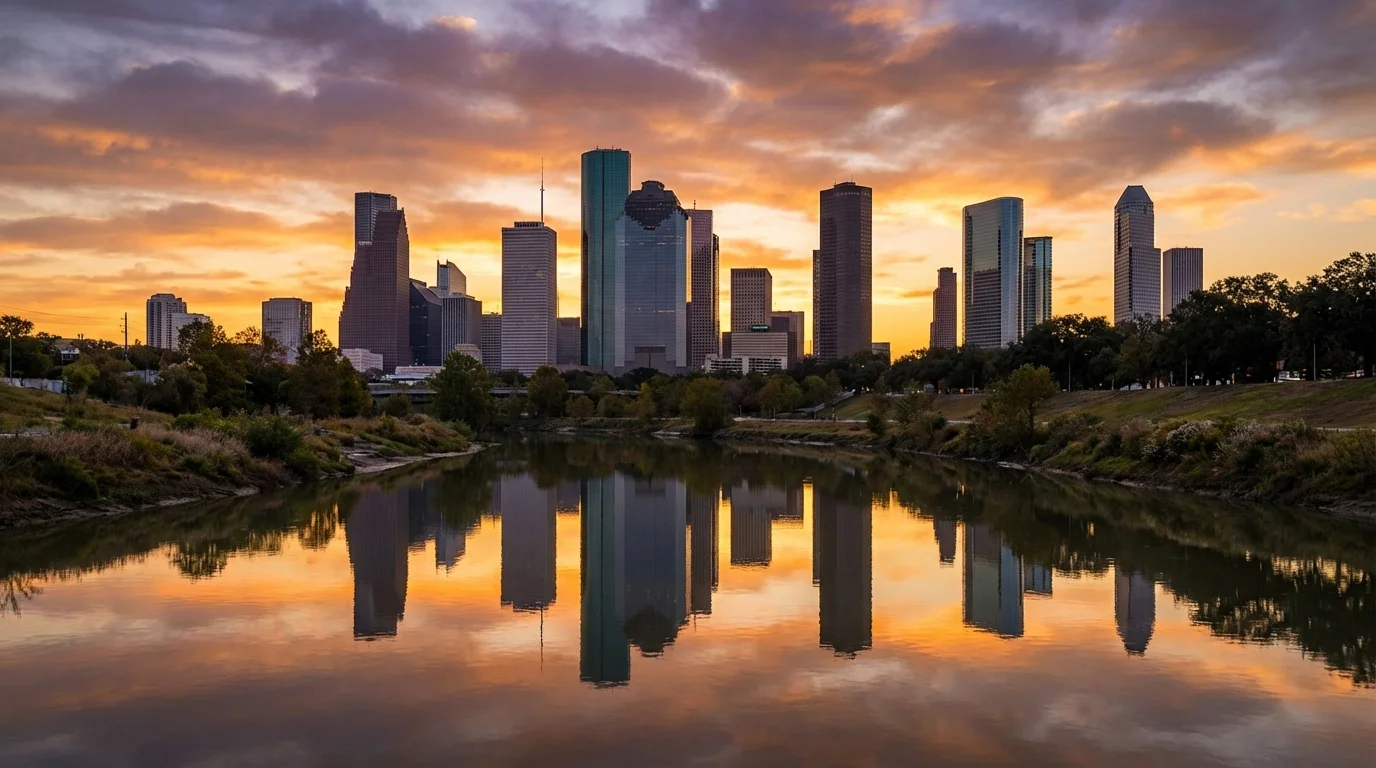
The Houston area code isn't one code — it's five. Houston is served by area codes 713, 281, 832, 346, and 621, all covering the same territory across the greater Houston metro area. With approximately 7.3 million people, Houston is one of only a handful of US metro areas that has devoured five phone codes.
This is the city that dug a 52-mile ship channel to the ocean because it didn't have a port, where the most famous quote in space history is a misquote, where a mosquito problem led to the invention of AstroTurf, and where the largest corporate fraud in American history evaporated $63.4 billion overnight. Houston is also the only major US city where voters have rejected zoning — three times.
Houston Area Code Quick Facts
All Houston Area Codes: Complete Timeline
The OG Houston code — one of the original 86 area codes. Originally covered all of southeastern Texas.
November 2 — Suburbs outside Beltway 8 split from 713. The Woodlands, Sugar Land, Katy, Pearland.
January 16 — First overlay. 713/281 boundary erased. Mandatory 10-digit dialing begins.
July 1 — Fourth code added as Houston's growth continued to devour available numbers.
January 23 — Fifth code launched. Projected to last approximately 9 years before a sixth is needed.
How One City Devoured Five Phone Codes
In 1947, area code 713 covered an enormous swath of southeastern Texas — from the Sabine River to the Brazos Valley, an area roughly the size of West Virginia. Houston's population was under 600,000. Then came the air conditioning boom.
Houston's population went from 384,514 in 1940 to 938,219 in 1960 — a 144% increase in two decades, directly correlated with the spread of affordable residential air conditioning. Before AC, Houston's summer heat (average highs 94–96°F with extreme humidity) made the city nearly uninhabitable. The Sun Belt migration that built modern Houston, Phoenix, Dallas, and Atlanta was, in a very real sense, an invention of Willis Carrier.
By 1983, the first split carved off area code 409. By 1996, even the reduced 713 territory couldn't keep up — 281 was created for suburbs outside Beltway 8. Just three years later, two codes still weren't enough: on January 16, 1999, the 713/281 boundary was erased entirely and 832 was added as an overlay. Code 346 arrived in 2014. Code 621 launched January 23, 2025 — projected to last only 9 years before a sixth may be needed.
"Houston, We've Had a Problem" — The Quote Everyone Gets Wrong
On April 13, 1970, at 9:08 PM CST, an oxygen tank exploded aboard Apollo 13, 200,000 miles from Earth. Command Module Pilot Jack Swigert spoke first: "Okay, Houston, we've had a problem here." Mission Commander Jim Lovell repeated: "Ah, Houston, we've had a problem."
Both used the past tense — "we've HAD a problem" — because the explosion had already occurred. The 1995 Ron Howard film changed it to the present tense: "Houston, we have a problem" — which became the universally known (and wrong) version. Mission Control has been at Johnson Space Center in Houston since Gemini 4 in 1965. The center sits on 1,620 acres and employs approximately 15,000 people, including about 110 active astronauts.
Digging to the Ocean: America's Largest Port
Houston sits 50 miles from the Gulf of Mexico. It has no natural harbor. Yet it is the #1 port in the United States by waterborne tonnage — because Houstonians simply dug their way to the ocean.
The Houston Ship Channel opened on November 10, 1914, when President Woodrow Wilson pressed a button in Washington to fire a cannon in Houston. Originally 25 feet deep and 150 feet wide, it's now 45 feet deep, up to 530 feet wide, and 52 miles long.
In 2023, 309.5 million short tons moved through the channel. Port Houston ranks 1st in the US in foreign waterborne tonnage at 220.1 million short tons — the gap between Houston (#1) and the #2 port is 92 million tons, larger than 97% of all ports in the country. Container traffic reached 4.14 million TEUs in 2024.
Hurricane Harvey: The Storm That Broke the Rain Gauge
On August 25, 2017, Hurricane Harvey made landfall as a Category 4 hurricane near Rockport, Texas, then stalled over Houston for four days. Peak rainfall: 60.58 inches — a US tropical cyclone record. Nearly 7 million people experienced more than 30 inches of rainfall.
Total damage: $158.8 billion (CPI-adjusted), making it the second-most costly hurricane in US history. Over 200,000 homes and businesses were damaged or destroyed. More than 30,000 people were displaced and 17,000 rescues performed. 89 people died — the largest number of direct deaths from a tropical cyclone in Texas since 1919.
The Astrodome: Mosquitoes, Dead Grass, and Fake Turf
Harris County Judge Roy Hofheinz was constantly driven away from Houston's outdoor Buffalo Stadium by heat, humidity, and ravenous mosquitoes. His solution: build the world's first domed stadium. The Astrodome opened April 9, 1965 — 710 feet in diameter, ceiling 208 feet high, capacity 66,000. Billy Graham called it the "Eighth Wonder of the World."
The transparent Lucite ceiling was a marvel — until outfielders kept losing fly balls in the glare. The panels were painted over. No sunlight meant dead grass. Monsanto developed ChemGrass, an artificial playing surface, specifically for the Astrodome. It was rebranded "AstroTurf" after the stadium — and went on to be installed in stadiums worldwide. A $35–49 million mosquito solution accidentally revolutionized sports.
Enron: Houston's $63.4 Billion Implosion
In 2001, Houston-based Enron Corporation — the 7th-largest company in America by revenue, stock price $90.75 — collapsed in the largest corporate bankruptcy in US history. CEO Jeffrey Skilling and CFO Andrew Fastow used off-books entities to hide billions in debt while auditor Arthur Andersen billed Enron $1 million per week.
Enron filed for bankruptcy on December 2, 2001, with $63.4 billion in assets. The stock fell from $90.75 to under $1. Nearly 62% of 15,000 employees' retirement savings were in Enron stock purchased at $83 — now worthless. Arthur Andersen lost its license, costing 85,000 jobs worldwide. Skilling received 24 years; Kenneth Lay was convicted but died before sentencing.
The World's Largest Medical Center
The Texas Medical Center spans 2.1 square miles with 50 million square feet of developed space. It houses 21 hospitals, 4 medical schools, and employs over 106,000 people. If it were an independent city, its $25 billion GDP would rank among the top 30 economies in the world.
The numbers are staggering: 10 million patient encounters annually, 180,000 surgeries per year (one every three minutes), 25,000+ babies delivered per year, and 13,600 heart surgeries annually — more than any other location on Earth. It includes the world's largest children's hospital (Texas Children's) and the world's largest cancer hospital (MD Anderson).
The Only Major US City Without Zoning
Houston is the only major city in the United States without a zoning ordinance. Voters have rejected it three separate times — in 1948, 1962, and 1993. A strip club can sit next to a church next to a townhouse, and a high-rise apartment can go up next to a single-family bungalow.
Critics argue the lack of zoning contributed to catastrophic Harvey flooding — nothing prevented development on floodplains. Supporters argue it keeps housing affordable: Houston has significantly lower housing costs than New York, San Francisco, or Los Angeles, partly because rapid construction of new supply isn't blocked by zoning restrictions.
Houston Area Code Tools
Related Area Codes
Need a Houston Phone Number?
Get a Houston area code number with BubblyPhone. Make affordable international calls, keep your existing number, and stay connected to the Energy Capital of the World.