786 Area Code: Miami FL Location, Time Zone & Scam Alert (2026)
The 786 area code overlays 305 across Miami-Dade County and the Florida Keys. Learn about Miami — the only major US city founded by a woman, the Capital of Latin America, Art Deco South Beach, Wynwood Walls, and how to call Miami internationally.
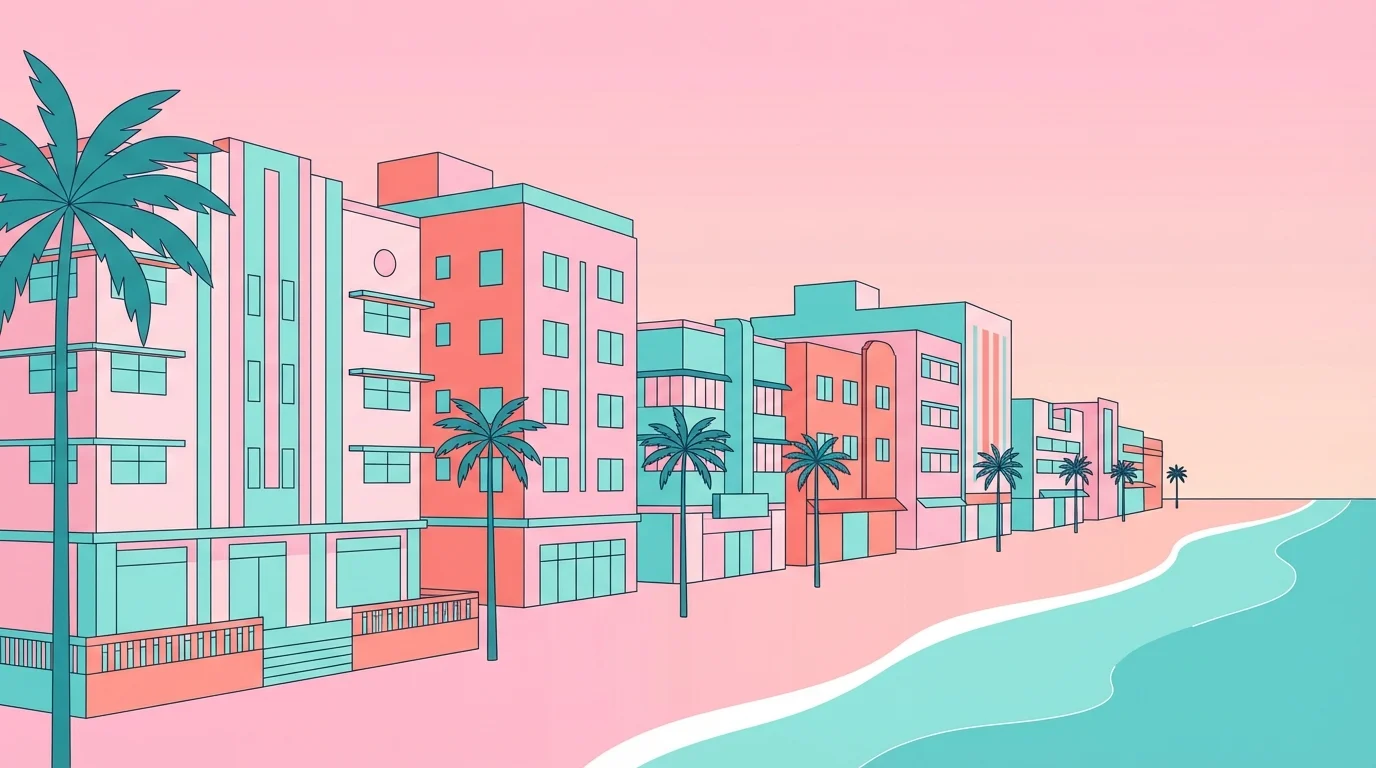
The 786 area code covers Miami-Dade County and the Florida Keys — overlaying the iconic 305 area code across one of the most culturally vibrant, internationally connected, and economically powerful metro areas in the United States.
Introduced on March 1, 1998, as Florida's first overlay area code, 786 serves the same territory as 305 — the area code that spawned a cultural identity so powerful that rapper Pitbull built his entire brand around it. Miami is the only major US city founded by a woman, the unofficial "Capital of Latin America," the cruise capital of the world, and the city where Art Deco, cocaine cowboys, Miami Vice, and Messi all coexist in the same square miles.
This guide covers the 786 area code's location, the full 305/786/645 overlay story, what cities it serves, Eastern time zone details, scam call risks, and the unique cultural layers that make Miami unlike anywhere else on Earth.
786 Area Code Quick Facts
State
Florida
Major City
Miami
Counties
Miami-Dade, Monroe (partial)
Time Zone
Eastern (ET / UTC-5)
Type
Overlay (same area as 305)
Introduced
March 1, 1998
Population Served
~2.8 million (with 305/645)
Overlay Codes
305 (original), 645 (2023)
Cities & Communities in the 786 Area Code
The 786 area code covers the exact same territory as 305 — all of Miami-Dade County (34 municipalities) and most of Monroe County (the Upper and Middle Florida Keys). Together, the 305/786/645 codes serve approximately 2.8 million people.
| City | Population | County |
|---|---|---|
| Miami | 450,000 | Miami-Dade |
| Hialeah | 220,000 | Miami-Dade |
| Miami Gardens | 114,000 | Miami-Dade |
| Miami Beach | 82,000 | Miami-Dade |
| Homestead | 80,000 | Miami-Dade |
| North Miami | 62,000 | Miami-Dade |
| Doral | 80,000 | Miami-Dade |
| Coral Gables | 50,000 | Miami-Dade |
| North Miami Beach | 44,000 | Miami-Dade |
| Key Biscayne | 14,000 | Miami-Dade |
| Key West | 26,000 | Monroe |
| Marathon | 10,000 | Monroe |
South Florida Area Code Timeline
Florida's area code story began in 1947 when 305 covered the entire state. As Florida's population exploded from 2.7 million (1950) to over 22 million today, the original code was split and overlaid repeatedly. Here's how 786 fits into the history:
1947 — Original
One of the original 86 NANP codes. Covered the entire state of Florida — every county from Key West to the Panhandle.
1953 — Split
Western peninsula (Tampa Bay area) splits off. Florida's first area code split.
1995 — Split
September 11 — Broward County splits from 305. 305 shrinks to Miami-Dade and Monroe counties only.
1998 — Overlay
March 1 — First overlay in Florida history. Covers Miami-Dade County. 10-digit dialing becomes mandatory.
2001 — Extension
September 1 — 786 overlay extended to Monroe County (the Florida Keys).
2023 — Overlay
August 4 — Third area code added. New numbers may be assigned 305, 786, or 645.
The Only Major US City Founded by a Woman
Julia DeForest Tuttle (1849–1898) holds a distinction no one else in American history can claim: she is the only woman to have founded a major American city.
A Cleveland, Ohio native, Tuttle used her inheritance to purchase 640 acres on the north side of the Miami River — the James Egan land grant. Her masterstroke came during the catastrophic Great Freeze of 1894–1895, which wiped out Florida's citrus industry. While groves from Jacksonville to Palm Beach were destroyed, Miami's subtropical climate held.
Tuttle sent a fragrant branch of orange blossom to railroad magnate Henry Flagler, proving that southern Florida had been spared. Flagler agreed to extend his Florida East Coast Railway to Miami in exchange for land. Miami was incorporated on July 28, 1896 — but Tuttle couldn't vote in the incorporation election because women's suffrage wouldn't arrive until 1920.
Today, over 100,000 vehicles daily cross the Julia Tuttle Causeway connecting Miami and Miami Beach — though most drivers have no idea who she was or why the city exists.
The 305: More Than an Area Code
Few American cities identify with their area code as intensely as Miami does with 305. The number has transcended telecommunications to become a cultural badge of identity:
- •Pitbull branded himself "Mr. 305" before becoming "Mr. Worldwide." His 2007 track "305 Anthem" became the unofficial city anthem. He later got FIU's football stadium renamed Pitbull Stadium.
- •Florida International University puts "305" on its football helmets and uses it as a recruiting tool.
- •3:05 PM is the unofficial cafecito break time — Miamians take their Cuban coffee at the time that matches their area code.
- •"305 til I die" is tattooed on bodies, printed on T-shirts, and used as a rallying cry across the city.
- •305 is one of the most in-demand area codes on the secondary phone number market, trailing only LA's 310 and NYC's 212.
Where does 786 fit? Honestly, 786 doesn't carry the same nostalgic weight — it's the "newer" code, like getting a 347 number in New York instead of a 212. But for practical purposes, both codes are unmistakably Miami and increasingly interchangeable.
Capital of Latin America
Miami's claim as the unofficial capital of Latin America isn't hyperbole — it's backed by hard infrastructure:
Banking & Business
- Second-largest banking center in the US
- 60+ international banks, 600+ US commercial banks
- ~1,800 money managers and hundreds of family offices
- Major LatAm HQs: GM, Disney Latin America, Inter-Continental Hotels
Culture & Media
- All major record labels have Latin music offices here
- Univision and Telemundo major operations
- Only major US city where business is routinely conducted in Spanish
- Spanish spoken not just by immigrants but in Brickell boardrooms
Versailles restaurant, founded by Felipe A. Valls Sr. in 1971 on Calle Ocho (SW 8th Street) in Little Havana, is the self-proclaimed "Capitol of Exile." When Castro was hospitalized in 2006, news media set up a tent city in the Versailles parking lot. When his death was announced in November 2016, thousands gathered there to celebrate, dance, and wave Cuban flags. Every presidential candidate seeking Cuban-American endorsement makes Versailles their first stop.
Calle Ocho: The World's Largest Hispanic Festival
The Calle Ocho Festival began in 1978 as a small neighborhood event for Cuban immigrants. It has since grown into the largest Hispanic festival in the United States and one of the largest street festivals in the world, spanning 15 to 30 blocks of Little Havana and drawing over one million attendees annually.
The festival holds a Guinness World Record for the longest conga line: 119,986 people. It showcases music, food, and art from every corner of Latin America, the Caribbean, and beyond.
South Beach: From "God's Waiting Room" to Global Nightlife Capital
The transformation of South Beach is one of the most dramatic urban reinventions in American history:
1930s–1940s: The Golden Age
Hundreds of Art Deco buildings constructed in roughly one square mile, creating a glamorous resort destination. Today this district contains the largest concentration of Art Deco architecture in the world — over 800 preserved historic buildings.
1960s–1970s: Decline
The glamour faded. Art Deco hotels became cheap retirement homes. The neighborhood earned the nickname "God's Waiting Room" and the "geriatric ghetto."
1979: Preservation Victory
Barbara Baer Capitman co-founded the Miami Design Preservation League and, against fierce developer opposition, got the Art Deco District listed on the National Register of Historic Places — a first for a 20th-century architectural district.
1984–1989: Miami Vice Effect
The TV show's pastel-soaked cinematography turned South Beach into aspirational real estate overnight. Ray-Ban Wayfarer sales surged to 720,000 units in 1984 after Don Johnson wore them on screen. Fashion trends born on the show — T-shirts under pastel suits, no socks, rolled sleeves — defined 1980s American style.
Miami Bass, Cocaine Cowboys & the 1980s
The 1980s were Miami's most volatile and culturally explosive decade — and the 305/786 area code carries both legacies.
Miami Bass
Luther "Uncle Luke" Campbell and 2 Live Crew pioneered Miami bass — a hip-hop subgenre built on the Roland TR-808 drum machine with Caribbean-influenced tempos (100+ BPM). Their 1989 album "As Nasty As They Wanna Be" became the first album ever ruled legally obscene by a federal court (later overturned on appeal). Uncle Luke gave the South its first rap group and record label, defining the sonic template that influenced Migos, Future, and Travis Scott.
Cocaine Cowboys
The Dadeland Mall shootout (July 11, 1979) coined the term "Cocaine Cowboys." By 1981, Miami trafficked 70% of America's cocaine. The annual drug trade was estimated at $12 billion — exceeding the two largest legitimate industries combined. Homicides hit 621 in 1981. The county morgue ran out of space and rented a Burger King refrigerated truck to store bodies — it stayed in use from 1981 to 1988.
Wynwood Walls: Warehouse to World-Class Art
Tony Goldman — the developer who previously revitalized SoHo in New York (1970s), South Beach (1980s), and 13th Street in Philadelphia (1990s) — turned his attention to Wynwood in the 2000s.
In 2009, Goldman established Wynwood Walls, transforming derelict warehouse buildings into the world's first major outdoor exhibition center for international street art, with works curated by gallerist Jeffrey Deitch.
Goldman died in 2012. His daughter Jessica Goldman Srebnick has curated Wynwood Walls ever since. The neighborhood is now one of Miami's most visited areas and a primary draw during Art Basel Miami Beach each December — the most prestigious art fair in the Western Hemisphere.
Brickell: Manhattan of the South
Named after William and Mary Brickell, who arrived at the mouth of the Miami River in 1871, the neighborhood transformed from "Millionaire's Row" mansions in the 1920s into a major international financial district starting in the 1970s — fueled partly by Latin American banking fleeing political instability.
Brickell is now the densest neighborhood south of Manhattan, with a population of roughly 40,000 that tripled between 2000 and 2016. It hosts the largest concentration of domestic and international banks on the East Coast south of New York City.
Overtown: Miami's Lost "Little Broadway"
Originally called "Colored Town" under Jim Crow laws, Overtown was the historic center of Black commerce and culture in South Florida. By the 1940s, its main drag — Northwest Second Avenue — was nicknamed the "Little Broadway of the South," hosting hundreds of Black-owned businesses, nightclubs, a hospital, and social organizations.
The neighborhood was devastated when city officials routed Interstate 95 directly through its heart in the 1960s, demolishing hundreds of homes and businesses. The population plummeted from approximately 40,000 to about 10,000.
The Coral Castle Mystery
In Homestead (southern Miami-Dade), a 5-foot-tall, 100-pound Latvian immigrant named Edward Leedskalnin single-handedly quarried and sculpted over 1,000 tons of oolite limestone into a fantastical structure over 28 years (1923–1951) — all as a monument to his lost love, a 16-year-old fiancée who rejected him one day before their wedding.
Using only basic tools — picks, winches, ropes, and pulleys — Leedskalnin created a 9-ton revolving gate so perfectly balanced that a child could push it open with one finger. When it broke in 1986, engineers discovered he'd drilled a shaft from top to bottom and balanced it on an old truck bearing.
Leedskalnin died in 1951, having placed a sign on his gate reading "Going to the Hospital" before taking a bus to Jackson Memorial. Coral Castle was added to the National Register of Historic Places in 1984.
Gateway to the Americas: PortMiami & MIA
PortMiami
- 8.56 million cruise passengers in fiscal 2025
- Single-day record: 75,201 passengers (Nov 30, 2025)
- Record 10 cruise ships in port simultaneously (Feb 8, 2025)
- One of the world's busiest cruise ports
Miami International Airport (MIA)
- 55.9 million passengers (2024) — up 22% from pre-pandemic
- #1 in the US for international passenger traffic
- Busiest US airport for Latin America/Caribbean flights
- 1,000+ daily flights to 195 destinations
- #1 international freight airport in the US
The Messi Effect
Lionel Messi's arrival at Inter Miami CF in July 2023 produced staggering impacts that rippled far beyond the soccer pitch:
- •Inter Miami attendance jumped 36%; league-wide MLS attendance rose nearly 20%
- •1,700% increase in ticket sales for Messi's matches
- •Franchise value rose from ~$600M to $1.35–$1.45 billion — the most valuable MLS team
- •Revenue nearly quadrupled from $56M (2022) to ~$200M
- •Instagram followers surged from 1 million to 14 million
Miami-Dade: The Only Hyphenated County in America
Originally named "Dade County" in 1836 (honoring Major Francis L. Dade, killed in the Second Seminole War), the county resisted adding "Miami" to its name for decades. Between 1958 and 1990, voters rejected the name change five times.
On November 13, 1997, voters finally approved the rename to "Miami-Dade County" — making it the only hyphenated county name in the United States. Mayor Alex Penelas pushed the change believing it would attract international business investment — and the evidence suggests he was right.
Related Area Codes
Understanding the 786 area code in context with Florida's area code landscape:
Frequently Asked Questions
Need a 786 Miami Number?
Get a Miami area code number with BubblyPhone. Make affordable international calls, keep your existing number, and stay connected to the 305/786.
Get Your Miami Number