How to Call a Foreign Supplier or Customer Service Line in a Language You Don't Speak
Supplier gone quiet on chat? Call them in Mandarin — you speak English, they hear their language, and you keep a bilingual transcript of what was agreed.
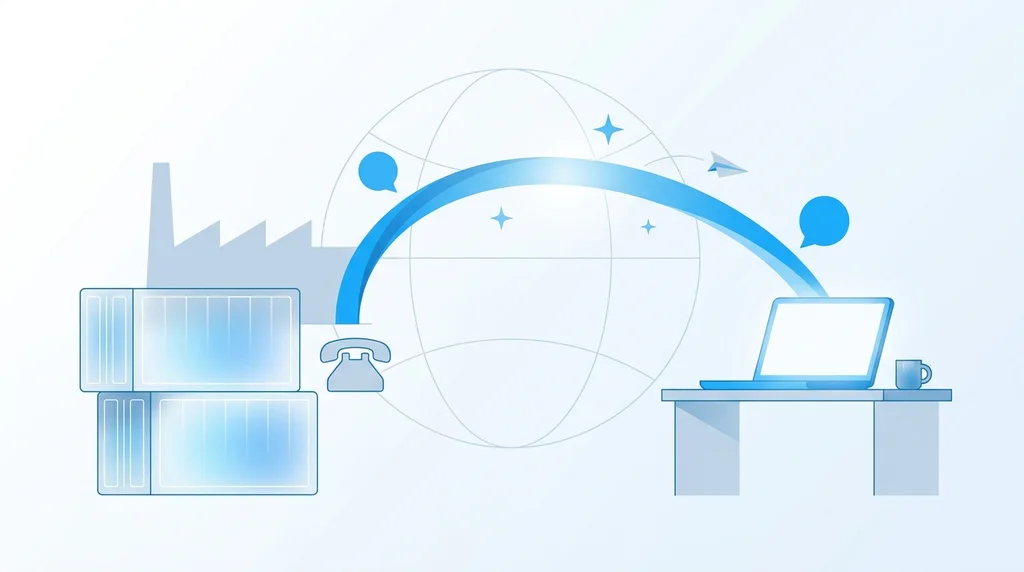
The most reliable way to reach a supplier or customer-service line in a language you don't speak is a live-translated phone call: you speak English, they hear Mandarin — or any of 62 languages — in a natural voice, and they need nothing except the phone already ringing on their desk. It works from your browser, dials landlines, and saves a bilingual transcript of exactly what was said, which for a business call is half the point.
This guide covers both versions of the problem: the importer whose Alibaba supplier has gone quiet on chat three weeks before a shipping deadline, and the traveler or expat facing a foreign airline, hotel, bank, or utility hotline with no English option. Same tool, different stakes — here's how it works, what it honestly costs, and where the limits are.
When Chat Stops Working, Call
If you import anything, you know the pattern. The supplier who answered within an hour during sampling now takes three days to reply. The production update is “soon.” The QC photos haven't arrived. Your sailing is booked, Chinese New Year is coming — factories close for weeks, and everything not shipped before the holiday ships long after it — and the chat thread has become a wall of read receipts.
Chat silence is rarely malice. Your message is one of two hundred in a sales agent's WeChat, machine-translated on their side, and deferring text costs nothing. A phone call is different in kind: it interrupts, it forces a real-time answer, and it signals a customer who follows up. Sourcing veterans have always escalated stalled messages by calling the factory. The barrier was never the number — it's usually right on the supplier's profile. The barrier was that whoever picks up speaks Mandarin and you don't.
That barrier is now solved — imperfectly, in ways worth understanding, but well enough that a ten-minute call can unstick what two weeks of messages couldn't. The same goes for the traveler's version: the airline that only rebooks by phone, the foreign bank blocking your card, the utility in the country where you just rented an apartment. Some problems are phone-shaped, whatever language the phone speaks.
What Actually Works for a Call You Can't Speak
A translating calling service — works from any browser, calls any phone
BubblyPhone's Live Translation (currently in beta) runs in the browser on whatever device you already own and dials real numbers — mobiles and landlines. You speak English; an AI interpreter voice speaks your words in the other language, sentence by sentence, with a 1–2 second pause, and translates the replies back. It covers 62 languages, costs $0.20/min on top of the normal call rate with no subscription, and shows live bilingual captions while you talk. The other end needs nothing — which matters, because a factory front office is often a landline, and no app-based tool reaches a landline.
Your phone's built-in translation — free, if you own the right hardware
Three phone families now translate calls on the device at no cost: Pixel 10 and newer (English paired with 10 languages), recent Samsung Galaxy phones with Galaxy AI (20 languages), and Apple Intelligence iPhones — 15 Pro and newer (12 languages). If you own one and your language is covered, use it. But check the list first: Pixel's ten languages don't include Chinese at all, and these features were designed for personal conversations, not for holding through a hotline queue or navigating a Mandarin phone menu. The full landscape is in our call-translator comparison.
A human — still the right call for the biggest calls
If you're negotiating a contract, placing a six-figure order, or working through a genuine dispute, a bilingual sourcing agent earns their fee. They cost far more than twenty cents a minute, but they know the industry vocabulary, hear what isn't being said, and can push back culturally in ways no AI can. AI translation is for the routine 80% of supplier communication — status checks, confirmations, chasing — and a human is for the calls where nuance is the whole game.
Two routes to skip. WeChat text plus machine translation is fine for simple confirmations, but it's exactly the channel already failing you when things get urgent. And the speakerphone-plus-translation-app trick doesn't work on real calls: the app listens through the room's air, so your voice, the caller's compressed phone audio, and the app's spoken translation all collide in one channel. We've written up why Google Translate can't translate phone calls in detail.
A Translated Supplier Call, Step by Step
Say your Guangdong supplier has gone quiet and your freight forwarder needs a ship date. You open the dialer at bubblyphone.com, toggle Live Translation on, pick Chinese (Mandarin) — your language is detected automatically — and dial the factory office number. When someone picks up, a short greeting in Mandarin explains the call is being translated. On a business call that disclosure works in your favor: the other person knows to speak slower and clearer, the way people naturally do with an interpreter. Then you talk, one sentence at a time, with an interpreter's pause between turns:
You: “Hello, this is Sarah from Brightline Goods. I'm calling about purchase order 4-7-2-0.” → they hear it in Mandarin, in a natural voice
Supplier: “你好,我是李经理。这个订单下周可以完成。”→ you hear: “Hello, this is Manager Li. The order can be finished next week.”
You: “Our sailing is booked for the twelfth. Can you ship by the tenth?”
Supplier: “可以,10号之前发货没有问题。”→ “Yes, shipping before the tenth is no problem.”
You: “Thank you. To confirm the quantity: three thousand units — 3-0-0-0.”
Supplier: “对,3000件,10号发货。”→ “Correct — 3,000 units, shipping on the tenth.”
Notice two habits in that exchange. Numbers are spoken digit-by-digit — AI translation handles digits well, but on a call where 300 versus 3,000 is the whole conversation, you say the number slowly and listen for the read-back. And every key commitment gets restated once. That's not distrust of the tool; it's what a good interpreter-mediated call has always sounded like.
While you talk, live bilingual captions run on screen, so you can keep your order sheet open and paste SKUs into chat as they come up. When you hang up, the full transcript — both languages, both sides — saves to your call history. For a supplier call that transcript is quietly the most valuable feature: a written record of exactly what was committed to — ship date, quantity, price — re-readable in both languages and forwardable to your partner or your freight forwarder. Chat gives you that too, but chat wasn't getting answered.
Now the honest cost math. China is one of the expensive destinations: calls cost about $1.47/min, and translation adds $0.20/min — about $1.67/min all-in, or roughly $17 for ten minutes. Not a cheap phone call, and we won't pretend otherwise. But you're not buying minutes; you're buying a firm ship date before the factory closes for the holiday. Against a container missing its sailing, $17 is a rounding error. Every country's rate is published on the rates page before you dial — and most supplier countries are far cheaper than China.
Calling Foreign Customer-Service Hotlines
The traveler's version of this problem has lower stakes per call and higher frustration per minute. A foreign airline that only handles same-day changes by phone. A hotel in Osaka. A German utility, a Spanish bank, a French landlord's property manager — hotlines with no English option, or an English line open four hours a day in a time zone you're not in.
A translated call works the same way here, with one honest caveat: before you reach a human, you'll usually face an automated menu in the local language. Two tips. Many national hotlines tuck an English option late in the menu — and on many systems pressing 0 or waiting silently routes to an operator. And the live captions translate what the recorded menu is saying as it plays, so you can read the options in English instead of guessing; menus talk fast, so you may need to let one loop once. Once a human answers, you're in the same sentence-by-sentence rhythm as the supplier call — and you end with a transcript of what the agent actually promised, which is exactly what you otherwise lose the moment you hang up.
Hotline destinations are mostly cheap, too: landline calls to Germany start around $0.02/min and Japan around $0.06/min, so with translation you're paying roughly $0.22–$0.26/min all-in — a twenty-minute hold-and-resolve call for about five dollars.
Getting the Most Out of a Translated Business Call
- Call their morning. For Chinese suppliers, 9–11am in China is evening in the US — a call placed at 8pm Eastern lands at the start of their workday, when the person who can actually answer your question is at their desk.
- Prepare your numbers before dialing. Order number, SKUs, quantities, dates — have them written in front of you, and paste them into the captions view or your notes as they're confirmed.
- Short sentences, one thought each. The translation works sentence by sentence. “Can you ship by the tenth?” translates cleanly; a forty-word sentence about the tenth, the forwarder, and the packaging change does not.
- Say numbers digit-by-digit and wait for the read-back. Have every quantity, date, and price repeated back. The captions show both versions, so a mismatch is visible immediately.
- Watch the jargon. Industry shorthand — fabric weights, tolerances, Incoterms like FOB and EXW — can translate awkwardly. Say what you mean in plain words first (“you arrange shipping to the port”).
- Save and forward the transcript. Send the key lines to the supplier in chat as written confirmation — a call plus a written follow-up is the combination that sticks.
One more expectation to set: machine translation quality is not uniform across languages. A 2019 study in JAMA Internal Medicine that scored machine-translated hospital discharge instructions found 92% of sentences accurate in Spanish but only 81% in Chinese — the pair most supplier calls need is measurably harder than the European pairs the technology handles best. That's not a reason to skip the call; it's the reason the read-back habit and the transcript exist. Keep sentences short, confirm the numbers, and the routine business of a supplier call translates well.
Frequently Asked Questions
How do I call my Chinese supplier if I don't speak Chinese?
Does the supplier need to install anything?
How much does a translated call to China cost?
Can I trust AI translation with order details and technical terms?
Is the transcript a record of what the supplier agreed to?
What about the foreign-language phone menu before a human answers?
Wouldn't my phone's built-in translation do this for free?
Get the Answer Chat Couldn't Get You
Call your supplier or that foreign hotline from your browser — you speak English, they hear their language, and you keep a bilingual transcript of what was agreed. 62 languages, $0.20/min on top of the call rate.
See How Live Translation WorksWorks with any phone on their end — including the factory landline.