How Do I Call USA from NZ? Step-by-Step Dialing Guide
Table of Contents
You're in New Zealand, holding a U.S. number, and wondering whether to dial it as written or add a country code. To call the United States from NZ, use 00 + 1 + U.S. area code + local number. On many mobiles, +1 + area code + local number works instead.
Direct Dialing Pattern From New Zealand
The standard pattern is 00 + 1 + area code + local number. New Zealand uses 00 as its international exit code, while the United States uses country code 1, so the complete sequence tells your phone to leave the New Zealand numbering system and route the call into the North American numbering system. This dialing guide for calling the USA from New Zealand confirms the sequence.
Suppose your U.S. contact gave you a number with a New York-style area code and a seven-digit local number. From a New Zealand landline, enter:
00 1 [U.S. area code] [local number]
You can usually enter the number without spaces. The important parts are present and in the correct order:
- 00, the New Zealand international access code.
- 1, the U.S. country code.
- The full U.S. area code, even when calling a mobile.
- The seven-digit subscriber number.
U.S. area codes are already written in the format needed for international calling. Don't remove a leading digit from a U.S. area code. The rule about dropping a leading zero applies when converting some New Zealand numbers into international format, not when dialing a U.S. number. For example, New Zealand's 09 Auckland area code becomes 9 after country code +64 when someone calls New Zealand internationally, as explained in this international New Zealand dialing example.
Practical rule: A U.S. number should normally look like +1 followed by ten digits when normalized for international use. If the number doesn't include an area code, ask the recipient for the complete number before you call.
If you need a quick explanation of the U.S. code itself, keep this guide to the code number for the United States nearby. Most failed calls come from omitting 00, entering 64 instead of 1, or leaving out the area code.
Mobile Versus Landline Dialing Differences
A mobile phone often lets you replace New Zealand's 00 exit code with a plus sign, so you can dial +1 + U.S. area code + local number. A fixed line may still require the complete 00 + 1 + area code + local number sequence, depending on the handset and telephone service. International calling guidance for New Zealand users highlights this device difference.

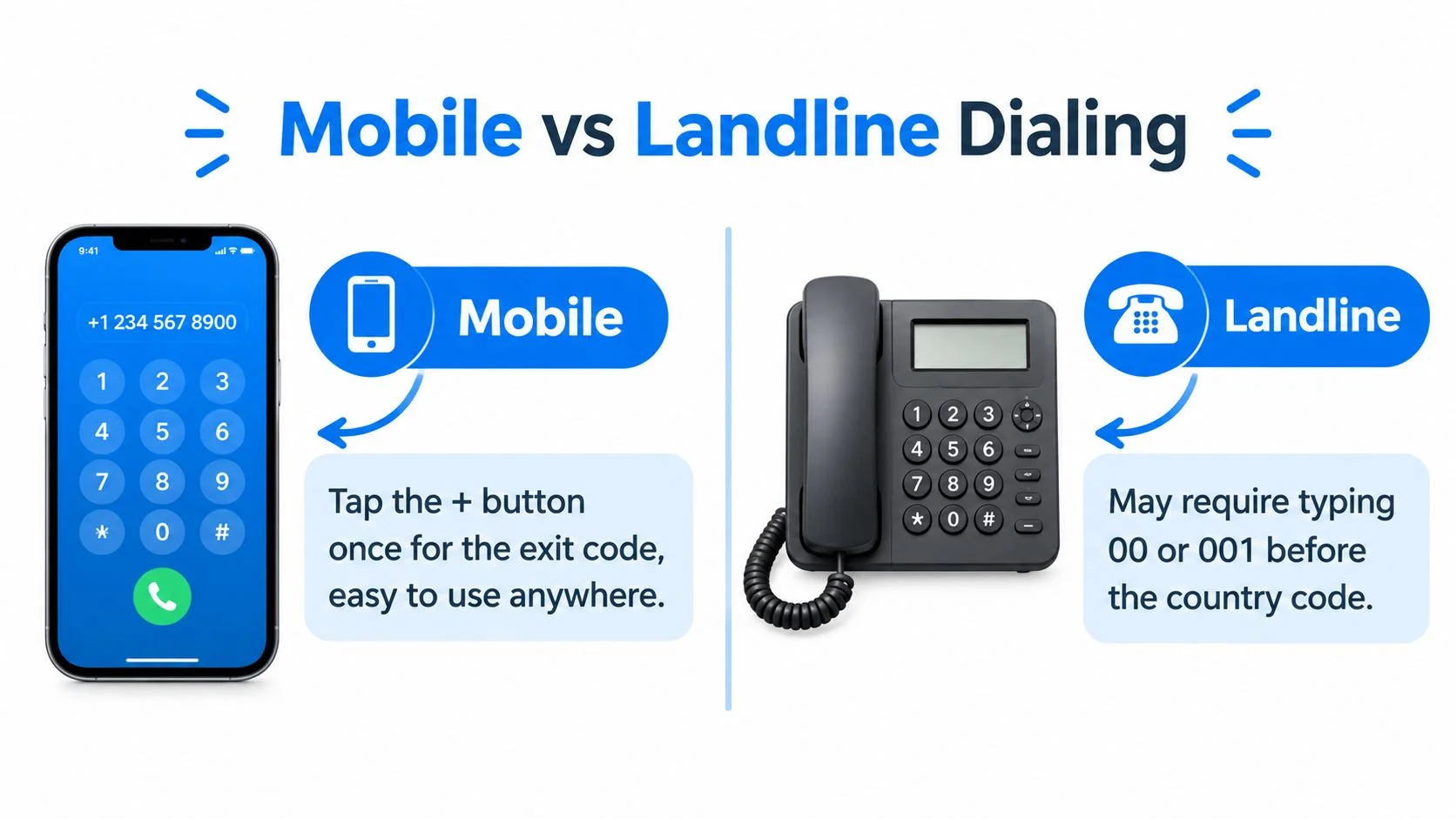
On a mobile, press and hold the 0 key to produce +, then enter the U.S. country code and number. The plus sign acts as an international access instruction that the mobile network interprets for your location. That makes +1 convenient when you're calling from a mobile in NZ or while traveling with a mobile device.
Landlines are less forgiving. Many fixed phones won't interpret + as an international prefix, so enter 00 explicitly. If the line uses a business phone system, hotel switchboard, or office exchange, you may also need to dial an outside-line access number before the international sequence.
Check the number before pressing call
Look for these common mistakes:
- Wrong country code: New Zealand uses +64. The United States uses +1.
- Missing area code: U.S. numbers generally need the area code for routing.
- Extra New Zealand zero: Don't add a New Zealand trunk prefix to a U.S. number.
- Mixed formats: Choose either
00 1...or+1.... Don't combine them as00 + 1...unless the device specifically displays the plus symbol as part of its dialing method.
Save the number in international format as +1 followed by the complete U.S. number. That format is easier to reuse from a mobile and reduces errors when you switch between contacts, apps, and ordinary phone dialing.
Carrier Calling Versus VoIP Calling
Regular carrier dialing is the simplest option when your phone plan already supports international calls. You use the phone's normal dialer, the recipient answers on a standard U.S. mobile or landline, and the call doesn't depend on the recipient installing anything. The trade-off is that charges vary by provider, plan, line type, and whether you're roaming, so check the current rate table before placing a long call.
Internet-based calling can make more sense for occasional callers who want to control spending or avoid roaming exposure. A browser or app places the call over an internet connection, while the person in the United States can answer on an ordinary phone. That separation matters: both people don't need to use the same calling application.
Compare the real trade-offs
The often-missed issue is cost and access, not the dialing code. This practical discussion of calling the USA from New Zealand points out that callers need clearer guidance on roaming, cost, and internet-based alternatives rather than dialing instructions alone.
If you're using public Wi-Fi, hotel internet, or a workplace network, connection quality can affect voice clarity. A basic explanation of VPN basics from Nerds 2 You can help you understand how internet traffic is handled, although a VPN isn't required just to place an ordinary browser call.
For a browser option, BubblyPhone lets you call U.S. landlines and mobiles from a modern browser, with the recipient needing no app or account. Calls use prepaid credits, billing is per minute rounded up to the whole minute, and the published rate should be checked before dialing at BubblyPhone's live rates. No calling subscription is needed. The optional dedicated-number plan is a separate recurring product.
Best Time to Call the United States From NZ
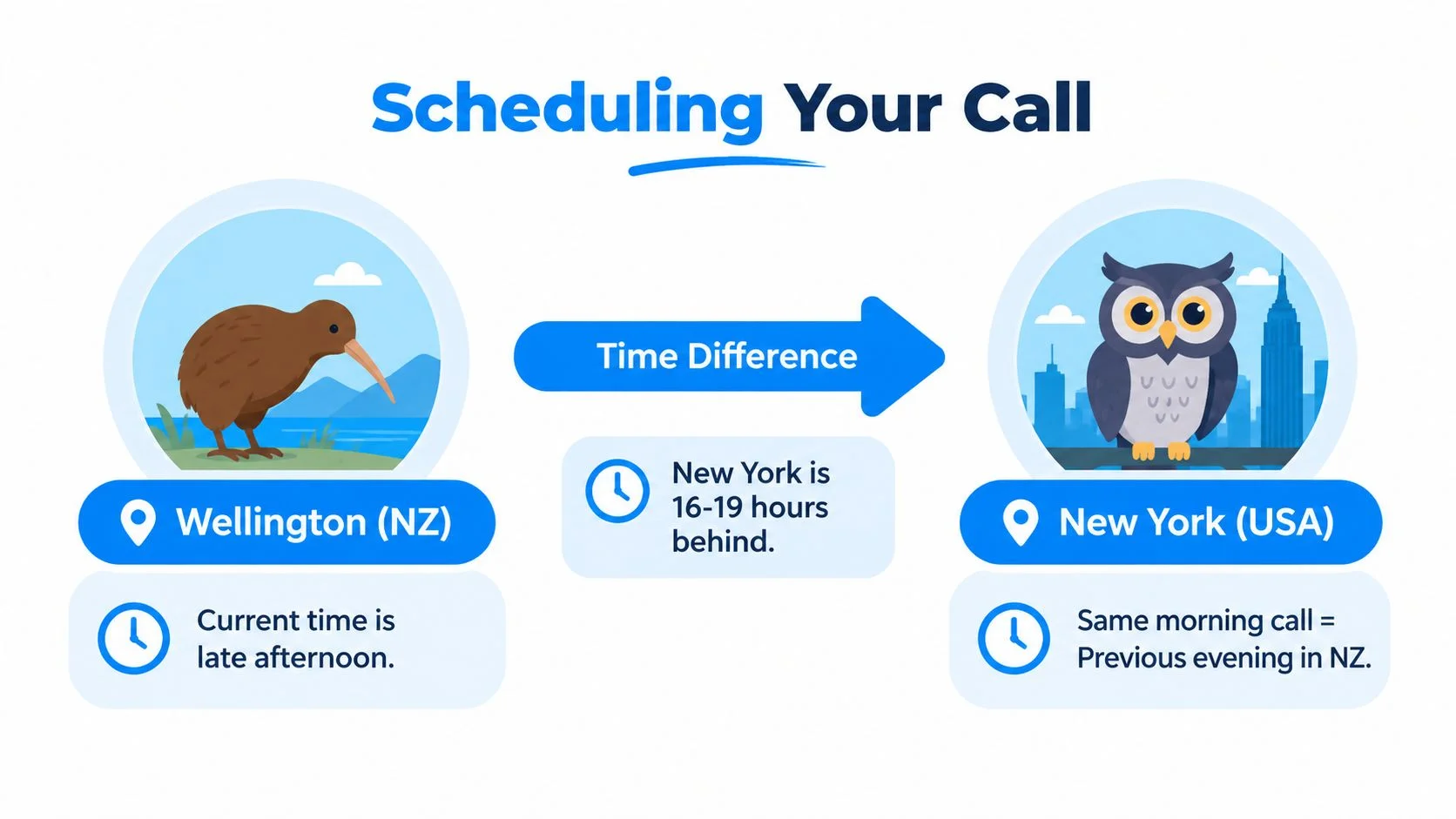
New Zealand is usually 17 to 23 hours ahead of U.S. time zones, depending on the season and the U.S. zone, so a call made during your daytime may reach someone in the Americas on the previous calendar day. This time-zone guide for calling between New Zealand and the United States explains why the date difference causes so many missed calls.
The practical consequence is easy to miss. A New Zealand morning can be the previous afternoon or evening in the United States, while a New Zealand evening may be the U.S. morning or earlier part of the day. Don't rely on the clock alone. Check the recipient's city and calendar date before you call.

Use a simple scheduling rule
For a business call, ask the U.S. contact for their preferred local window, then convert that time to New Zealand time rather than guessing. For family calls, start with a period that is late afternoon or early evening for them, and confirm the date in a message first.
A useful decision sequence is:
- Identify the U.S. city or time zone.
- Check the current difference, especially around seasonal clock changes.
- Convert the recipient's available hours to NZ time.
- Choose the calling method after you know the duration and connection available.
The best time to call tool can help compare locations before you dial. Scheduling first also avoids paying for unanswered attempts, particularly when your service bills calls by the minute or rounds a connected call up to the whole minute.
Making Your First Browser-Based Call
A browser-based call is straightforward: open the service, sign in, add credit if required, enter the complete U.S. number, and start the call. The recipient answers their normal mobile or landline, so they don't need an app, browser, account, or special device.

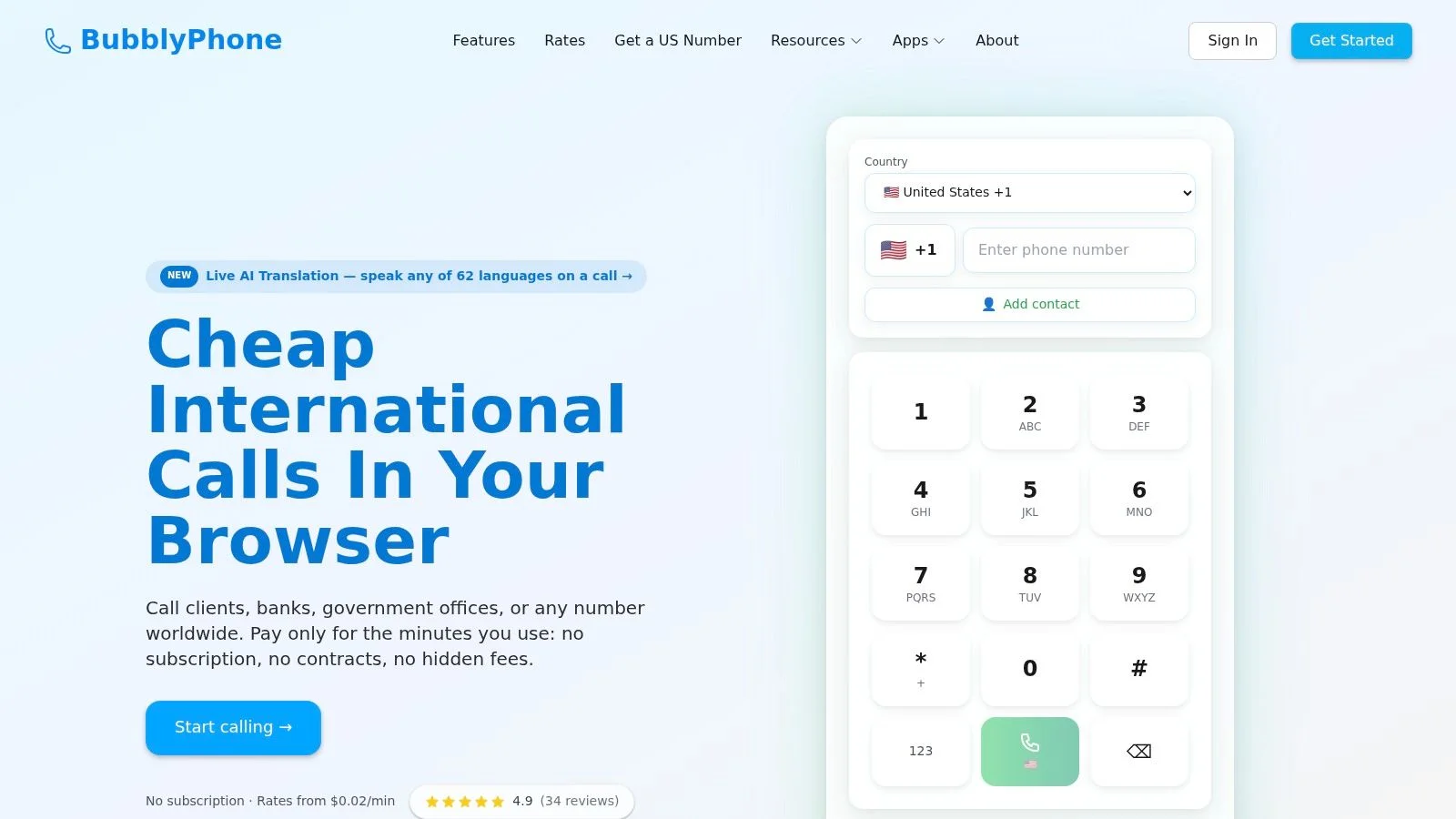
Start by opening a modern browser and allowing microphone access when prompted. If the browser asks which microphone or speaker to use, select the headset or built-in device you prefer. A headset usually reduces echo, especially if you're calling from a shared room.
Enter the number in international format
Use the full U.S. number, beginning with +1, followed by the area code and local number. Don't enter a domestic New Zealand prefix, and don't omit the area code because the recipient happens to use a mobile.
Before you press the call button, check three things:
- The destination: It should show the United States or the correct country code.
- The number: It should contain +1 and the complete U.S. number.
- The rate: Review the current destination pricing before connecting, especially for a long conversation.
For a detailed walkthrough of the outbound process, use the guide to making outbound calls. It covers the practical browser permissions and dialing steps that matter when you're making the first call.
After the recipient answers, speak normally and watch the call timer if you're managing prepaid credit. Because billing is per minute and rounded up to the whole minute, ending the call when the conversation is finished avoids unnecessary additional time. Hang up through the browser interface, then check the call history if you need to confirm the destination or duration.
The main failure points are usually local rather than technical. A blocked microphone, unstable Wi-Fi, an incomplete number, or calling while the recipient is asleep can make a correct dialing sequence feel like a failed service. Test your microphone before the call, use the recipient's local time, and keep the complete number in international format.
This video gives a visual look at the browser calling flow:
For occasional calls, credits start at $5 and never expire. That lets you place a call when you need one without taking out a calling subscription, while the recipient still answers on a regular phone.
BubblyPhone lets you call U.S. mobiles and landlines directly from any browser, and the person you're calling needs no app or account. Credits start at $5 and never expire, so check the live rates and make your next New Zealand-to-USA call through BubblyPhone.