Calling USA from Japan: Codes, Times, and Smart Options
Table of Contents
- What each part means
- Validate the destination before dialing
- Mobile plans and roaming
- Browser calling
- The offset changes by destination
- Work backward from the recipient's window
- Use a simple cost-control routine
- Four scenarios create most failures
- App calling has a recipient problem
- Prepare the recipient
- Leave a useful voicemail
- Why does the call fail even with +1?
- Why does the call go straight to voicemail?
- Can I call from a hotel or airport phone?
You're in Tokyo, need to reach a U.S. mobile or landline, and the usual advice gives you only a string of digits. Calling the USA from Japan is straightforward, but the actual problems come afterward: choosing a cost-controlled connection, avoiding Wi-Fi calling failures, reaching someone at a reasonable hour, and making sure your caller ID doesn't look suspicious.
The Dialing Format From Japan to the United States
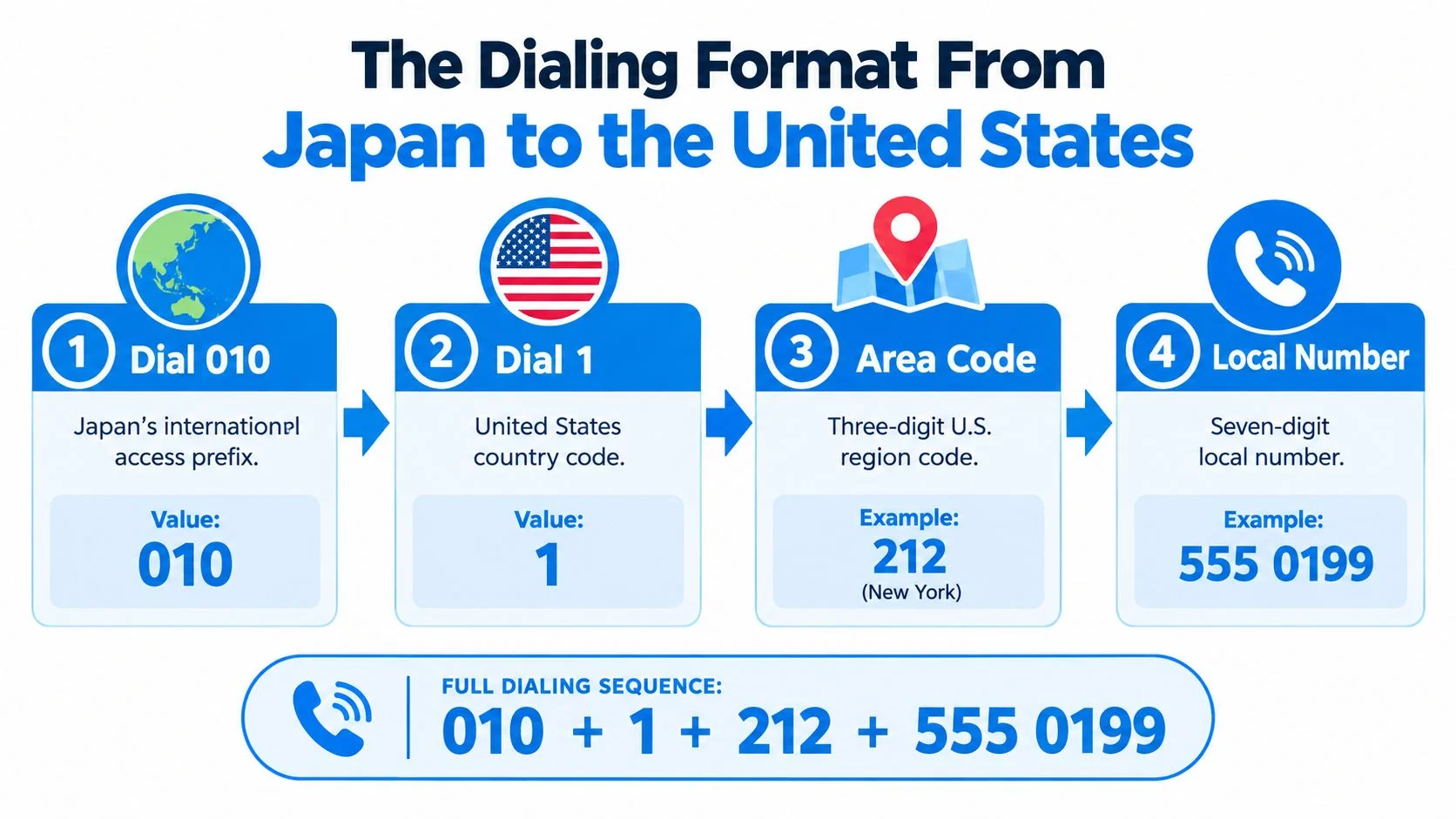
To call a U.S. number from Japan, dial 010 + 1 + the complete 10-digit U.S. number. On a mobile phone, use +1 followed by the area code and seven-digit local number instead.

What each part means
- 010 is Japan's international access prefix. It tells the Japanese network that the call is leaving the country.
- 1 is the United States country code under the international E.164 numbering system.
- The remaining 10 digits are the U.S. number, made up of a three-digit area code and a seven-digit subscriber number.
For example, a New York number written domestically as (212) 555-1234 becomes 010-1-212-555-1234 from a Japanese phone, or +1-212-555-1234 in mobile international format. The ITU numbering guidance for international calls confirms the distinction between an international access prefix, a country code, and the national number.
The plus sign acts as the mobile-friendly replacement for the international access code. Don't type both. Use either 010-1... or +1..., not 010-+1....
U.S. numbers don't normally have a domestic trunk zero to remove. That differs from Japanese numbers. A Japanese mobile number such as 090-1234-5678 becomes +81-90-1234-5678 when called internationally, while a U.S. number keeps its area code after +1. The same format reaches ordinary U.S. landlines and mobile phones.
Validate the destination before dialing
Count the digits after country code 1. There must be exactly 10 digits, including the area code. An omitted area-code digit, an extra domestic prefix, or a number entered as though it were Japanese can cause the call to fail.
Don't assume every U.S. number accepts international calls. Toll-free and special-service numbers may not connect from abroad, even when the country code is correct. If a number fails, look for the organization's international contact number, an ordinary geographic number, a secure web form, or a callback option. Japan's national tourism authority also notes that Japanese toll-free numbers cannot be called from outside Japan, and direct-dial overseas facilities at public phones aren't widespread. Its telephone guidance for international visitors is useful when you're dealing with hotel, airport, or public-phone limitations.
For browser calling, enter the number as +1 followed by 10 digits, check the displayed destination, and only then place the call. A clear explanation of international number formatting is also available in this guide to the U.S. country code.
Choosing How to Place the Call
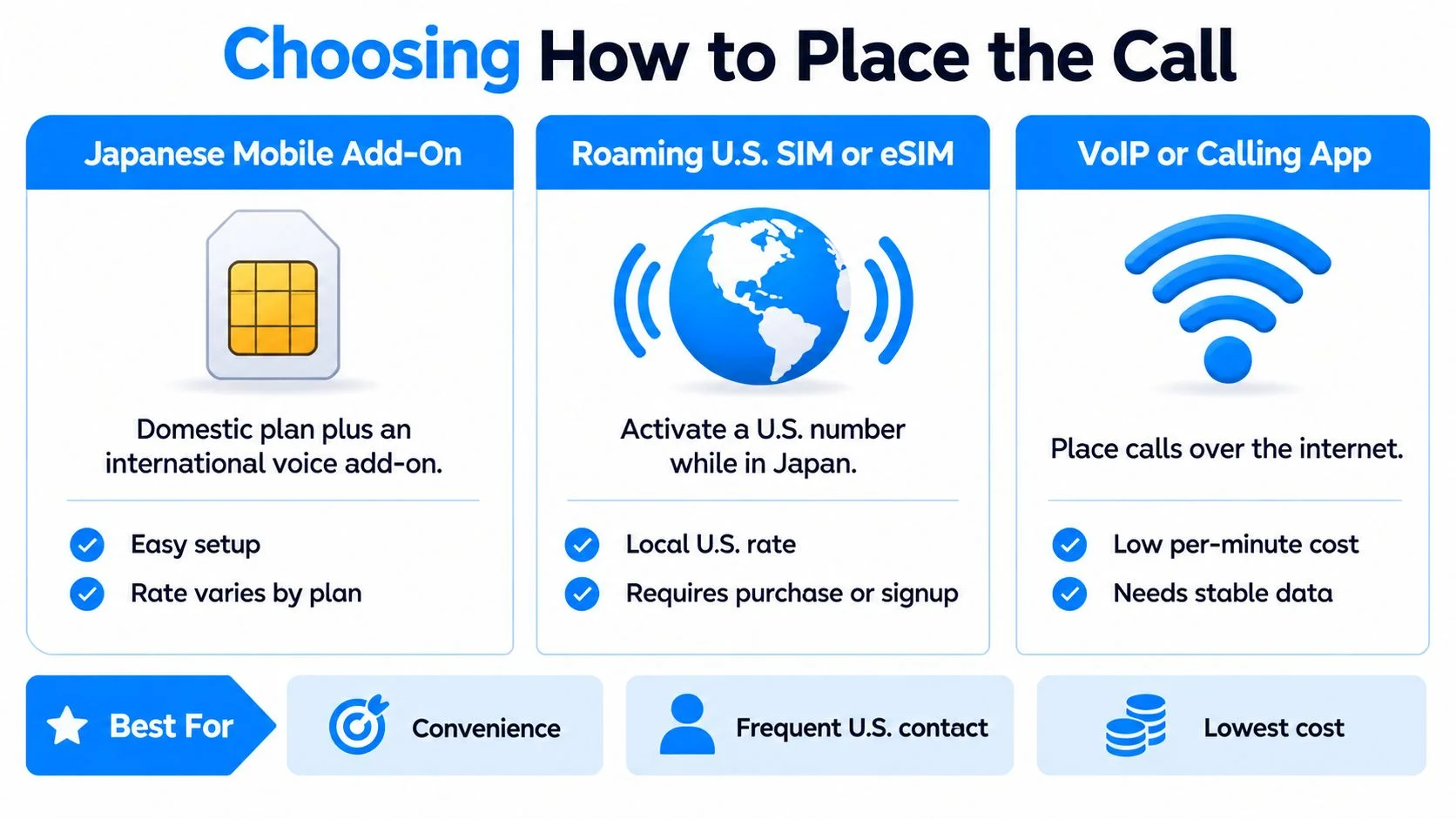
The best calling method depends on how often you call and whether you need predictable billing. A Japanese mobile plan is convenient, but a browser dialer is often easier for one-off calls because it doesn't require a special SIM, a compatible add-on, or an app on the receiving side.

Mobile plans and roaming
A Japanese mobile plan keeps everything on one device, which is useful when you need your normal number for authentication or callbacks. The downside is that the international voice price depends on the plan, add-on, destination type, and billing rules. Check the provider's live international-rate table before calling instead of assuming your domestic plan covers overseas voice.
A roaming U.S. SIM or eSIM can give you a recognizable U.S. number, but activation and registration can become the main obstacle. You may also need to manage a separate balance, data connection, and authentication process. It makes sense for frequent U.S. contact, not necessarily for a single family or customer-service call.
Hotel phones and Japanese landlines are familiar, but they're poor default choices. Direct-dial international calling may be unavailable, and hotel billing can be difficult to verify before you place the call. Airport and hotel phones also aren't widespread as dependable overseas-call facilities.
Browser calling
A browser-based service can connect to an ordinary U.S. landline or mobile while the recipient uses their regular phone. The caller sees the applicable destination rate before dialing, and the call uses pay-as-you-go credits rather than a recurring calling subscription. BubblyPhone works through browser calling and uses enterprise-grade global carrier infrastructure, which makes it a practical carrier-neutral option when you don't want to change SIMs or ask the recipient to install software.
For teams designing phone workflows rather than making one personal call, this voice call setup guide provides useful background on organizing calling channels and call handling.
Time Zones and the Best Window to Call
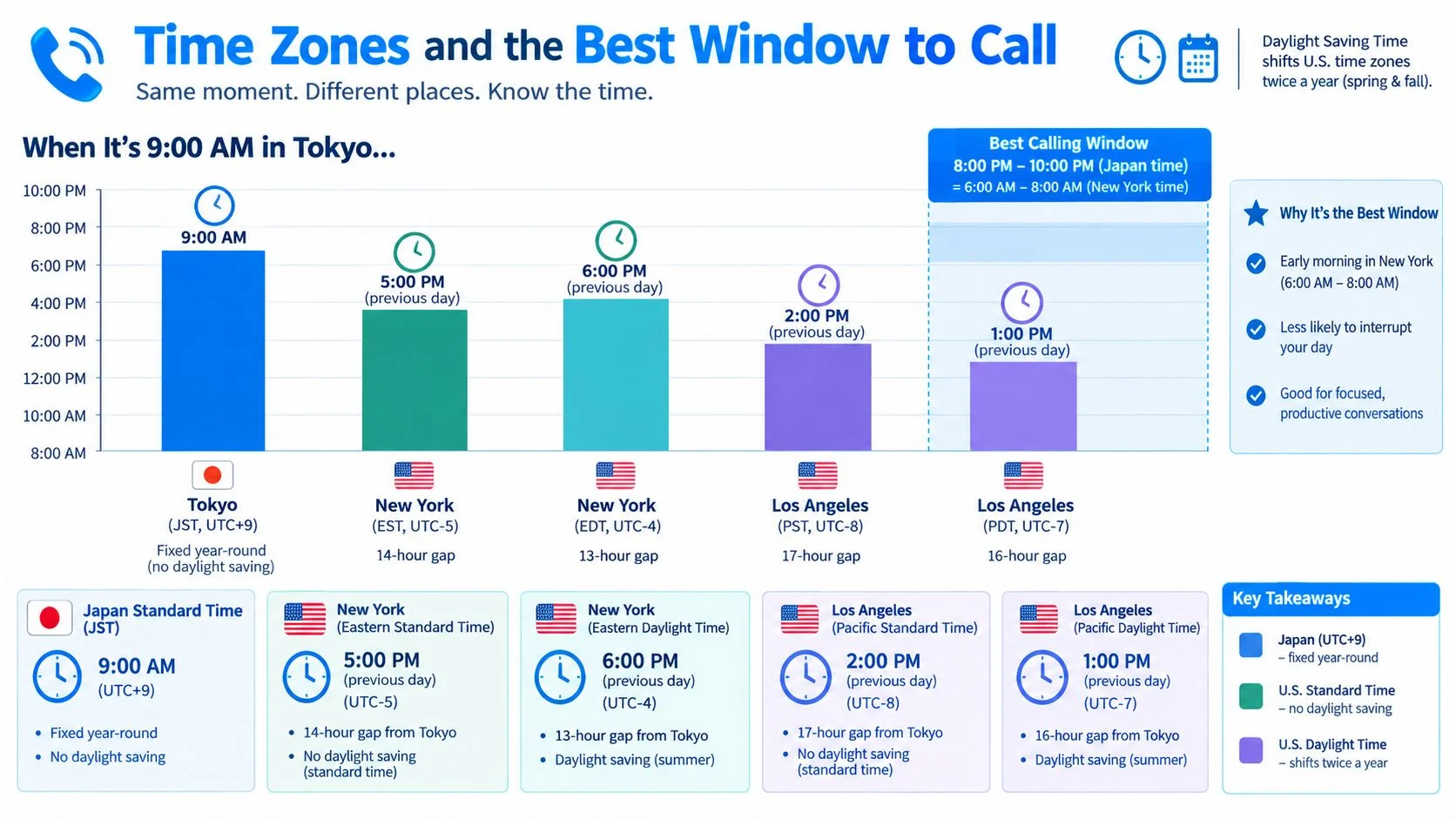
Japan Standard Time is UTC+9 year-round, while the United States spans several time zones and many locations change clocks seasonally. Don't schedule from a generic “U.S. time” assumption. Use the recipient's city, state, or area code.

The offset changes by destination
Japan remains on the same clock throughout the year. U.S. daylight-saving changes can reduce the gap by one hour during the relevant period.
The Japan National Tourism Organization's time-zone reference lists New York as 14 hours behind Japan, Chicago as 15 hours behind, and Los Angeles as 17 hours behind in the listed standard-time examples. Those figures are useful, but confirm the seasonal status of the destination before a business call.
Work backward from the recipient's window
Start with the U.S. local time the recipient has approved, then convert it into JST. A 9:00 a.m. to 5:00 p.m. Eastern business window generally corresponds to 10:00 p.m. to 6:00 a.m. JST during the daylight period and 11:00 p.m. to 7:00 a.m. JST during standard time. Pacific business hours move later in Japan, often making evening or overnight calls unavoidable.
The date is the common trap. At 9:00 a.m. in Tokyo, it can be 7:00 p.m. the previous day in New York under a 14-hour difference, 6:00 p.m. in Chicago, or 4:00 p.m. in Los Angeles. A Tuesday morning call in Japan may therefore be a Monday call in the United States.
Use a best time to call calculator, then confirm the local date with the recipient. For recurring work, put both JST and the recipient's local time in the calendar invitation.
If your calls involve distributed support or customer operations, time-zone alignment also affects staffing and handoffs. This overview of bilingual nearshore solutions offers relevant planning context for teams serving customers across regions.
Controlling Cost Without Surprise Bills
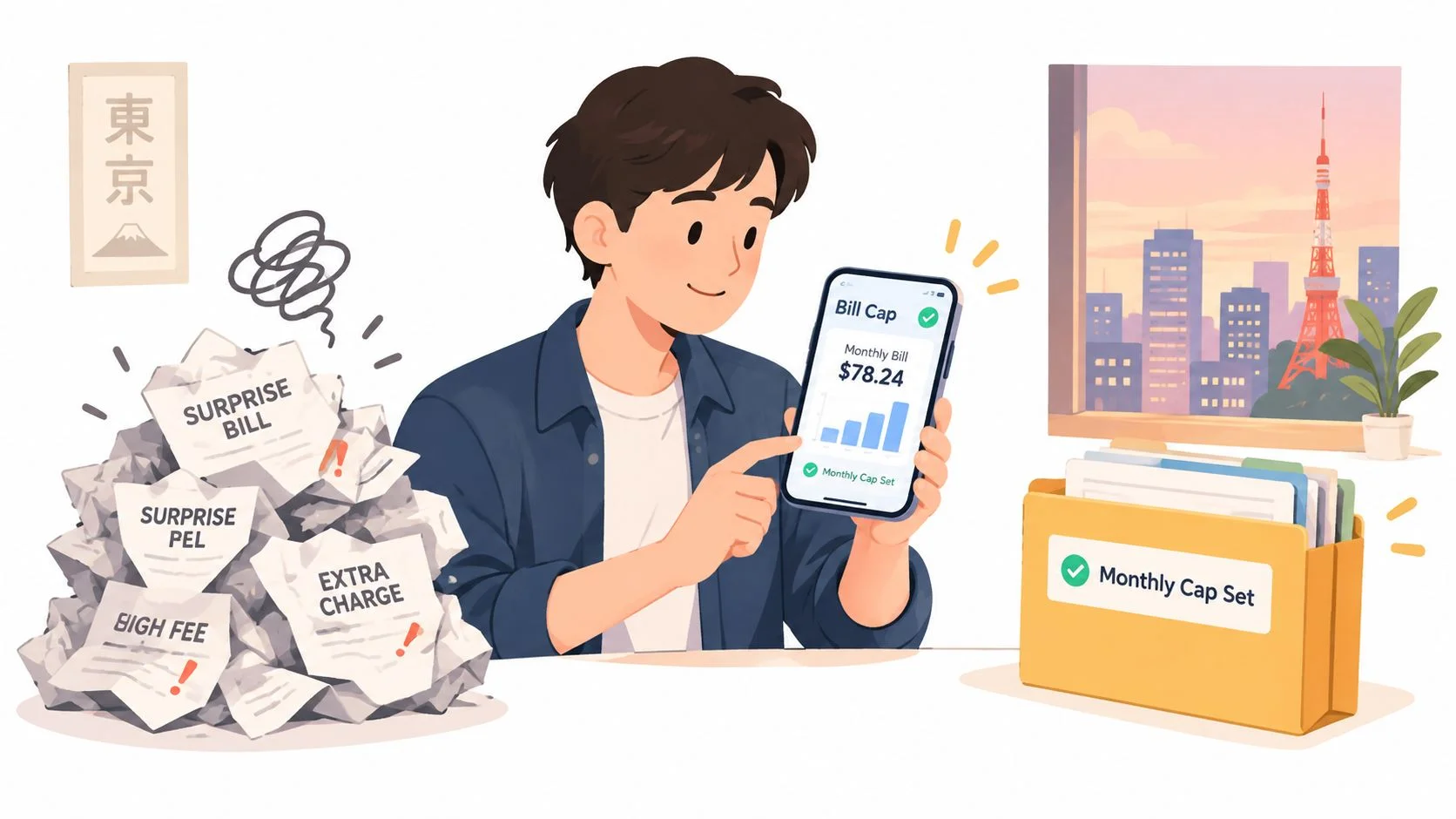
Predictability matters more than a headline rate. Before calling from Japan, check the live international rate, confirm the destination, and choose a billing method that doesn't impose a recurring commitment for occasional use.

International calling has always been sensitive to market structure and pricing. During the earlier KDD monopoly period, a three-minute peak-hour call from Japan to the United States cost more than $15, according to the New York Times' report on Japan's international-call price war. By October 1989, new entrants had begun activating international connections, and some Japan-to-U.S. calls were as much as 20% cheaper than calls in the opposite direction, showing how provider structure can affect the final bill.
Use a simple cost-control routine
- Check the live destination rate. Look up the exact U.S. number type before dialing. Geographic, mobile, toll-free, and special-service destinations may route differently.
- Prefer pay-as-you-go for occasional calls. Prepaid credits let you set a spending boundary without signing up for a recurring calling plan.
- Confirm the number on screen. A wrong area code or an accidental special-service destination can turn a formatting mistake into a charge.
- Track whole-minute billing. Calls billed by whole minutes, rounded up, should be planned around the expected duration rather than ended at an arbitrary second.
- Avoid minimum commitments. A low advertised rate can lose its value if the service adds a connection fee, minimum balance, or unused monthly allowance.
A browser dialer with transparent pricing can be easier to audit than a roaming bill that arrives after travel. BubblyPhone uses prepaid credits, bills calls by whole minutes rounded up, and doesn't require a calling subscription. Credits start at $5 and never expire, while the optional dedicated-number plan is a separate recurring product. Check the call cost calculator and the current destination table before placing the call.
When Wi-Fi Calling and Carrier Apps Work and When They Don't
“Just use your phone” isn't a complete plan for calling the United States from Japan. The result depends on your number, roaming status, hotel network, Wi-Fi-calling setup, and whether the recipient has the same calling application.
Four scenarios create most failures
A Japanese mobile plan may allow international voice, but the destination rate can differ from domestic calling. Some plans require an international add-on, and a carrier may block the call until the account feature is enabled.
A U.S. plan with international roaming can preserve your U.S. number, but roaming voice charges may apply by minute. Confirm the plan's current treatment of calls made from Japan, not just calls received there.
Wi-Fi calling from a Japanese hotel can work, but don't rely on it without testing. The feature may need to be enabled before travel, and the device may need to complete carrier authentication or emergency-address checks. A hotel network can also interfere with the authentication handshake or voice traffic.
One current U.S. carrier policy states that Wi-Fi calls to U.S. numbers are free under its international-roaming policy, while calls to non-U.S. numbers may be charged separately. A Japanese mobile provider also publishes U.S. voice charges that vary by service and destination context. The practical lesson is simple: Wi-Fi calling is a policy feature, not a universal free pass. Check the live terms before dialing.
App calling has a recipient problem
Separate calling apps can work well when both people use the same client and have stable data. They become awkward when you're calling a customer, hotel, bank, landlord, or relative who has no reason to install another app. You also need to confirm how the call presents caller ID and whether the recipient can return it.
A carrier-neutral browser fallback avoids that dependency. The caller enters the U.S. number, sees the applicable rate before connection, and reaches an ordinary landline or mobile without requiring the recipient to install an app or create an account.
Caller-ID Trust, Voicemail and the Callback Problem
A legitimate call from Japan can still look risky to a U.S. recipient. Arrange the call first, identify yourself clearly, and keep your caller ID consistent whenever possible.
Prepare the recipient
A small business calling a U.S. supplier should send a short email or message first with the planned time, caller's name, and expected purpose. That message gives the recipient a reason to answer an unfamiliar international number and reduces the chance that the call looks like automated traffic.
The FCC treats foreign-originated spoofing as a regulatory concern, and U.S. providers may block traffic associated with foreign-originated calls that fail required robocall-mitigation conditions. That doesn't mean every legitimate Japan-originated call will be blocked, but it does mean you shouldn't promise that any service will bypass filtering.
Families face the same issue in a different form. A parent in Japan may call a U.S. family member without warning, see the call go straight to voicemail, and redial repeatedly. Repeated one-ring attempts resemble the Wangiri callback scam pattern, where a recipient is tempted to return an unfamiliar international call and may face inflated charges. Consumer guidance on this scam is summarized by the Miami Herald's explanation of one-ring calls.
Leave a useful voicemail
If the call reaches voicemail, leave your name, why you're calling, and a verified callback channel. Don't tell the recipient to call a number they can't recognize or verify. Say when you'll be available, then follow up by message rather than making a series of short attempts.
Caller ID can show a Japanese number, a U.S. number, a masked number, or an asserted identity that a downstream carrier flags. Ask your calling service what presentation it supports, and don't assume the recipient will see the number you expect. Consistent presentation makes repeat business calls easier to recognize, but it can't override every carrier's filtering decision.
Practical rule: Send the message before the call, leave one informative voicemail if needed, and give the recipient a trusted way to verify you.
Quick Fixes and Common Questions
Use 010 + 1 + the full 10-digit U.S. number from Japan, or +1 plus the same 10 digits on a mobile. Most failed calls come from a wrong number format, an unsupported destination, a timing mistake, or a connection method that wasn't enabled before travel.
Why does the call fail even with +1?
Check that the number has exactly 10 digits after 1. Toll-free and special-service U.S. numbers may not accept international-originated calls, so search for an international customer-service number or an ordinary geographic alternative.
Why does the call go straight to voicemail?
The recipient may not recognize the caller ID, the U.S. provider may filter foreign-originated traffic, or the person may be unavailable. Arrange the call by message, leave your name and a verified callback channel, and avoid repeated one-ring attempts.
Can I call from a hotel or airport phone?
Sometimes, but direct-dial overseas facilities aren't widespread. Hotel surcharges and availability can also be unclear. A browser-based fallback is safer for an ordinary U.S. landline or mobile because you can check the destination before connecting.
Open a browser, enter the U.S. number in +1 format, verify the displayed destination, and place the call. The person on the other end only needs their phone to ring, with no app or account required on their side.
BubblyPhone lets you call a regular U.S. landline or mobile from any browser, with whole-minute billing, prepaid credits starting at $5, and credits that never expire. Open BubblyPhone, check the live rate, and make the call without asking the recipient to install an app or create an account.