How to Call Spain from United States in 2026

Table of Contents
You're in the United States, your relative in Madrid is waiting, and the phone screen is asking whether to use 011, +34, or both. To call Spain from the United States, dial 011 34 followed by all nine digits of the Spanish number from a conventional phone, or use +34 followed by those nine digits on a smartphone or internet dialer.
The dialing pattern is easy once you know what each part means. The details that cause failed calls are usually elsewhere: an extra zero, an incomplete Spanish number, an incorrect caller ID, a rate difference between mobiles and landlines, or calling while the recipient is unavailable because of the time difference. If you're also planning a trip, practical local resources such as this guide to luxury shopping in Spain can help with planning beyond the phone call.
The Quick Dial Sequence From the United States
From a conventional U.S. phone, dial 011 + 34 + the complete nine-digit Spanish number. From a smartphone or internet dialer, enter +34 + the same nine digits. Don't use both formats together, so never dial 011 +34... when the device already accepts the plus sign.
The sequence breaks down like this:
- 011 tells a conventional U.S. phone system that the call is international.
- 34 identifies Spain as the destination country.
- The nine-digit Spanish number identifies the recipient's mobile, landline, or other assigned service.
For example, a Spanish number beginning with 6 remains a nine-digit number after 34. The international form looks like +34 6XX XXX XXX, while a conventional U.S. dialing interface uses 011 34 6XX XXX XXX.
What you need before dialing
Have the recipient's complete Spanish number ready, including its first national digit. You don't need to add a Spanish international prefix, and the person in Spain doesn't need to dial anything special to answer. Their phone receives the call normally if the number is valid and the network accepts the call.
A smartphone usually handles +34 more reliably than 011, especially if you travel or switch between networks. Browser dialers commonly accept the international plus format too, but check the number before pressing call because a misplaced zero can send the call toward an invalid destination.
The rest of the process is practical rather than complicated. You'll want to identify whether the number is mobile or geographic, check the current rate for that number type, choose a sensible calling time, and understand why a correctly formatted call can still be blocked under Spain's caller-ID rules.
What Each Part of the Number Means
The sequence is short, but each segment serves a different routing job. 011 is the U.S. international exit code, 34 identifies Spain, and the remaining digits form the complete Spanish national number. The FCC international calling guidance describes 011 as the access prefix used before a destination country code and subscriber number on conventional international calls.
The three segments
011 tells a traditional U.S. phone system to leave domestic dialing and request an international route. Use it only when the calling interface expects that exit code. Smartphones and browser dialers often accept the plus format instead.
34 is Spain's country code. It is assigned under the ITU's E.164 numbering system and administered nationally by Spain's telecommunications regulator, the CNMC. After the network reads 34, it can route the call toward Spain before processing the national number.
The final nine digits are the complete Spanish number. Spain adopted a closed nine-digit numbering plan on 4 April 1998, so callers provide all nine digits for mobile, geographic, and other assigned services. The Spanish government's numbering plan documents that structure.

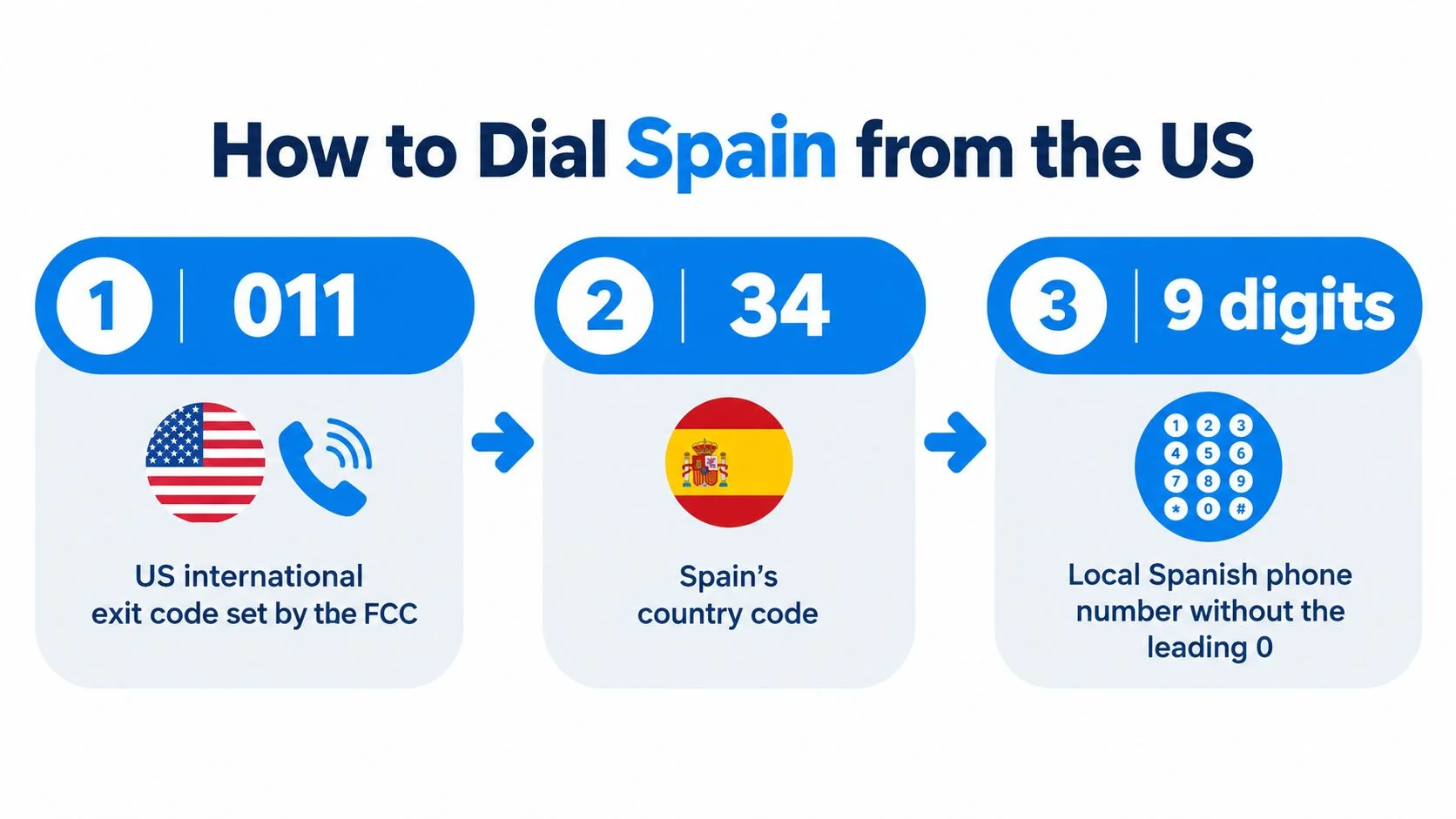
The opening Spanish digit belongs to the number. Keep a leading 9 on a geographic destination and a leading 6 on a mobile destination. Do not treat either digit as a removable local area prefix.
On a smartphone or browser dialer, +34 replaces the local international exit code. It signals the device to use the appropriate international access method from the calling location. This Spain country code guide provides a useful format reference.
Use exit, country, complete number as the check: 011 when required, 34, then every Spanish digit.
Reading a Spanish Number Before You Call
Look at the first digit of the nine-digit Spanish number to make a quick classification. Spanish mobile numbers generally begin with 6 or 7, while geographic numbers commonly begin with 8 or 9, so that opening digit belongs to the destination and must stay in place.
A Madrid geographic number is commonly written in a form such as +34 91 XXX XX XX. The 9 at the beginning of the national number is part of the Spanish destination. Don't strip it out because it resembles a U.S. area code.
A Spanish mobile example is +34 6XX XXX XXX. The 6 is also part of the nine-digit national number. The same principle applies to mobile ranges beginning with 7, which should be treated as mobile destinations rather than shortened numbers.
Compare the formats directly
The error that causes the most confusion is adding a zero after the country code. If a contact is stored as +34 0..., check the original number before calling. Spain's international format normally uses +34 followed directly by the nine national digits, without a domestic trunk prefix.
Practical rule: Normalize the number before dialing. Remove spaces, parentheses, and hyphens for validation, confirm that nine national digits remain, then restore readable spacing if you want it for your contacts.
Number type also matters when you check availability and pricing. A mobile and a geographic destination can follow different routing or rate categories, even though both use the same +34 country code. If a service reports an unsupported range, record that result separately from your number validation, because a valid-looking number can still be unreachable for operational reasons.
Checking Transparent Rates Before You Dial
Check the live rate table before placing the call, and look at the destination type rather than relying on a general “Spain” label. Mobile and landline calls can be listed separately, so the number's opening digit helps you choose the relevant category.
A sensible rate check takes less than a minute:
- Select Spain: Confirm that the country field is Spain, not a similarly named destination.
- Identify the number type: Compare the mobile and landline or geographic entries when both are available.
- Review the billing rule: Confirm whether calls are billed by the minute and whether the balance expires.
- Check the live price: Use the current Spain calling rates, since destination pricing can change and shouldn't be guessed from an old article.
Calls through BubblyPhone are billed per minute and rounded up to the whole minute. Credits start at $5 and never expire, and no subscription is required for outbound calling, as stated on the international calling rates explanation. The optional dedicated-number plan is the only recurring product, so making an outbound call doesn't require enrolling in a calling subscription.

The useful comparison isn't only the advertised rate. Look at how the service bills short calls, whether credits remain available for later use, and whether the recipient needs a separate app or account. For a family call, direct access to a regular phone can matter more than forcing both people onto the same platform.
The recipient doesn't need to install anything or create an account to receive a call to a regular Spanish landline or mobile. That removes a common setup problem, especially when you're calling an older relative, a business contact, or someone who only wants to answer their normal phone.
Spain's 2025 Caller-ID Rules and the Silent-Call Trap
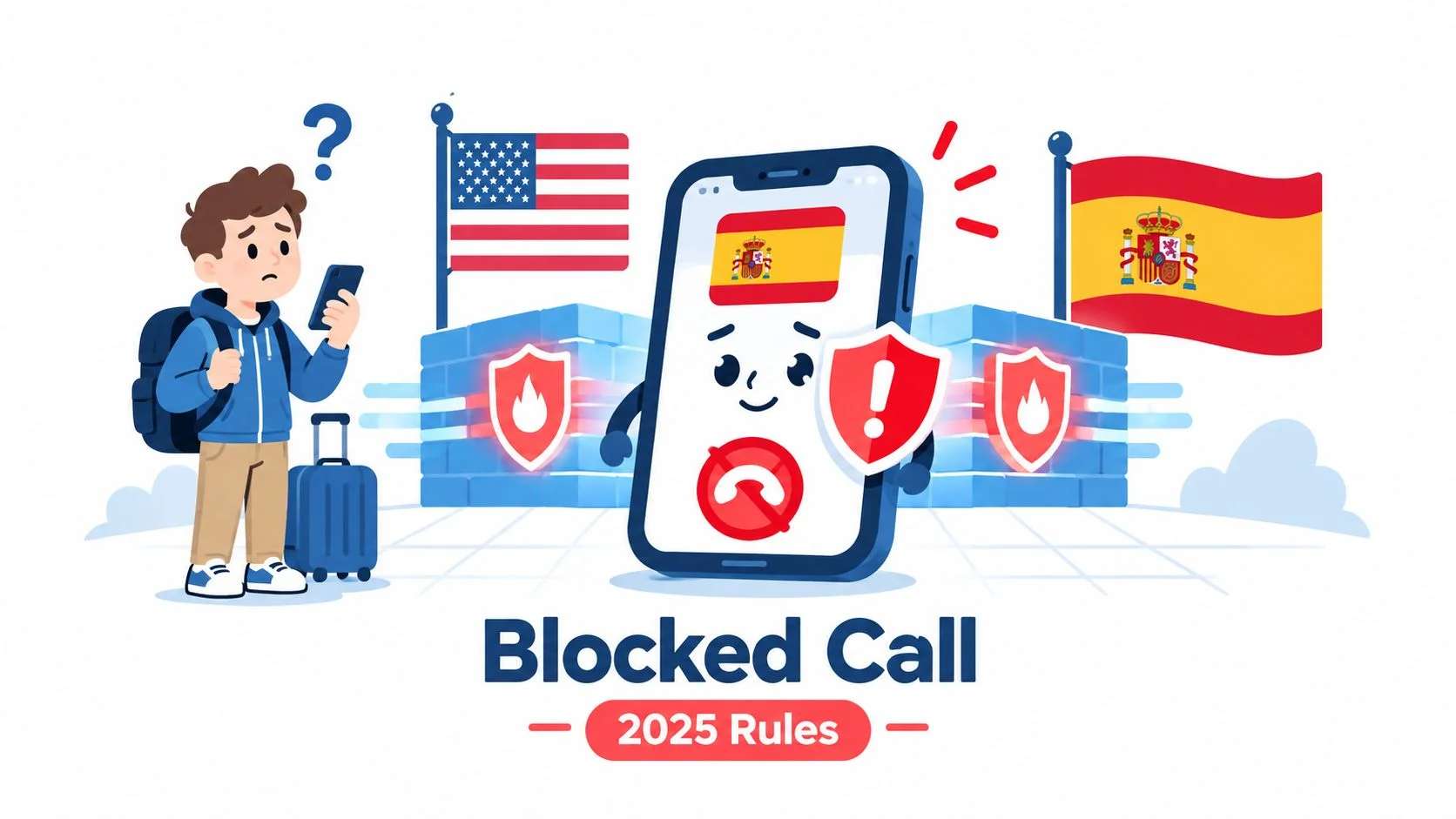
A correctly dialed call can still fail if the displayed caller ID looks deceptive. Spain's 2025 anti-scam rules require operators to block calls and SMS from abroad that falsely present a Spanish number, while allowing an exception for customers who are roaming, according to the Spanish government's 2025 telecoms announcement.

Three caller-ID situations
A legitimate international call showing a U.S. number is normally identifiable as an overseas call. The Spanish recipient sees the actual originating identity rather than a made-up Spanish number. That may look less familiar, but it's more consistent with a genuine call from the United States.
A Spanish customer roaming abroad may still present a Spanish identity because the customer's normal service is being used while traveling. The rules distinguish this legitimate roaming situation from an overseas caller falsely claiming to be Spanish.
A spoofed Spanish caller ID creates the silent-call risk. The call may be correctly formatted at the dialing level, yet the receiving network can reject it because the displayed identity appears to impersonate a Spanish number.
Commercial callers face an additional constraint. Commercial calls from mobile-number ranges are restricted under the newer rules, and permitted commercial calling should use geographic, specially assigned, 800, or 900 numbers rather than an unsuitable mobile identity.
Use accurate caller identification. Don't make a U.S. call look like it originates from a Spanish number unless that identity is genuinely yours and permitted for the call.
This is the practical distinction many basic dialing guides miss. The question isn't only whether you entered 011 34 or +34 correctly. You also need to ask whether the recipient's network will trust the caller identity and deliver the call.
Quick Fixes for Connection and Audio Problems
Start with the dialing string, then check timing, connection quality, and routing. Most failed calls become easier to diagnose when you separate number validation, network delivery, and audio performance instead of treating every failure as a wrong number.

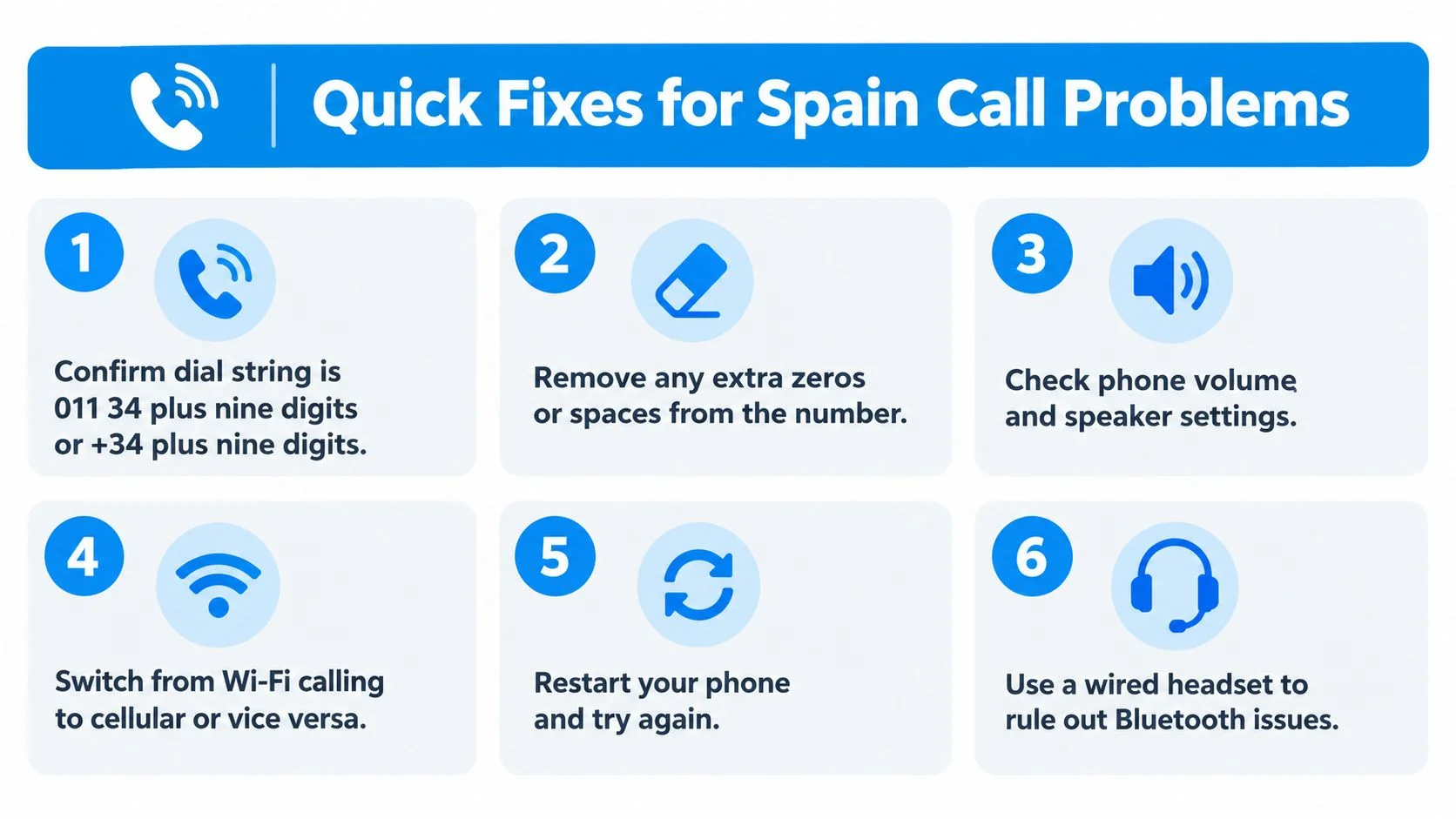
Run this checklist in order
- Confirm the format. Use
011 34plus nine digits, or+34plus nine digits. Don't combine the two. - Remove an extra zero. A leading
0after34usually indicates that a domestic format was copied into an international field. - Check the recipient's region and local time. Mainland Spain uses Central European Time in winter and Central European Summer Time during daylight saving time. The Canary Islands are one hour behind the mainland, as shown by the Spain time zone reference.
- Test the connection. Browser calls use your internet connection, so crowded Wi-Fi, weak signal, or active downloads can create delay, robotic audio, or dropped calls. Guidance on best practices for video calls also applies to keeping real-time browser audio stable.
- Check device audio. Confirm the browser has microphone permission, the correct speaker is selected, and the phone or computer volume is turned up.
- Separate routing from validation. A valid nine-digit number can still fail because the service doesn't support that range, account restrictions apply, caller ID is rejected, or routing is temporarily unavailable.
If the recipient never sees an incoming call, caller-ID rejection or destination support deserves attention. If the call connects but sounds poor, improve the local connection before changing the number. A wired headset can also help isolate Bluetooth or microphone problems.
Make Your First Call to Spain From a Browser
To call Spain from a browser, enter +34 followed by all nine Spanish digits, check the destination type and local time, then press call. The person answering a regular Spanish landline or mobile doesn't need an app or account.
A browser dialer is useful when you want to call from a computer without asking your family member or customer to install matching software. BubblyPhone supports calls to regular landlines and mobiles in Spain from a modern browser, with credits starting at $5 and never expiring, as described on its browser international calling page.
Before you call, copy the number into the international format, remove any extra zero, and verify the current Spain destination price in the live rate table. Since billing is rounded up to the whole minute, a short test call can confirm number validity, audio quality, caller-ID behavior, and recipient availability without committing to a recurring calling subscription.
Open the browser dialer, enter +34 and the nine Spanish digits, and place the call when the recipient is available.
Open BubblyPhone to call a Spanish landline or mobile directly from your browser. Credits start at $5 and never expire, and the person you're calling needs no app or account.