Receive SMS on a Virtual Phone Number: A Practical Guide
Table of Contents
A virtual phone number can receive SMS when a hosted service maps a real public number to an app, webhook, or browser inbox instead of a physical SIM. The number still follows the international numbering system, but whether a message arrives depends on its type, country, route, and the sender's acceptance of virtual numbers.
You may need this because a travel booking, supplier, family member, or online service is sending a text to a number you don't want tied to another handset. The useful mental model is a cloud mailbox for text messages, not a magical replacement for every mobile line. Ordinary alerts and business messages often fit well, while sensitive verification can fail or be rejected.
What a Virtual Phone Number Actually Is
A virtual phone number is a real, dialable number issued by a hosted provider and routed to software rather than a physical SIM. Incoming calls or texts can appear in a browser panel, mobile app, email workflow, or developer webhook, depending on how the account is configured.
A mobile line is normally associated with a SIM or eSIM in a particular device. A virtual number is associated with an account and its delivery settings. If you receive SMS on a virtual phone number, the message reaches the person who controls the hosted account, not necessarily the person holding a particular handset.

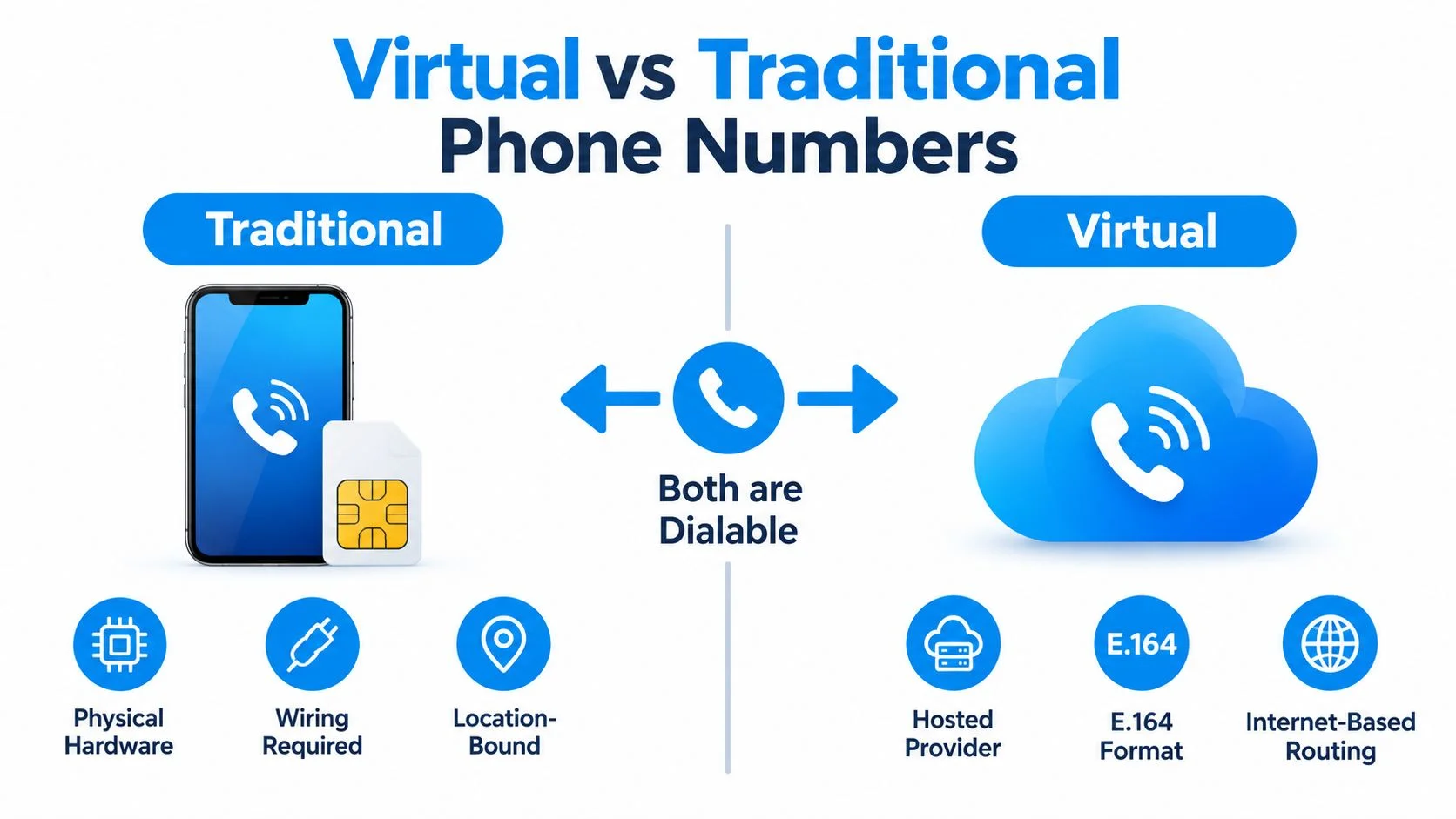
The number still needs to be valid within an international numbering plan. ITU-T Recommendation E.164 allows an international number to contain up to 15 digits, excluding the international dialing prefix, with a country code of one to three digits. Use the complete international form, such as a plus sign followed by the country code and subscriber digits, rather than adding a domestic trunk prefix. See this overview of a virtual phone number for the broader distinction between hosted numbers and device-based lines.
Virtual and mobile lines at a glance
A mailbox analogy fits better than a second-phone analogy. The number is publicly reachable, but the inbox is software-defined. That makes it convenient for travel, remote work, and business separation, while also making account security and number lifecycle management essential.
How Inbound SMS Reaches a Virtual Inbox
A text sent to a virtual number still starts its life on an ordinary mobile network. What changes is the last part of the trip. Instead of landing on a SIM inside one handset, the message is handed to a hosted service that maps the number to your account and then delivers it to the place you set, such as a browser inbox, an app view, an email forwarder, or a webhook.

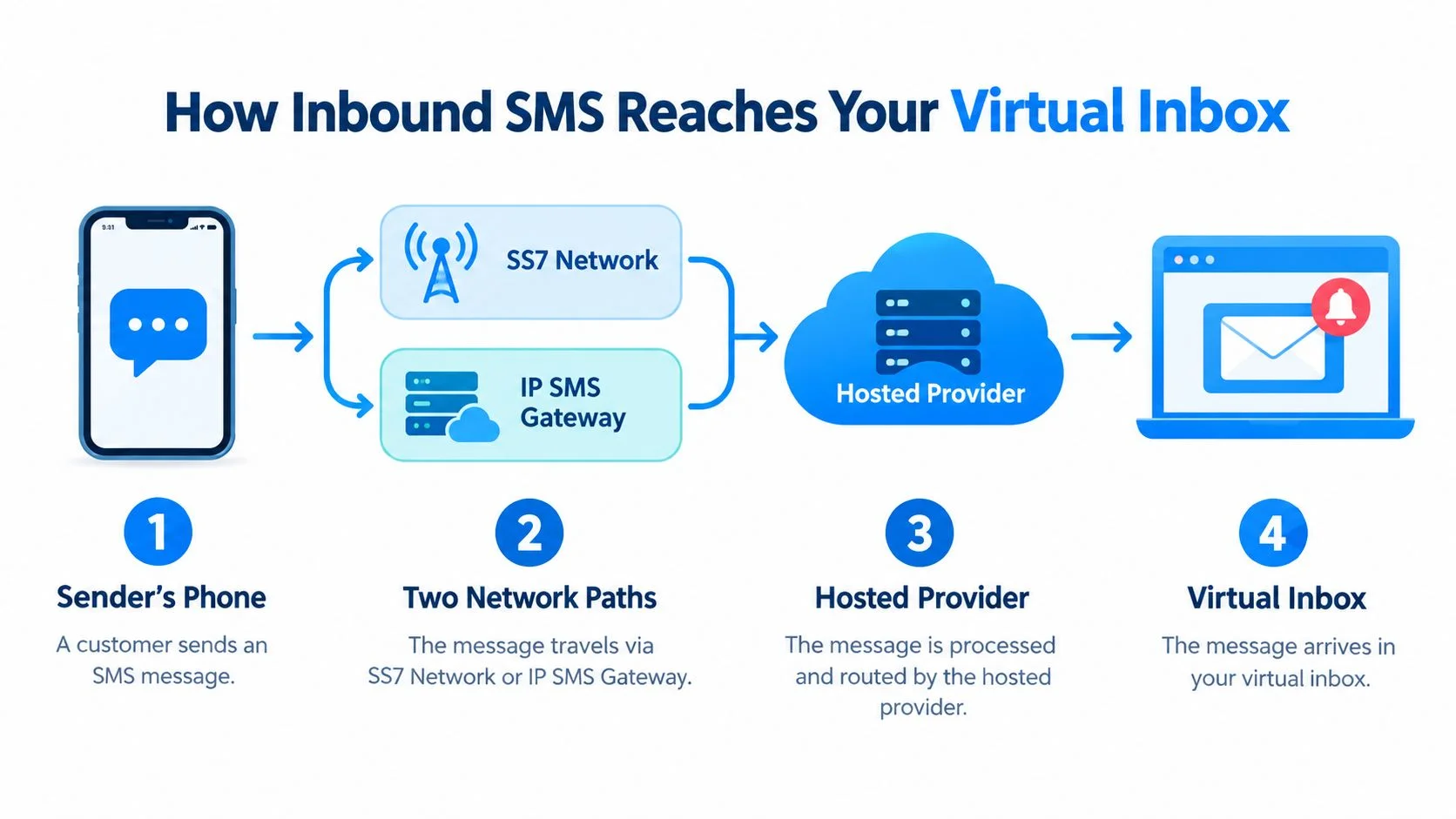
Postal redirection is the closest practical comparison. The sender writes to a public address. The delivery system only needs that address to be valid and routable. After that, the service responsible for the destination decides whether the message ends up in a front desk tray, a locked room, or a scanned digital archive. SMS routing works the same way. The originating network pushes the message toward the number, and the hosted provider decides which software destination receives it.
The route in practical terms
- The sender enters the number. A phone or application submits the SMS to the sender's carrier or messaging provider.
- The network interprets the destination. Country code, national numbering rules, and route data are used to decide where that message should go.
- A delivery route carries the SMS onward. Depending on the path, that can involve traditional telecom signaling or an IP-based SMS gateway.
- The hosted platform matches the number to an account. Its number inventory links the destination to the correct customer configuration.
- Your chosen endpoint receives the message. It appears in an inbox, is forwarded by email, or triggers a webhook.
The E.164 limit discussed earlier matters here in a very practical way. A missing plus sign, an added domestic trunk prefix, or the wrong country selection can send the message to a different destination or make the number invalid under the ITU-T E.164 numbering recommendation.
Capability also depends on the number and the route. Some numbers are voice-only. Some support inbound SMS. Some receive texts from one set of originating networks but not another, or are treated differently when the message is an OTP rather than a routine person-to-person text. That is why receiving SMS on a virtual number is never just an inbox question. It is also a numbering, routing, and policy question.
Common Use Cases That Work Well
Virtual numbers work best for routine inbound communication, where the message is useful but doesn't serve as the only proof of identity. Travelers, expatriates, remote workers, and small businesses can separate a communication channel without carrying another physical handset.

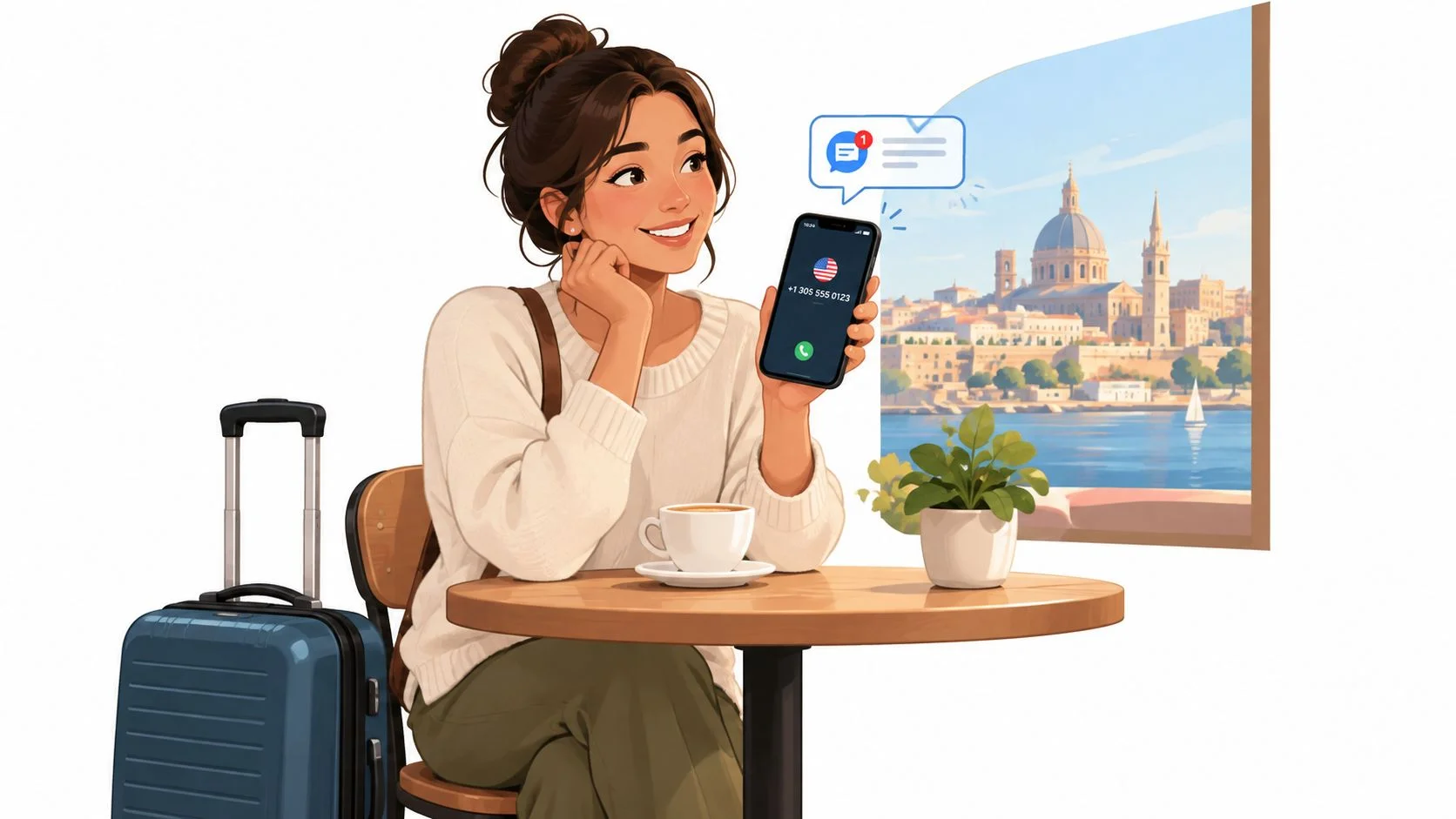
A traveler might use a dedicated number for a booking notice, a property manager's arrival instructions, or a message from a local service. The text appears in the hosted inbox while the traveler keeps a primary mobile line for personal use. That arrangement is useful when the user needs a separate destination, not a permanent identity credential.
A small business can publish one number for supplier updates and customer messages. Staff members can access the same inbox under controlled permissions, review message history, and connect incoming texts to an internal workflow. A remote worker might use the number for delivery coordination across time zones, while a family member uses it for practical check-ins.
Developers have a different use case. A webhook can pass an inbound message into a ticketing system, scheduling workflow, or internal alert process. The important distinction is that automation consumes the message as data, while a person reads it through a browser or application inbox.
After the number is provisioned, test it with an ordinary message before relying on it. A simple test from a separate mobile line can confirm that the destination is active, the country format is correct, and the expected inbox or webhook receives the event.
Here is a visual explanation of the everyday flow:
These use cases share a low-assurance profile. Appointment notices, travel updates, supplier replies, and non-sensitive alerts are usually more suitable than bank recovery codes, government access, or an account containing valuable personal data.
Why Some Numbers Do Not Receive SMS
A virtual number won't receive every SMS because it can accept calls. Delivery depends on the number's capability, country, regulatory environment, route, and the originating service's policy toward virtual or VoIP-assigned ranges.

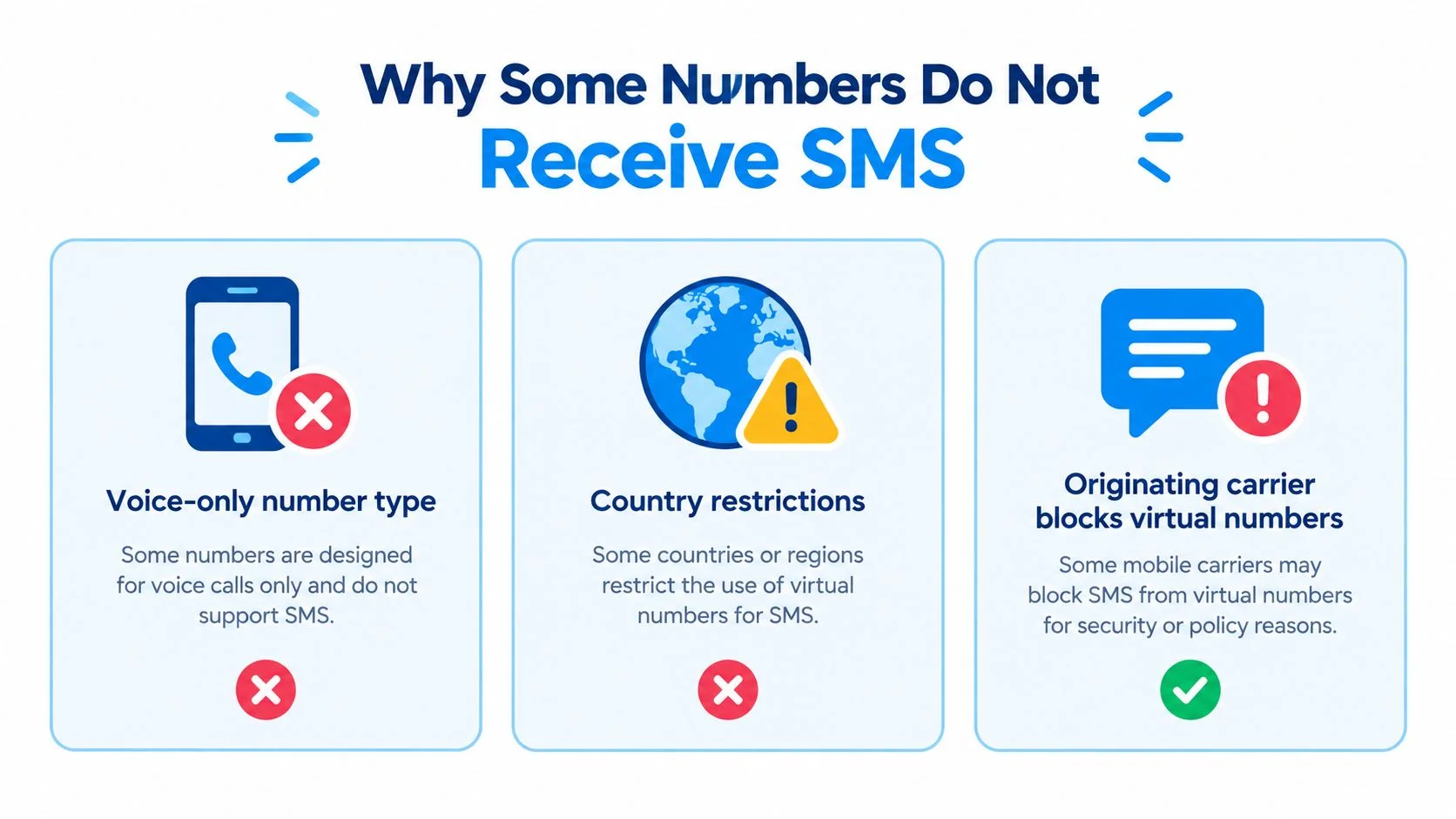
Three common failure points
- Number type: A voice-only number has no SMS termination capability. A number can be geographically valid and still be unable to accept texts.
- Country and regulatory rules: Some countries restrict commercial messaging routes or apply controls that affect which traffic a hosted service can terminate.
- Originating network policy: A sender may classify a destination as VoIP, shared, temporary, or otherwise unsuitable and block the message before it leaves the sender's system.
Verification platforms add another filter. Some accept only ranges they classify as mobile-network numbers. Others reject virtual numbers because automated account creation, fraud, or identity-check circumvention has been associated with those ranges. A legitimate user can therefore see a failed verification even when ordinary SMS delivery works.
The distinction matters: delivery failure means the message was sent toward the number but didn't complete the route. Sender-side rejection means the service refused the number before sending a code. Asking a provider to resend won't fix the second problem.
Test before publication
Before giving the number to customers, suppliers, or family, confirm that it has inbound-SMS capability for the intended country. Ask whether the number is dedicated or shared, whether messages from major originating networks are accepted, and whether the provider exposes delivery events or message identifiers. A virtual number checker can help organize these checks before you publish the number.
For production workflows, retain the sender, destination, timestamp, and provider message ID. These fields let support staff distinguish a bad destination, a blocked route, and an application error without guessing.
Where Received Messages Appear
Received SMS appears wherever the hosted service delivers it, usually a browser or application inbox, an email forwarder, or a webhook. Choose the surface based on whether a person needs to read messages casually or software needs to process them automatically.
Three delivery surfaces
A browser or in-app inbox is the simplest option for personal use, travel coordination, and occasional review. It keeps messages in one place and avoids building an integration. Its weakness is that access depends on logging in and checking the account unless notifications are enabled.
Email forwarding creates a searchable trail in an existing mailbox. That can help with accountability or offline reference, but it also copies sensitive content into another system. Set access controls and retention rules on both the number account and the email account.
A webhook sends each inbound event to an application endpoint. This suits ticketing, scheduling, alerting, and AI-assisted workflows. It also creates engineering duties: verify webhook signatures, use least-privilege credentials, reject replays, and prevent message content from being logged unnecessarily.
The receiving interface doesn't change the underlying trust level of the message. A code displayed in a polished browser inbox is still a code delivered through a number-based channel. The guide to receiving text messages can help you match the delivery method to your workflow.
Configuring a Dedicated Number Step by Step
To configure a dedicated receive-only number, choose a supported country and number type, activate inbound SMS, format the number correctly, test delivery, and set retention rules before sharing it.
Provision and format the number
- Choose the country for the intended use case. Select the country where senders are most likely to originate, not merely the country that looks familiar. Availability and routing vary by country.
- Confirm SMS capability. Check that the specific number supports receiving SMS. Voice capability alone isn't enough.
- Store the international format. Save the plus sign, country code, and national digits together. Don't prepend a domestic trunk prefix when entering the number into an international service.
- Label the number. Record its purpose, owner, provisioning date, and the accounts that use it. This prevents a business number from becoming a personal recovery channel.
A product integration can matter when messages need to enter an existing customer workflow. For example, teams using a CRM or engagement platform may review a Twilio integration to understand how inbound communication is connected to business records.
Test and monitor
Send a test SMS from an independent mobile line. Confirm that the message appears in the expected inbox, that the sender is displayed correctly, and that any webhook receives the event once. Enable delivery-status monitoring where available, then retain the provider message ID for troubleshooting.
Optional settings may include voicemail transcription or transcription of incoming calls on a dedicated plan. Those features are separate from SMS reception, so enable them only when the use case requires them.
Finally, decide how long messages should remain available. Export records that the business must retain, delete unnecessary copies, and document who can access the inbox. A working number with uncontrolled retention can create more privacy risk than a number that fails visibly.
Privacy, Security, and Verification Limits
A virtual inbox should be treated as a low-assurance mailbox, not as permanent proof that a person owns an identity. Anyone who controls the hosted account may be able to see every received code, confirmation, and personal message.
The National Institute of Standards and Technology classifies SMS and voice delivered through the public switched telephone network as restricted authentication methods. Its guidance identifies risks including SS7 weaknesses, number reassignment, social engineering against carriers, forwarding, SIM changes, number porting, interception, and weak resistance to phishing. NIST also distinguishes a phone from an IP or VoIP endpoint, because a VoIP account may not have the same protections as a mobile device.
Protect the account behind the number
Use a hardware security key or authenticator app to protect the virtual-number account where supported. A password alone creates a single point of failure: if an attacker takes over the hosted account, they may read every future message and any password-reset token delivered there.
For an integration, apply controls that limit what each component can do:
- Least privilege: Give webhook credentials only the permissions they need.
- Encrypted storage: Protect message content and metadata at rest.
- Short retention: Delete codes and sensitive messages after the workflow no longer needs them.
- Replay protection: Reject duplicate webhook events or previously processed message identifiers.
- Allowlisting: Restrict senders or countries where the use case makes that practical.
- Rate limits: Limit code-processing endpoints so repeated messages cannot trigger unlimited actions.
Treat verification separately
A service may reject a virtual number because it requires a mobile-network number, not because the number is broken. Banks, government portals, cryptocurrency services, and identity-sensitive platforms may prohibit VoIP or temporary ranges altogether. Don't keep requesting codes from a number the service has rejected, because repeated failures can lead to lockouts.
Use a stronger authenticator, such as a passkey or hardware-backed method, for high-value accounts. Keep a second recovery method and remove the virtual number from critical accounts before you surrender it. NIST's authenticator guidance supports treating SMS as a restricted channel rather than a phishing-resistant security factor.
Ownership, Recycling, and Your Next Move
The safe way to manage a virtual number is to treat it as a lifecycle asset: provision it, monitor it, migrate accounts away from it, and retire it deliberately. Delivery on the first day doesn't answer what happens after cancellation, suspension, reassignment, or a change in ownership.
Ask the provider whether the number is dedicated or shared, how long it remains assigned after cancellation, whether received texts are stored, and who can access support records. A recycled number can later receive messages intended for its previous user, while a shared number can expose messages to more than one account holder.
Before relinquishing a number:
- Remove it from account recovery and two-step verification settings.
- Replace it with a stronger authenticator or another recovery route.
- Export only the records you are entitled to retain.
- Delete old messages, forwarded copies, and webhook logs.
- Confirm the provider's retention and deletion policy.
- Update customers, suppliers, and family members with the new destination.
Global mobile access helps explain why SMS remains practical. The ITU reported approximately 9.1 billion mobile-cellular subscriptions in 2024, equal to 112 subscriptions per 100 inhabitants, while roughly four out of five people aged 10 and older worldwide had mobile ownership. Those subscriptions are not unique users, because individuals may hold multiple SIMs, devices, or numbers, but they show why ordinary SMS remains a broadly reachable channel. The same ITU data shows a gap between high-income countries, averaging about 138 subscriptions per 100 inhabitants, and low-income countries, averaging 71 per 100, so country coverage and availability still matter.
A virtual number is therefore useful, but it isn't a permanent identity proof. Use it for the communication job it can reliably perform, maintain a recovery plan, and retire it before another person can inherit its messages.
Make international calls from any browser with BubblyPhone, connecting directly to any landline or mobile while the person you call needs no app or account. Calling is billed per minute, credits start at $5 and never expire, and you can check current destination pricing at BubblyPhone rates.