How to Call Poland from USA: Dialing Guide
Table of Contents
To call Poland from the US, dial 011 + 48 + the 9-digit Polish national number from a landline, or +48 + the number from a mobile phone. Leave out any leading zero used in the domestic Polish format.
You may be trying to reach family, a hotel, a supplier, or a customer service desk, and the number you have may look different from the format your phone expects. The dialing code is straightforward, but most failed attempts come from carrying over that domestic zero, omitting part of the national number, or choosing a calling method without checking how it bills international minutes.
The Exact Sequence to Dial Poland
From a US landline, dial 011, then 48, then the complete Polish number. From a mobile phone, use the plus sign instead: +48, followed by the complete Polish number. The BubblyPhone dialing guide uses the same international structure for calls from the United States to Poland.
The sequence has three parts:
- 011 or + identifies the international route. On a traditional US landline, 011 is the international access code. On a mobile, the plus sign lets the network use the appropriate international access method.
- 48 identifies Poland. It's Poland's country code and must appear before the destination number when the call originates outside the country.
- The full Polish national number identifies the specific landline, mobile, or business destination.
The most common mistake is adding a domestic leading zero. That zero is a trunk prefix used for calls within Poland. It isn't part of the international format, so remove it before placing the call. If a contact gives you a number written in a local Polish style, compare the digits after removing that prefix rather than copying the number exactly as displayed.
Practical rule: Use 011 on a US landline, use + on a mobile, add 48, and then enter the Polish number without an extra 0.
If the call fails immediately, don't keep changing random digits. First check whether you used 011 or + correctly, then confirm that 48 appears only once and that the destination number is complete. A Polish mobile and a landline follow the same international opening, so you shouldn't manually add a separate US-style area code before dialing.
Understanding Polish Number Formats
A Polish number entered from abroad is generally a 9-digit national number after +48, with no domestic leading zero. Poland's numbering plan allows national numbers from 5 to 9 digits, excluding the country code, according to the ITU numbering plan for Poland. For the ordinary Polish destinations most callers handle, a complete 9-digit number is the format to verify before dialing.

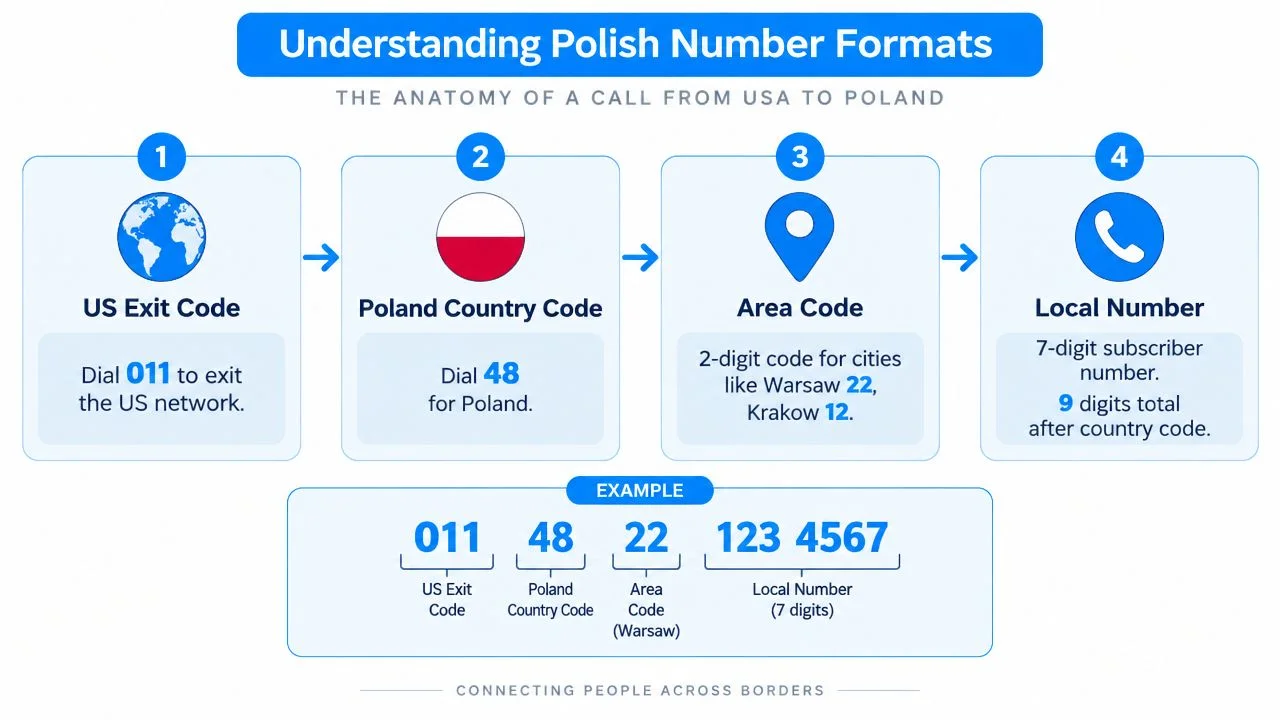
Geographic landlines contain a city or regional component within the national number. Mobile numbers use a mobile range instead of a geographic city identifier, but that difference doesn't change the international opening. You still dial +48 and the complete number, rather than adding a local prefix manually.
What to verify before dialing
Check the number as a whole, not just its first few digits. A reliable review looks like this:
- Country code: Confirm that Poland is represented by 48, not a neighboring country code.
- National number: Confirm that the destination includes the expected digits after +48.
- Leading zero: Remove a domestic zero if the contact supplied the number in a local format.
- Destination type: Ask whether the contact uses a mobile, landline, or business line if the number appears incomplete.
For example, a number written for domestic use may include a zero at the front. In international form, that zero is omitted, while the rest of the destination remains intact. The Poland country code guide is useful when you're checking the country code separately from the national number.
A number that looks shorter after formatting isn't necessarily missing digits. The apparent change often comes from removing the domestic trunk prefix. If the number still doesn't fit the expected format, ask the recipient to send it in international form rather than guessing which digits belong to an area or mobile range.
Modern Alternatives to Traditional Carrier Dialing
Traditional carrier dialing works when you already have a correctly formatted number and your phone plan supports international calls. A browser-based calling workflow can be more practical when you want to check the price first, call from a laptop, or reach someone who won't install an app.

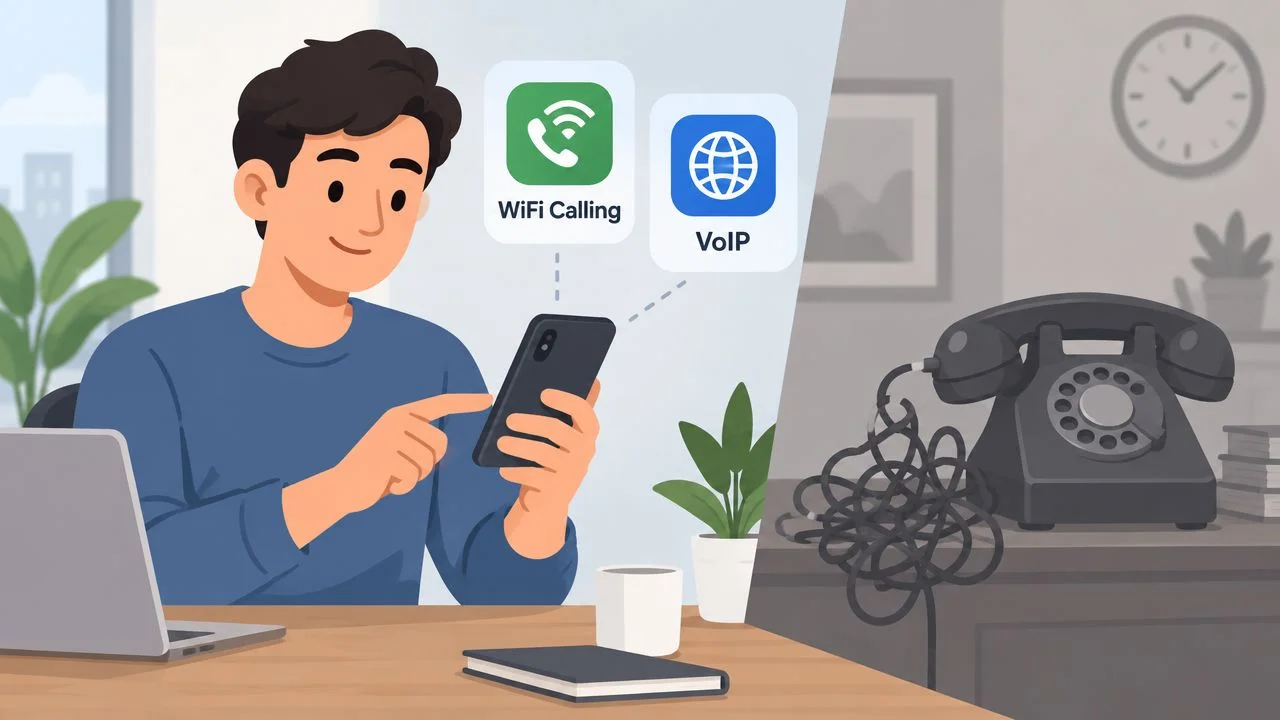
The difference isn't the Polish country code. Both methods still require the correct destination format. The difference is the workflow around the call.
With a conventional phone route, you may need to remember an exit code, rely on your carrier's international billing, and accept whatever calling interface your device provides. That can work well for occasional calls, but it gives you less visibility before connection if your plan doesn't present country-specific pricing clearly.
A browser-based VoIP service lets you enter the number in international form from a web dialer. The recipient can answer on a normal Polish landline or mobile, so they don't need the same service, an app, or an account. Calls can use enterprise-grade global carrier infrastructure, while the caller handles the session through a browser rather than special phone hardware.
Where modern calling helps
- Laptop calling: Useful when your contact list, customer records, or work notes are already open on a computer.
- Recipient flexibility: The person in Poland can answer on a regular phone without changing their setup.
- Cost visibility: A published rate table lets you check the destination type before connecting.
- Language support: Optional live translation and real-time captions can help families, travelers, and cross-border teams communicate when neither side is fully comfortable in the other language.
Live translation isn't a substitute for checking the number. It addresses the conversation after the call connects, while formatting determines whether the call reaches the right destination in the first place. For a quick family check-in, a standard browser call may be enough. For a supplier conversation or support call, captions and translation can make the browser workflow more useful than a bare dialing sequence.
Checking Live Rates Before You Connect
Check the current Poland rate before you dial, especially when the destination could be either a landline or a mobile. The BubblyPhone rates page separates country and number-type pricing so you can review the applicable per-minute charge before starting the call.
A practical cost-control routine is simple:
- Identify the destination type. Confirm whether you're calling a Polish mobile, geographic landline, or business number.
- Open the live rate table. Search for Poland and review the rate that matches the destination.
- Estimate the conversation length. Treat a short call and an open-ended business discussion differently.
- Check the billing rule. Usage is billed per minute and rounded up to the whole minute.
- Add only the credit you need. Prepaid credits start at $5 and never expire, so unused balance doesn't disappear because you don't call again immediately.
There's no subscription required for ordinary calling. The optional dedicated-number plan is the recurring product, while outbound calls use pay-as-you-go credits. The service also presents pricing before dialing, which makes it easier to decide whether to proceed, change the destination method, or ask the contact for a different number.
The important distinction is control, not a promise of a universal price. Rates can change, and mobile and landline destinations may not carry the same charge. Check the live table immediately before a longer call rather than relying on an old message, saved note, or informal estimate.
Timing Your Call and Troubleshooting Errors
Call during the recipient's normal waking and working hours, allowing for the time difference between your US location and Poland. The exact difference depends on where you are in the United States and whether seasonal clock changes are in effect, so use a current time-zone tool instead of relying on a fixed mental conversion.
A failed call usually falls into one of three categories: formatting, network access, or availability. Diagnose those separately.
If the call ends immediately
Recheck the number in international form. Confirm that you used 011 or +, entered 48, removed the domestic leading zero, and included the complete national number. Don't add a second zero or manually invent a city prefix for a mobile destination.
If the format is correct, try a different connection. Some workplace, hotel, school, or public networks restrict browser calling or real-time voice traffic. Switching from a restricted Wi-Fi network to a permitted connection can distinguish a local network problem from a destination problem.
If it rings without an answer
Endless ringing doesn't necessarily mean the number is wrong. The person may be asleep, away from the phone, screening an unfamiliar number, or working outside the hours you expected. Polish businesses may also be closed when you're calling from the United States, particularly if you're treating your own daytime as the recipient's daytime.
Use this troubleshooting order:
- Number check: Compare the international format with the original contact details.
- Destination check: Confirm whether the call should reach a mobile, landline, or business line.
- Network check: Try another internet connection if a browser call drops before ringing.
- Timing check: Call again during a reasonable local hour.
- Recipient check: Send a separate message asking the contact to confirm the number and preferred calling window.
A fast failure points you toward formatting or network access. A long ring points more often toward timing or recipient availability.
Don't repeatedly redial an uncertain number. Verify the format once, check the route, and then make a deliberate second attempt. That approach is faster and reduces the risk of calling the wrong destination.
Start Calling Poland From Your Browser Today
The reliable process is short: format the destination as +48 followed by the complete Polish national number, remove any domestic leading zero, and check the current rate before connecting. Those three checks handle the most common errors without requiring you to guess at area codes or repeat failed calls.
For callers who want a browser workflow, BubblyPhone lets you call Polish landlines and mobiles from a standard web browser. The recipient doesn't need an app or account, and calling doesn't require a subscription. Usage is billed per minute and rounded up to the whole minute, while prepaid credits start at $5 and never expire.
That setup suits more than family calls. Travelers can call a hotel or local business without changing their SIM, small businesses can contact Polish suppliers from a laptop, and support teams can use optional live AI translation and captions when language creates friction. Dedicated numbers are a separate optional plan for receiving calls and SMS, and SMS on those numbers is receive-only.
Before a longer conversation, check the live Poland rate, confirm whether the destination is a landline or mobile, and keep the number in international format. Then place the call from the browser without asking the person in Poland to install anything.
Visit BubblyPhone to check the live Poland rates and call any Polish landline or mobile directly from your browser. You can start with $5 in non-expiring credits, and the person you're calling won't need an app or account.