How to Call France When Dialing from US to France
Table of Contents
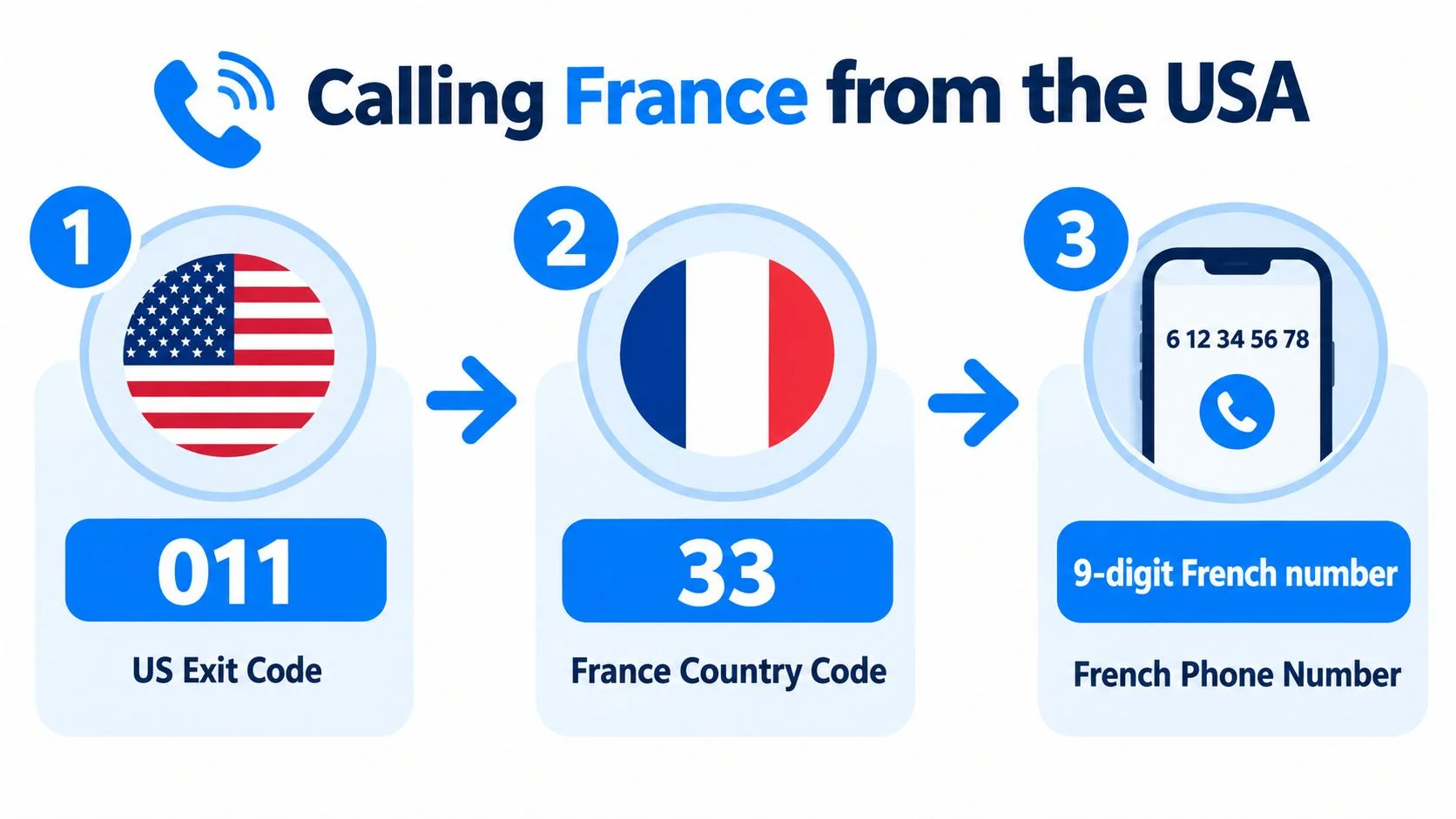
Dial 011, then 33, then the 9-digit French phone number after dropping its leading zero. On a mobile, use +33 instead of 011 33, but never combine the plus sign with the U.S. exit code.
You're probably looking at a French number written in its domestic form, wondering why the number seems to change when you call from the United States. The rule is straightforward once you understand what the first zero does inside France. Use the international format, check the time in France, and make sure the recipient can recognize your caller identity.
The Correct Dialing Format for France
To call France from the United States, dial 011 + 33 + the French number without its leading 0. The 011 is the U.S. international exit code, 33 is France's country code, and the remaining digits are the French number in international form, as this dialing guide for France from the U.S. confirms.
For a French number written domestically as 01 xx xx xx xx, the landline sequence becomes:
011 33 1 xx xx xx xx
The first 0 belongs to France's domestic dialing structure. It isn't part of the number you send after the country code when calling internationally. French landlines and mobile numbers both use 33 internationally, so the key job is to preserve the digits after the initial domestic zero while changing the access format.

Calling from a mobile phone
On a smartphone, replace 011 33 with +33. Using the same example, save or dial the number as:
+33 1 xx xx xx xx
The plus sign tells the mobile network to use the appropriate international access method for your location. That makes +33 more portable than a format beginning with 011, especially if you travel or use the same contacts while abroad. The two valid patterns are therefore 011 33 followed by nine French digits from the U.S. phone system, or +33 followed by nine French digits on a mobile.
For a quick reference on the country-code portion, see this explanation of the France country code and international format. Enter the digits in order, pause briefly for the connection, and avoid adding any extra zero after 33.
Common Mistakes When Calling France
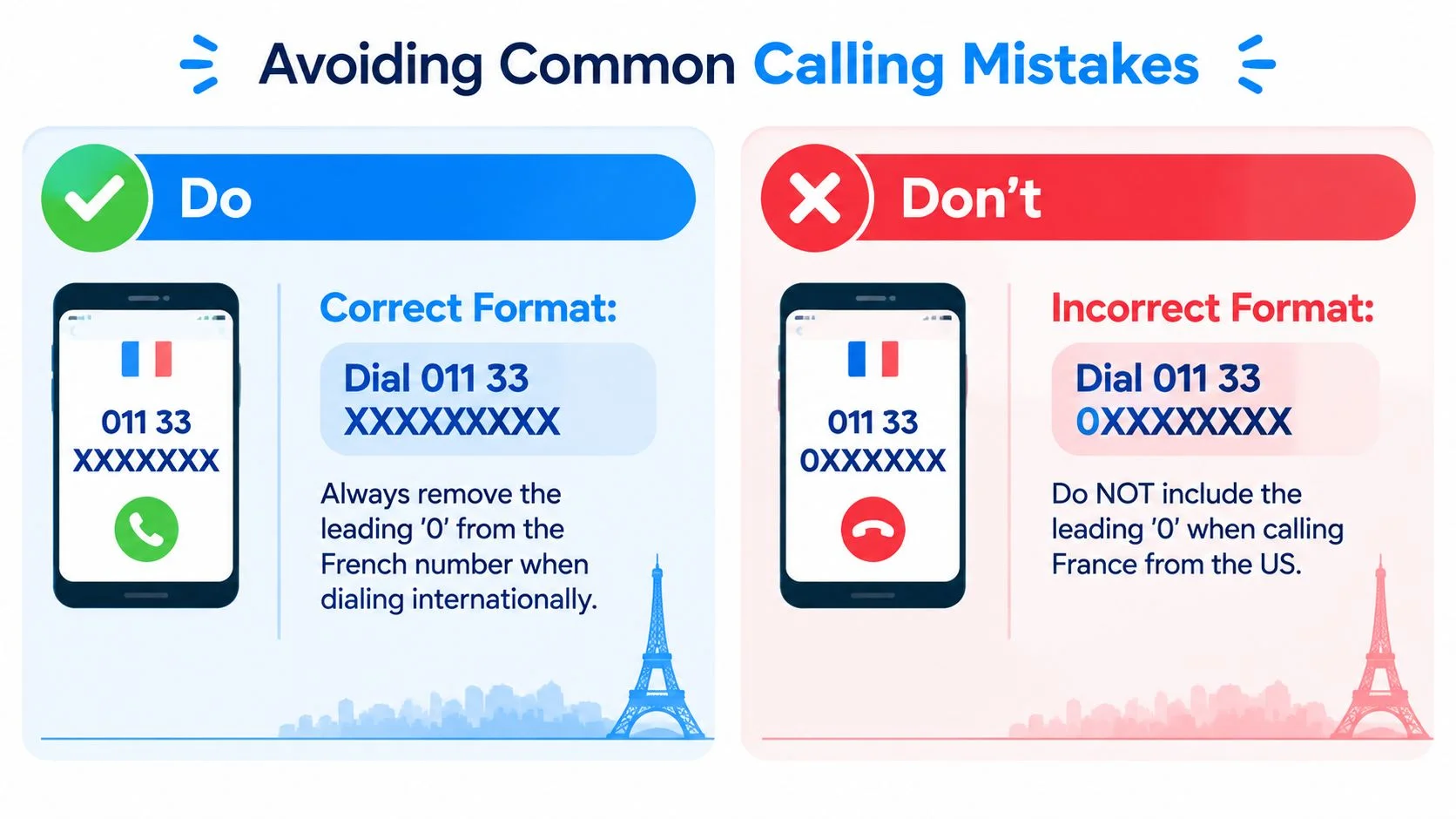
The most common failure in dialing from the U.S. to France is keeping the leading zero. Remove it because it's a domestic trunk prefix, not part of the international number. France's numbering plan uses a closed 10-digit national format, but the international version uses +33 or 011 33 followed by the remaining nine digits, as documented in the ITU case study on France's numbering plan.
The conversion looks like this:
- Domestic format:
01 xx xx xx xx - Correct international format:
+33 1 xx xx xx xx - Correct U.S. landline format:
011 33 1 xx xx xx xx - Incorrect format:
011 33 01 xx xx xx xx

Why the zero disappears
Inside France, the initial zero helps route a domestic call through the national numbering system. Once you identify France with country code 33, that domestic routing instruction is no longer needed. The international format therefore strips the zero and retains the next digit, so 01 becomes 1 after 33.
A second mistake is typing both international formats together. +33 already replaces 011 33, so +33 011 33... is malformed. Pick one method, either 011 33 on a U.S. phone line or +33 on a mobile device.
Practical rule: Save French contacts in the +33 format, with the domestic zero removed. That prevents your phone from reusing an internal French format when you're calling from abroad.
Check the contact before retrying a failed call. If it begins with +33 0, delete that zero. If it begins with 011 +33, remove either the plus format or the U.S. exit code.
Checking Time and Calling Rates Before You Dial
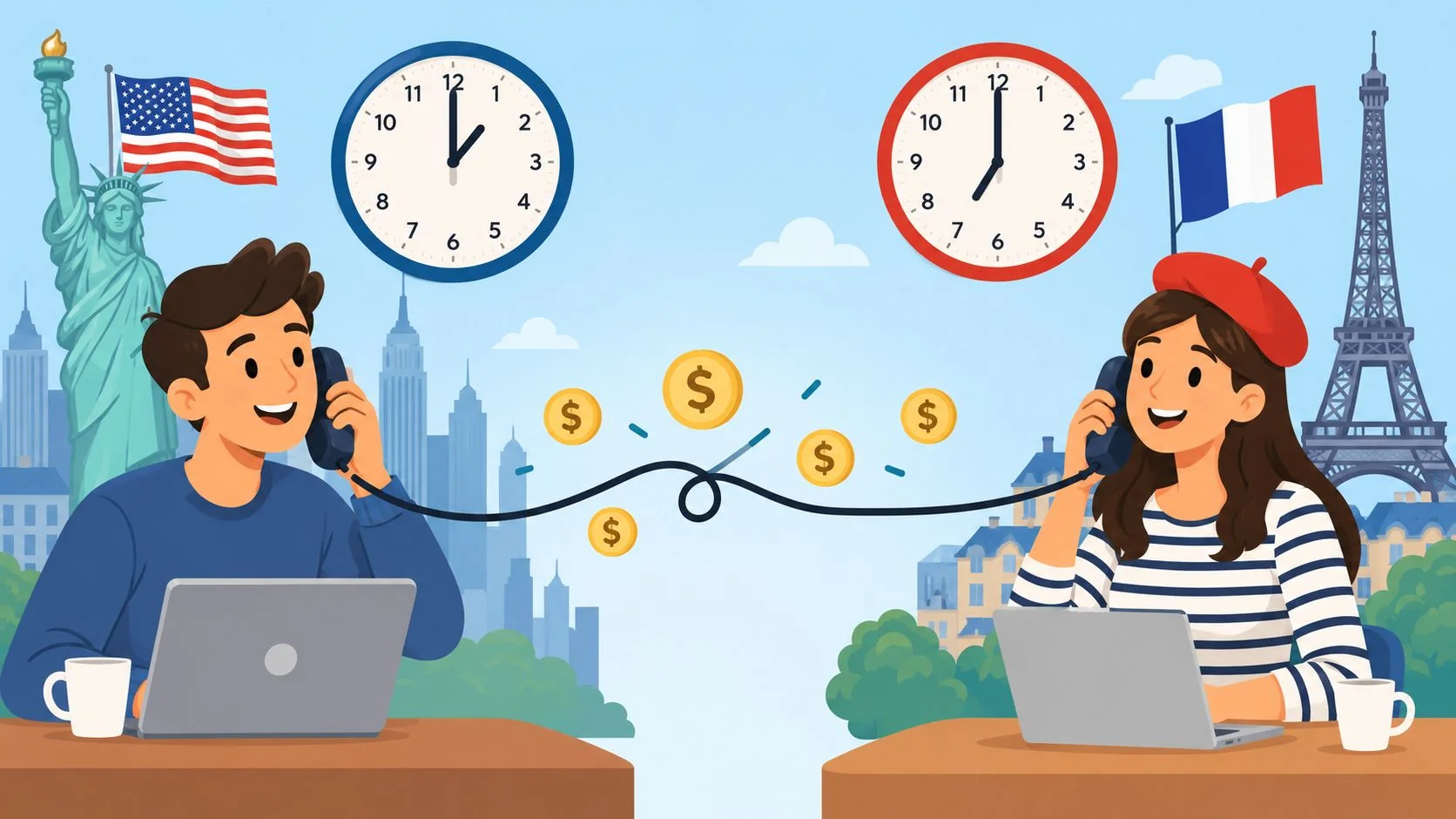
France is typically 6 to 9 hours ahead of U.S. time zones, depending on the season and where you are in the United States, because France uses Central European Time and Central European Summer Time, as explained in this guide to telephone communication in France. A convenient morning in the U.S. can already be afternoon or evening for someone in France.
That difference affects more than courtesy. Families may be asleep, small businesses may be closed, and a client who would normally answer may ignore a call arriving outside their working hours. Before dialing, identify the recipient's city or region, check the current local time, and choose a window that fits the purpose of the call.

Build a cost check into your routine
International calling costs depend on the service and the destination number type. A call to a landline may be priced differently from a call to a mobile, so don't assume that one France rate applies to every number. Check the current destination price before you start, particularly if the call may become a long conversation.
The BubblyPhone call cost calculator provides a way to review the destination cost before dialing. BubblyPhone uses prepaid credits, bills calls per minute, and rounds each call up to the whole minute. There's no subscription required for ordinary calling, while the optional dedicated-number plan is a separate recurring product.
A practical approach is to decide how much time the call deserves before you connect. If you need a short confirmation, keep the conversation focused. If you're calling family, check the rate first and add enough credit for the conversation rather than discovering a charge issue after the call has started.
Ensuring Good Call Quality and Getting Your Call Answered
A successful international call needs two things, clear audio and a caller identity the recipient recognizes. A technically connected call can still fail if the voice is difficult to understand or the French recipient sees an unfamiliar international number and assumes it's spam.
France has faced a serious number-spoofing problem. Arcep reported close to 18,000 spoofing reports since January 2025, while another Arcep release recorded complaints rising from 531 in 2023 to more than 19,000 in 2025 in its reporting context, as shown in the Arcep release on spoofing. That environment naturally encourages people to screen calls, especially calls displaying unfamiliar or inconsistent numbers.
Treat caller identity as part of delivery
A consistent caller ID helps the recipient decide that your call is legitimate. Businesses should use the same recognizable identity for repeat contacts, and individuals should tell family or friends in advance that an international call is coming. Avoid malformed caller ID presentation, rapid repeated attempts, or unexplained calls from changing numbers.
Audio quality also matters. Connections using enterprise-grade global carrier infrastructure can provide a steadier route than an improvised connection, but your own setup still affects the result. Use a reliable internet connection, a headset that doesn't leak background noise, and a quiet room. For additional practical guidance on reducing interruptions and connection problems while working remotely, these expert tips for remote professionals are useful.
A clear call that the recipient answers is more valuable than a perfect connection that gets ignored.
If the first call goes unanswered, leave a concise voicemail or send a message through an existing channel explaining who you are and why you called. Don't keep redialing without context. Screening is often a response to uncertainty, and a brief advance notice removes that uncertainty more effectively than repeated attempts.
The Easiest Way to Call France from Any Device
The easiest approach is to use a browser-based calling service when you want to reach a normal French landline or mobile without requiring the recipient to install anything. You still enter +33 followed by the French number without its domestic zero, but the calling interface can handle the connection from your browser.
That removes several sources of friction at once. You don't need to install software on the receiving side, and the person in France doesn't need an app or account. You can call a regular phone number, whether it belongs to a landline or mobile, while keeping the dialing rule consistent.
Use a simple pay-as-you-go setup
BubblyPhone offers browser-based calling to French numbers, with prepaid credits that start at $5 and never expire. Calls are billed per minute and rounded up to the whole minute, so check the current destination pricing before dialing rather than relying on an old rate remembered from a previous call.
The browser model suits several situations:
- Family calls: Relatives in France can answer on their ordinary phone.
- Travel and remote work: You can place a call from a browser without carrying a separate calling device.
- Business contacts: Suppliers and clients don't need to join the same platform.
- Occasional callers: Credits remain available instead of being tied to a monthly calling subscription.
For a broader explanation of browser-based international calling, see the international calling app guide. The important distinction is that the recipient needs no app or account, while the caller can use a browser, iOS device, or Android device.
Before you click call, verify three things: the number starts with +33 or 011 33, the domestic zero has been removed, and the local time is suitable. Then confirm the displayed cost, use a stable connection, and identify yourself clearly when the recipient answers.
Make your next call from the United States to France with BubblyPhone, using any browser to reach a French landline or mobile without requiring an app or account for the recipient. Credits start at $5 and never expire, so check the France rate, enter the number in +33 format, and call when the timing is right.