How to Call Italy from the US in 2026

Table of Contents
You've got the Italian number in front of you, but the call still needs to go through cleanly from the U.S. The fastest way is 011 + 39 + the Italian number, and the part that trips people up most is whether to keep the leading zero in the Italian area code.
If you're calling a Rome office, a Milan desk, or a mobile saved from WhatsApp, the number format matters before anything else. Get that right first, then check the rate, then place the call.
The Dialing Sequence You Need to Know
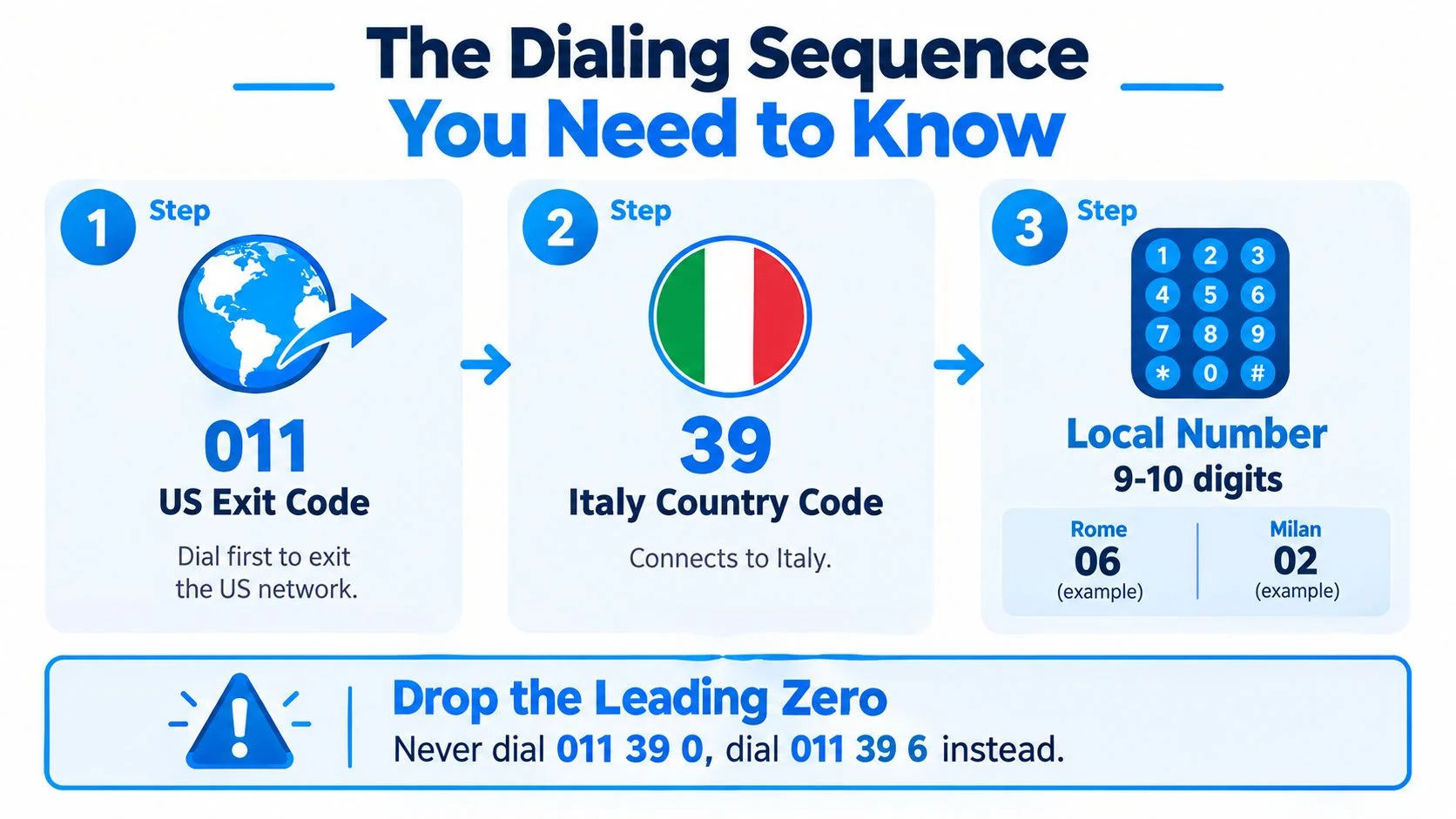
The number you need is 011 + 39 + the full Italian number. From a U.S. line, 011 is the international exit code, 39 is Italy's country code, and the rest is the Italian number you're trying to reach, whether it's a landline or mobile How to call Italy from abroad.
The detail that saves most calls is the leading zero rule. If an Italian landline is written locally as 06 1234 5678 for Rome, you don't dial that zero after the country code from the U.S. You dial 011 39 6 1234 5678 instead. That same structure is why a number that looks right on paper can still fail if you copy it without adjusting the format.
Practical rule: If the Italian number starts with a geographic area code, keep the area code, but drop the domestic trunk zero when you move it into international form.
That matters before price, app choice, or calling device. A well-displayed rate is useful, but it can't rescue a mistyped destination. If the string is wrong, the call never reaches Italy.
For a quick reference while you dial, use the international dialing guide for Italy. The basic parts stay the same every time, the U.S. exit code, Italy's country code, the city or mobile prefix, and the local subscriber number.

Breaking Down Each Piece of the Number
The full pattern is simple once you see the parts separately. A U.S. caller starts with 011, adds 39, then enters the Italian area code or mobile prefix and the local number. For a broader numbering reference, Italy's plan uses country code +39 and supports national numbers that can vary in length depending on type, with the ITU listing a minimum of 3 digits and a maximum of 12 digits excluding the country code ITU numbering plan material.
The four pieces you're actually dialing
Rome and Milan are helpful examples because they show that Italian area codes don't look like U.S. ones. You might see Rome written with 06 and Milan with 02, while Florence is often written as 055. That mix is normal, and it's exactly why you shouldn't assume every country handles area codes the way the U.S. does.
A full Rome landline becomes 011 39 6 1234 5678 when dialed from the U.S. A mobile number is different, because the mobile prefix is already part of the full number structure, so a number written domestically as 333 123 4567 would be dialed as 011 39 333 123 4567. The important habit is to preserve the Italian structure and stop trying to force it into North American formatting.
If you want a compact cheat sheet while copying numbers, the Italy country code guide keeps the sequence in one place. The main thing is not memorizing a single string, it's recognizing which part of the Italian number you have in front of you.
Use this shortcut: U.S. exit code, Italy country code, then the Italian number exactly as it should travel internationally.
Landline, Mobile, and International Format Numbers
The same Italian contact can arrive in your hands in three different formats, and the one you see determines how you dial it. A landline written for local use doesn't get treated the same way as a mobile saved in international format, and that's where a lot of failed calls start.
How the format changes the way you dial
For landlines, the key move is dropping the domestic trunk zero once the number crosses the border. That's why 06 becomes 6 in international form, while the rest of the number stays intact. The same logic helps with mobile numbers, which already start with a 3 prefix and don't use an area-code style trunk zero.
Numbers saved as +39 are the easiest case on modern mobile phones. The plus sign can act as the international access substitute, so you often don't need to type 011 manually when the device handles plus-sign dialing. That convenience only works when the phone itself supports it, so a U.S. landline still needs 011 before the country code.
Good habit: Match the number format to the device you're using. A copied contact in +39 format is not the same thing as a locally written Italian number.
If you're comparing calling methods or trying to understand why one number dials cleanly and another doesn't, the international calling rates explained page helps separate format from billing. And if you're also looking for a practical, no-credit-check phone service resource for broader household planning, no-credit-check phone service is a useful reference point.
Understanding Per-Minute Billing and Transparent Rates
The cost of an Italy call is easier to control when you can see the rate before you dial. With per-minute billing, a call is charged in whole-minute increments, so a call that runs partway into the next minute gets rounded up to the next full minute.
That's why transparent pricing matters more than vague “starting at” language. A published rate table lets you check the destination category first, then decide whether you want to place the call. For Italy, that means looking at the number type, landline or mobile, before you ever connect.
Why rate tables beat vague promises
The useful part of transparent billing is that it removes guessing. If you're calling a mobile in Rome or a mobile in Naples, the key issue is the destination category, not the city name. The caller should know the per-minute figure before connection, not after the invoice arrives.
That's also where browser-based calling fits naturally. You can check the live rate table first, then proceed only if the call cost is acceptable. A solid reference for this is BubblyPhone's international calling rates guide, which is designed to show destination-specific pricing before you call.
How Browser Dialing Simplifies the Process
Browser dialing cuts out the extra steps that slow international calls down. You open the site, enter the Italian number in full international form, confirm the displayed rate, then place the call. The person in Italy just answers a normal phone number, so there's no app install or account setup on their side.

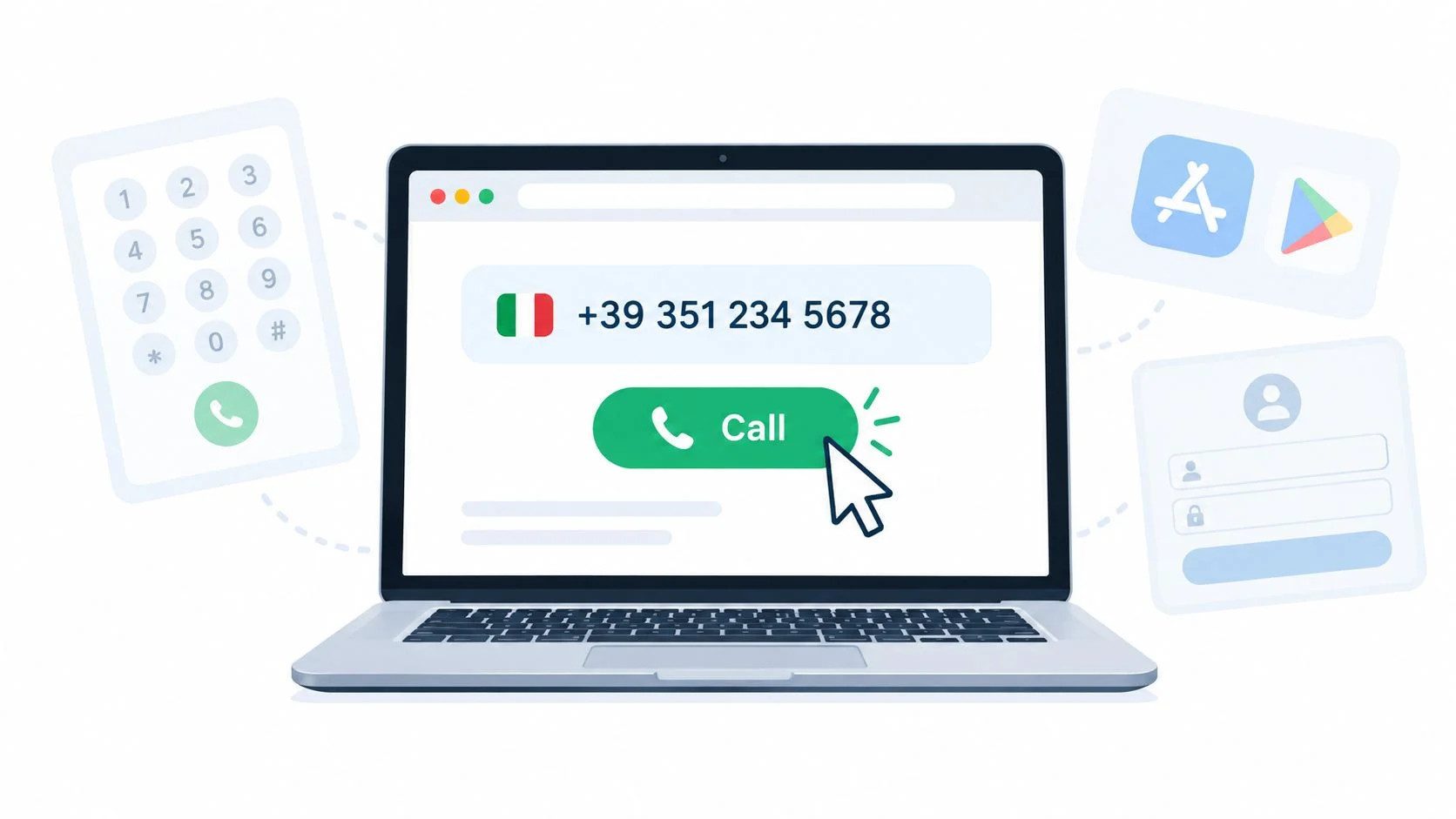
A browser-based call needs only a modern browser, a working microphone, and a stable connection. If you're using a laptop, a headset often makes the conversation clearer because it reduces echo and background noise. On a phone, the same idea applies, just with the browser instead of a native dial pad.
The practical sequence is straightforward. Enter the destination carefully, grant microphone permission when prompted, and check that the rate shown on screen matches your expectations before you start talking. That moment of confirmation is useful, because it gives you the cost up front instead of burying it in account history later.
The recipient experience stays simple. Older relatives, hotel staff, and small businesses don't need to learn a new app or create a login just to answer your call. They receive a normal call on their existing Italian number, which is exactly what makes browser dialing less intimidating for one-off international conversations.
Common Mistakes That Prevent Calls From Connecting
Most failed Italy calls come from format mistakes, not from the destination itself. If you see the number clearly and the rate clearly before you dial, you're less likely to make the small error that breaks the call.
The traps people hit most often
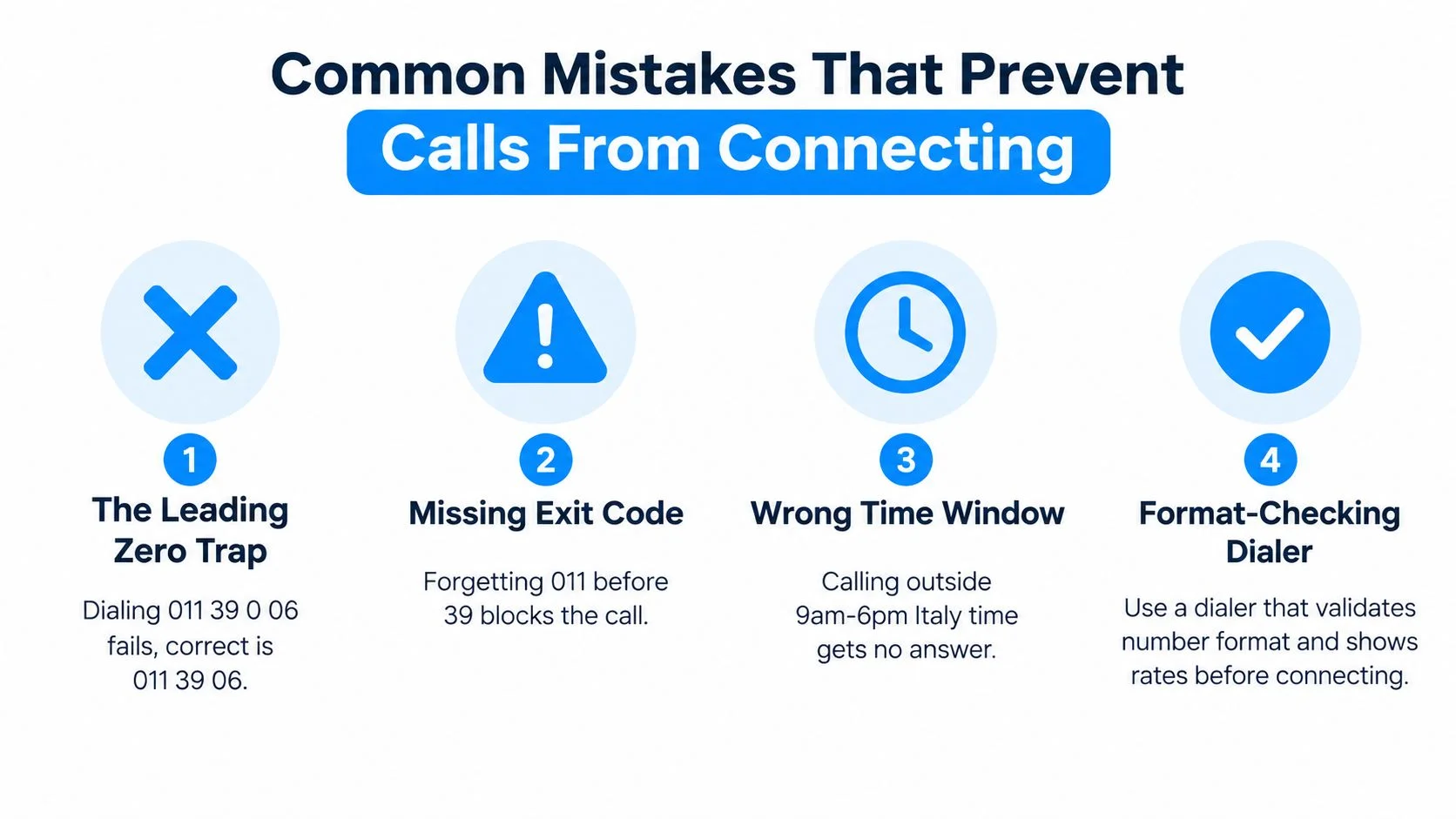
- The leading zero trap: Dialing 011 39 0 06 instead of 011 39 06 can stop the call from completing or send it to the wrong place.
- The missing exit code: Some callers leave off 011 and try to dial 39 directly from a U.S. phone, which only works in limited cases where plus-sign dialing is enabled.
- The landline and mobile mix-up: A 3xx mobile prefix is not a city area code, so treating it like one usually produces the wrong number.
- The blind trust problem: A flat-rate ad can sound simple and still hide rules that don't fit Italy well.
The deepest issue is transparency. If the caller doesn't see the final format and the rate before connection, mistakes are easy to make and hard to diagnose. A format-checking dialer is valuable because it puts both pieces in front of you at the same time.
You should know the number is valid before the first billed minute starts.
That's the main reason browser dialing works better for a lot of people than juggling notes, screenshots, or copied contacts. The right tool doesn't just connect the call, it helps you enter the destination correctly and see what it'll cost.

Placing Your First Call to Italy Today
You can place your first Italy call with three simple steps. Open a browser, enter the Italian number in international format, and confirm the rate before you connect. If the number starts as an Italian landline, keep the structure correct and drop the domestic trunk zero where required.
Start at the homepage, enter the destination, and look at the displayed per-minute pricing before you hit call. That's the cleanest way to avoid surprise billing, especially if you're calling a family landline, a mobile contact, or a business line saved in a mix of local and international formats.
BubblyPhone works entirely in the browser, so the person you're calling doesn't need an app or an account. Calls run on prepaid credits, billing is per minute rounded up to the whole minute, and the minimum top-up starts at $5 with credits that never expire. If you only call internationally once in a while, that setup keeps the process simple without forcing you into a subscription.
Visit the homepage, enter the number, verify the rate, and make the call while the format is still in front of you. That's the easiest way to get from confusion to a connected Italy call without guessing at the dial string or the cost.
If you want a cleaner way to call Italy from the U.S., use BubblyPhone in your browser and check the rate before you connect. It's built for direct calls to Italian landlines and mobiles, with no app or account needed on the receiving side.