Using a US Number to Receive SMS & Verification Codes: What Works (2026)
A US number can receive texts and many verification codes for $3/month from your balance — but it is VoIP, so some banks and apps block it. Works for a lot of sign-ups, not all.
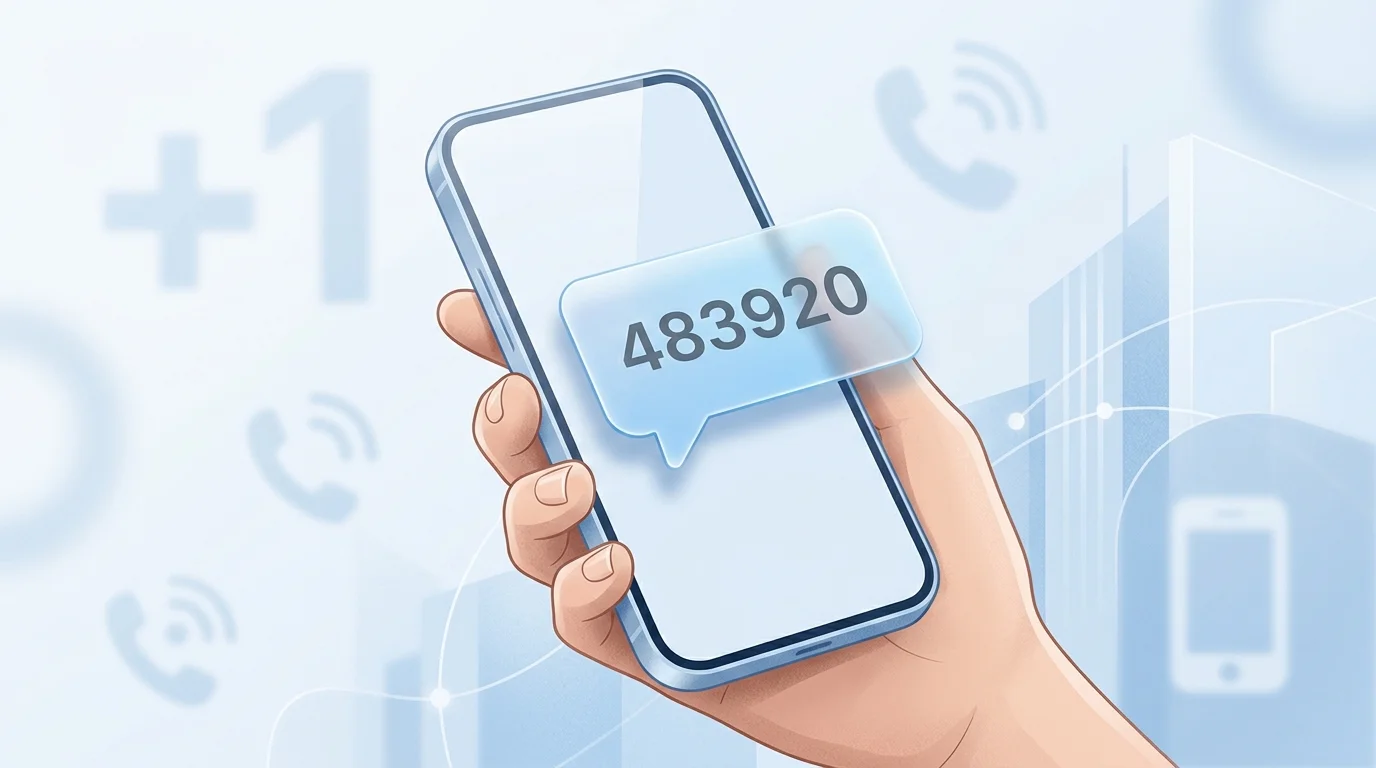
TL;DR — 30-Second Read
- Yes — a BubblyPhone US number can receive texts and many verification codes for $3/month from your balance. You see the codes in your Messages.
- But it's a VoIP number, and a lot of services deliberately block VoIP. Expect some sign-ups to reject it — banks and certain apps especially.
- Works for many: it's honest middle ground. Great for the everyday sign-ups and codes that accept VoIP; not a guarantee for every named service.
- It's a real number you own, not a shared burner. Free “receive SMS” sites give recycled numbers that get blocked even more — and aren't yours.
- For bank / KYC steps, use a carrier SIM. Keep the VoIP line as your everyday US number; use your real mobile where VoIP is refused.
The short answer
A BubblyPhone US number can receive text messages and many verification codes for $3/month from your balance — but be aware that some services (banks and certain apps) deliberately block VoIP numbers, so it works for a lot of sign-ups, not all of them. It's a real +1 number you own; you read incoming codes in your BubblyPhone Messages. Where a service refuses VoIP, fall back to a carrier SIM for that one step.
If you searched for a US number to receive SMS or verification codes, you've probably seen two kinds of answers: free “receive an SMS online” sites, and paid “non-VoIP” services promising every code lands. The honest reality sits in between. A real US number you own can receive texts and a great many sign-up codes — but VoIP detection is real, and a growing share of services check whether a number is VoIP before they even send the code.
This guide is the straight version: what a US VoIP number genuinely does for receiving codes, which kinds of services tend to accept it versus reject it, why free burner-SMS sites are the worst option, exactly how it works and costs on BubblyPhone, and where you should reach for a carrier SIM instead. No promises we can't keep.
📋 What this guide covers
📩 Can a US VoIP number receive verification codes?
Yes — for many services — but not all, and that caveat is the whole point. A BubblyPhone US number does two-way SMS, so when a sign-up texts a code to it, the message lands in your BubblyPhone Messages and you read the code there. For a large number of everyday sign-ups, newsletters, store accounts, forums, and ordinary one-time passcodes, that works fine.
The honest caveat: it's a VoIP number, and a growing number of services run a carrier lookup on any number you submit before sending the code. That lookup classifies the number as mobile, landline, or VoIP — and if it comes back VoIP, those services reject it on the spot. So the number can receive a lot of codes, but you should expect some platforms to refuse it outright. We'd rather tell you that up front than have you find out after you've bought.
⚖️ Which services tend to accept vs reject VoIP
As a rule of thumb: the more money or identity a service handles, the more likely it is to block VoIP. This is general guidance, not a guarantee — policies change constantly, and we won't promise any specific named service works. Use it to set expectations.
✅ Often accept VoIP
- Everyday store and shopping accounts
- Newsletters, forums, and community sign-ups
- Many SaaS and app accounts that text a one-time code
- General “confirm your number” steps that aren't identity-critical
⛔ Commonly reject VoIP
- Banks and most banking apps
- Fintech and payment platforms (the strictest category)
- Major account-security verification for big tech accounts
- Some messaging apps and certain crypto exchanges
Financial and identity-sensitive platforms — banks, payment processors, and fintech apps — are the strictest, and many won't even attempt delivery to a number flagged as VoIP. Big-tech account verification, some messaging apps, and certain crypto exchanges frequently reject VoIP too. We deliberately won't tell you “it works for [named service]” because these policies shift, and a promise we can't keep helps nobody. The safe plan: expect it to work for ordinary sign-ups, and keep a carrier SIM for the identity-critical ones.
🗑️ Why free burner-SMS sites are worse
Free “receive an SMS online” sites are the most-blocked option of all — and the number isn't even yours. Those sites publish a pool of numbers shared by thousands of strangers and recycled within days. That creates three real problems.
- They're flagged fastest. Because the same public numbers are hammered for mass sign-ups, services blacklist them quickly — so the code you're waiting for often never arrives.
- Anyone can read your codes. The inbox is public. A verification code for an account you care about is visible to whoever else is using that number.
- The number isn't yours and won't last. It's recycled within days, so you can't receive a follow-up code, reset your password later, or keep the number tied to your account. For anything you actually want to keep, it's useless.
A BubblyPhone number is the opposite: it's a single, private, paid number that's genuinely yours for as long as you keep it. That alone makes it more likely to be accepted than a recycled public number — and far safer for any account you intend to keep. For the wider case on a number with no ID required, see getting a US number without an SSN or address.
⚙️ How it works on BubblyPhone
You buy a real US number, and incoming texts — codes included — show up in your BubblyPhone Messages. There's no app to install and no ID to upload; it all runs from your account.
- Sign up and top up. Create an account with your email and add a little balance — enough to cover the $3 setup and first $3/month. No card stored, no SIM, no ID.
- Pick your US number. Choose an available US (+1) number and confirm. It's a real number assigned to your account right away — private and yours, not a shared burner.
- Use it on the sign-up. Enter your new US number where a service asks for a phone number to text a code to.
- Read the code in Messages. The number does two-way SMS, so when the code arrives it lands in your BubblyPhone Messages / Dialer — open it, read the code, and you're done. You can reply from the same +1 line too.
One clarification people ask about: incoming texts are read in your BubblyPhone Messages, not forwarded to your cell as SMS. Call forwarding to your own mobile is for calls; verification texts and codes you read in the account. The number also includes voicemail with AI transcription for any calls you miss.
💵 What it costs
$3 one-time setup, then $3/month — both auto-billed from your BubblyPhone balance. No credit card on file, no verification, no SIM. That flat $3/month keeps the number yours and keeps two-way SMS, voicemail, and AI transcription switched on.
The numbers, plainly
- $3 one-time setup when you first get the number.
- $3/month rental, deducted from your balance.
- Receiving texts and codes is part of the number — you read incoming SMS in your Messages at no per-text charge.
- Only calls are billed per minute — if you forward calls to your cell, you pay the incoming leg and the forward leg, shown as separate lines. Exact per-country rates are on the rates page.
If your balance can't cover the $3/month, you don't lose the number overnight. We email you a warning and start a 7-day grace period during which the number keeps working. It's only released if it's still unpaid after that window — so a temporarily low balance never costs you the number without notice.
🚧 Honest limits + when to use a carrier SIM
This is a real US number you own, but it's a VoIP line — so it isn't the right tool for identity-critical verification. Here's exactly where it falls short, so you know before you buy.
- Some services block VoIP — use a carrier SIM for those. For bank sign-ups, KYC and identity steps, and the strictest fintech and payment apps, you'll likely need a number that passes carrier checks — that means your real mobile SIM. Treat the BubblyPhone line as your everyday US number for the many sign-ups that do accept it, and reach for your carrier SIM where VoIP is refused.
- It's not a way to fake accounts or dodge KYC. This is a real number you own and pay for, meant for receiving codes and texts on accounts you legitimately control — not for creating throwaway or fraudulent accounts, and not a path around identity verification. If a service requires real KYC, do it properly with the right number.
- Texts are read in your account, not pushed to your cell as SMS. Incoming codes land in your BubblyPhone Messages; call forwarding to your mobile is for calls, not texts. Keep that in mind if you expect verification SMS to ring through to your handset.
- No emergency services. Like any VoIP line, your US number is not for 911 / 112 / 999. Use your local mobile for emergencies.
🚀 How to get one
From a standing start, you can have a working US number that receives texts in a few minutes — no SSN, no address, no ID. Here's the whole process.
- Create or sign in to your BubblyPhone account with your email and top up your balance — enough to cover the $3 setup plus the first $3/month.
- Go to the Get a Number page and pick an available US number.
- Confirm. The $3 setup and first month come out of your balance — no card, no ID, no SIM.
- Test it. Send yourself a text to the new number and watch it appear in Messages, so you know exactly where your codes will land.
- Use it on sign-ups that accept it — and keep your carrier SIM for bank and KYC steps where VoIP is refused.
Get a US number that receives texts
$3 one-time setup, then $3/month from your balance. A real +1 number you own, with two-way SMS so codes land in your Messages — plus voicemail and AI transcription. Works for many sign-ups; keep a carrier SIM for bank and KYC steps.
Get a US number❓ Frequently asked questions
Can I receive 2FA / verification codes on a BubblyPhone US number?
Does it work for Stripe, PayPal, or WhatsApp?
Is this for making fake or throwaway accounts?
Why not just use a free “receive SMS online” site?
Where do incoming texts and codes show up?
What should I use for bank or KYC verification?
Related resources
Get a US number
$3/month from your balance — two-way SMS, codes in your Messages
Get a US Number From Anywhere
The full pillar guide to a US line while living abroad
US Number Without SSN or Address
A real +1 number with no ID, no SIM, no residency
Spam Number Checker
Look up a US number before you trust a text from it
BubblyPhone Rates
Per-minute rates for every country — what the call legs cost