Phone Cards to Philippines: A Practical Guide for 2026
Table of Contents
- The rate on the front is rarely the rate you live with
- The real call flow
- What happens when the balance runs low
- The four cost drivers that matter
- Worked example for a 7-minute call
- What changes the real experience
- Where cards still lose ground
- My recommendation
- The dialing sequence that works
- Two examples you should copy
- Why this matters before you dial
- Practical examples
- The cases where cards still win
- The trade-off is real
Most advice about phone cards to the Philippines is stuck in the past. The cheapest-looking card often isn't the cheapest call, because the cost shows up in maintenance fees, connection charges, and rounding rules after you hang up.
If you call family in the Philippines regularly, stop comparing headline rates. Compare effective cost per real conversation minute. That's the only number that tells you what you paid.
Why Phone Cards to the Philippines Need a Fresh Look
Phone cards to the Philippines still work, but the old assumption that they're automatically the low-cost option is weak. In practice, the printed rate on the card sleeve can be the least important part of the bill.
A lot of people in the Filipino diaspora still think in a simple pattern: buy prepaid credit, dial a local access number, save money. That made sense for years because prepaid communication fit the Philippines extremely well. One study notes that around 30 million mobile phone users in the Philippines contrasted with 16.4 million ATM cardholders, which helps explain why prepaid, phone-based tools spread so quickly in a mobile-first market (research on mobile-first financial access in the Philippines).
That same prepaid habit also grew around migration and remittance behavior. The Philippines had about 10 million overseas Filipino workers, and one source says 16 countries accounted for more than 80% of OFW remittances, showing how large and concentrated the overseas calling market became (report on cross-border remittance and OFW connectivity).

The rate on the front is rarely the rate you live with
The problem isn't that phone cards are fake. The problem is that advertised per-minute rates are only one layer of pricing.
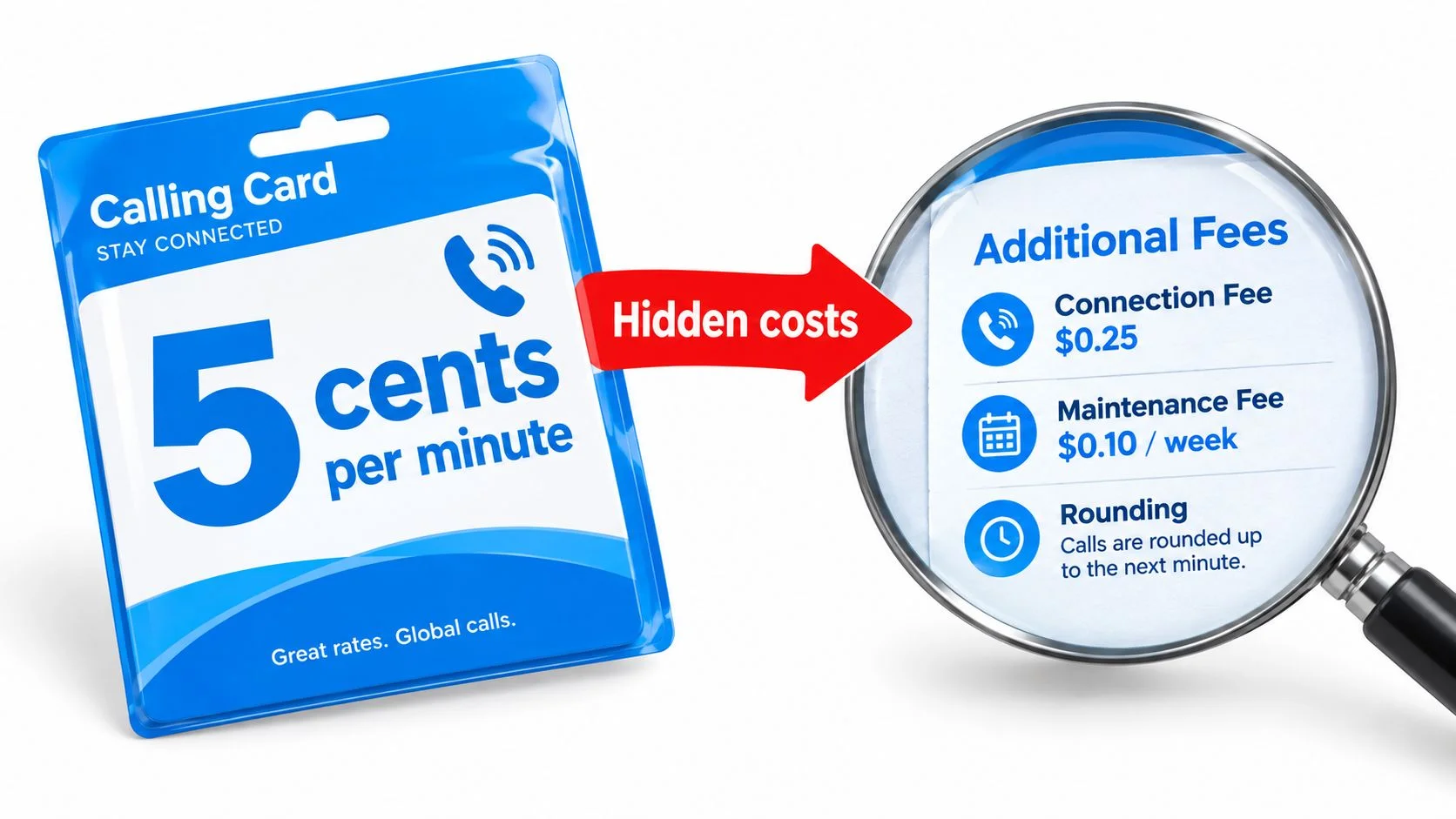
A card can look cheap, then bill you with:
- Connection charges that hit every call
- Maintenance fees that drain unused balance
- Rounding rules that bill more than your actual talk time
- Different pricing by number type, especially when you call a mobile instead of a landline
Practical rule: If you call in short bursts, the fixed fees matter more than the posted rate.
Browser-based calling changed the comparison. Instead of scratching off a PIN and guessing how the billing logic works, you can now use services that publish destination-specific pricing by number type and charge in a cleaner pay-as-you-go model. The right choice depends on how often you call, whether you're reaching a mobile or landline, and whether your own internet is reliable.
For most diaspora callers in 2026, the default mental model should change from “buy a card and save” to “calculate the cost of the conversation.”
How Calling Cards Actually Work
A calling card is just prepaid call credit wrapped in extra steps. You buy the credit first, then use the card's access system to reach the Philippines through a bridged call.
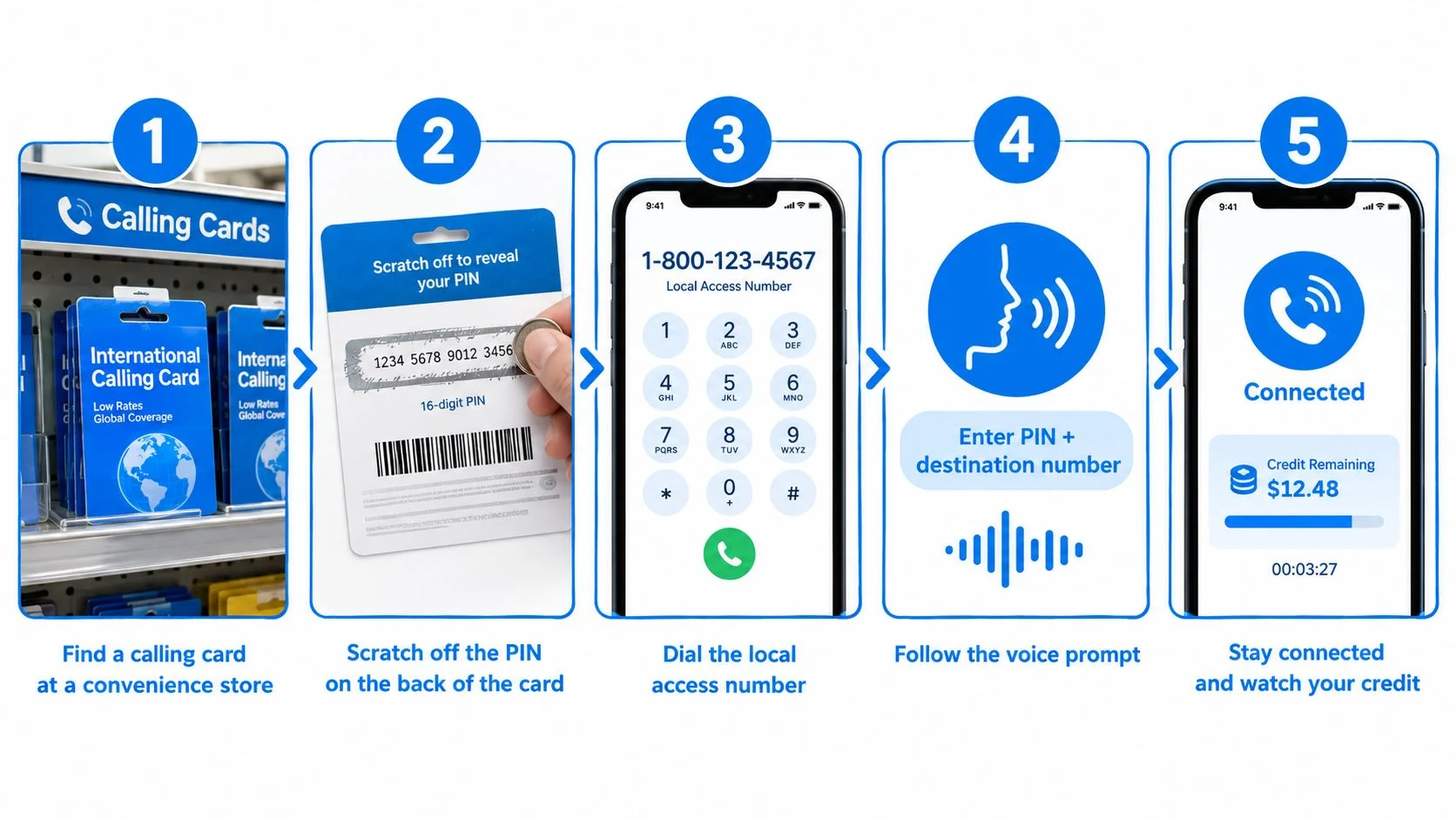
Here's the normal flow. You buy a physical card at a store or get a digital code online. Then you dial the card's access number, enter the PIN, and key in the Philippine number in international format. The card platform connects your local call leg to a Philippines termination leg and deducts credit while the call runs.

The real call flow
Think of it as a two-part path:
- You call the access number
That's usually a local or toll-access number tied to the card platform.
- You authenticate with the PIN
The platform checks your remaining balance and billing rules.
- You enter the destination
For the Philippines, that means using the country code and removing the domestic leading zero from the number.
- The platform bridges the call
Your local call is linked to a separate outbound call leg toward the Philippines.
- Your balance gets debited
The deduction depends on the destination type, the card's pricing rules, and any extra fees.
What happens when the balance runs low
Phone cards feel old fast. When the balance runs out, the call usually ends. Some systems warn you first. Some don't give much notice. If you're calling an older relative and the line cuts off mid-sentence, that's not a small annoyance.
Cards also come in a few practical flavors:
- Disposable cards: Use the loaded amount, then throw the card away.
- Rechargeable accounts: Add more credit later, often with the same PIN or account setup.
- Digital PIN products: Same logic as a physical card, just no plastic.
A phone card doesn't call the Philippines directly from your card balance. It uses your prepaid credit to authorize and route a bridged call through its own telecom system.
Some cards also have expiration windows or inactivity rules. That matters if you call once in a while instead of every week. The card can still “work” while your balance shrinks or becomes less useful over time. That's exactly why you should understand the mechanics before trusting the front-of-package rate.
Where the Per-Minute Rate Hides Extra Cost
The posted rate on many phone cards to the Philippines is a teaser number, not a budgeting number. Your real bill is shaped by fees and billing rules that sit underneath it.
One public listing for Philippines calling cards shows a weekly maintenance fee and 4-minute rounding, and the same guide notes that cards may also include extra fees or connection charges beyond the per-minute rate. It also notes that the Filipino diaspora is around 7 million people worldwide, which is exactly why these “small” billing differences add up for frequent family calls.
The four cost drivers that matter
Here's what usually inflates the cost:
- Maintenance fees: Your balance gets drained while you're not calling.
- Connection charges: A fixed amount hits at the start of each call.
- Rounding rules: A short call gets billed as a longer one.
- Destination premiums: Mobile and landline calls often bill differently.
If you've ever compared pricing in other digital services, this pattern will feel familiar. The same lesson shows up in global pricing for SaaS. The list price matters, but the full billing model matters more.
Worked example for a 7-minute call
A simple way to compare options is to convert everything into effective cost per real conversation minute.
Here's the blunt truth. A card with a low advertised rate can become expensive fast once you add a connection charge and upward rounding. On a short family check-in, fixed fees can matter more than the minute rate itself.
For a practical estimate before you buy credit, use a call cost calculator for international dialing. It's the fastest way to stop guessing.
Short calls punish card users the most. Every fixed fee gets divided across fewer real minutes.
That's why “cheap per minute” is the wrong question. Ask what a real 2-minute, 7-minute, or 15-minute conversation costs on the way you call.
Phone Cards Versus Browser-Based Calling
If you want the short answer, browser-based calling is usually the better default now. Phone cards still have a place, but only when your calling setup is old-fashioned or your internet is bad enough to ruin a web call.
The biggest difference is transparency. With a card, you often have to inspect the fine print to understand what happens after you dial. With browser-based calling, the cleaner services usually show destination-specific pricing up front, bill by the minute, and skip the ritual of access numbers and PIN entry.
What changes the real experience
This isn't just about price. It's about friction.
Where cards still lose ground
The old selling point of cards was control. Prepay a fixed amount, call when needed, no monthly bill. That part is still appealing. What breaks the model is when the platform layers in hidden billing behavior that the buyer won't notice until several calls later.
Browser-based calling wins for ease because it strips out steps. The person in Manila, Cebu, Davao, or a provincial town doesn't need an app or account if you're calling their regular number. You just need a browser, credit, and the correct number format.
One practical example is a browser calling workflow for the Philippines. It shows the modern pattern clearly: use a web dialer, check destination pricing, and call a regular mobile or landline without forcing the recipient onto the same app.
My recommendation
If you call from home, from work, or from a laptop with decent internet, start with browser-based calling. It's simpler, usually more transparent, and much easier to audit after the call.
If you call from a shared landline, a basic phone, or somewhere with unstable data, cards still make sense. But don't buy them based on the front label alone. Buy them only after you understand the fee logic.
Dialing the Philippines the Right Way
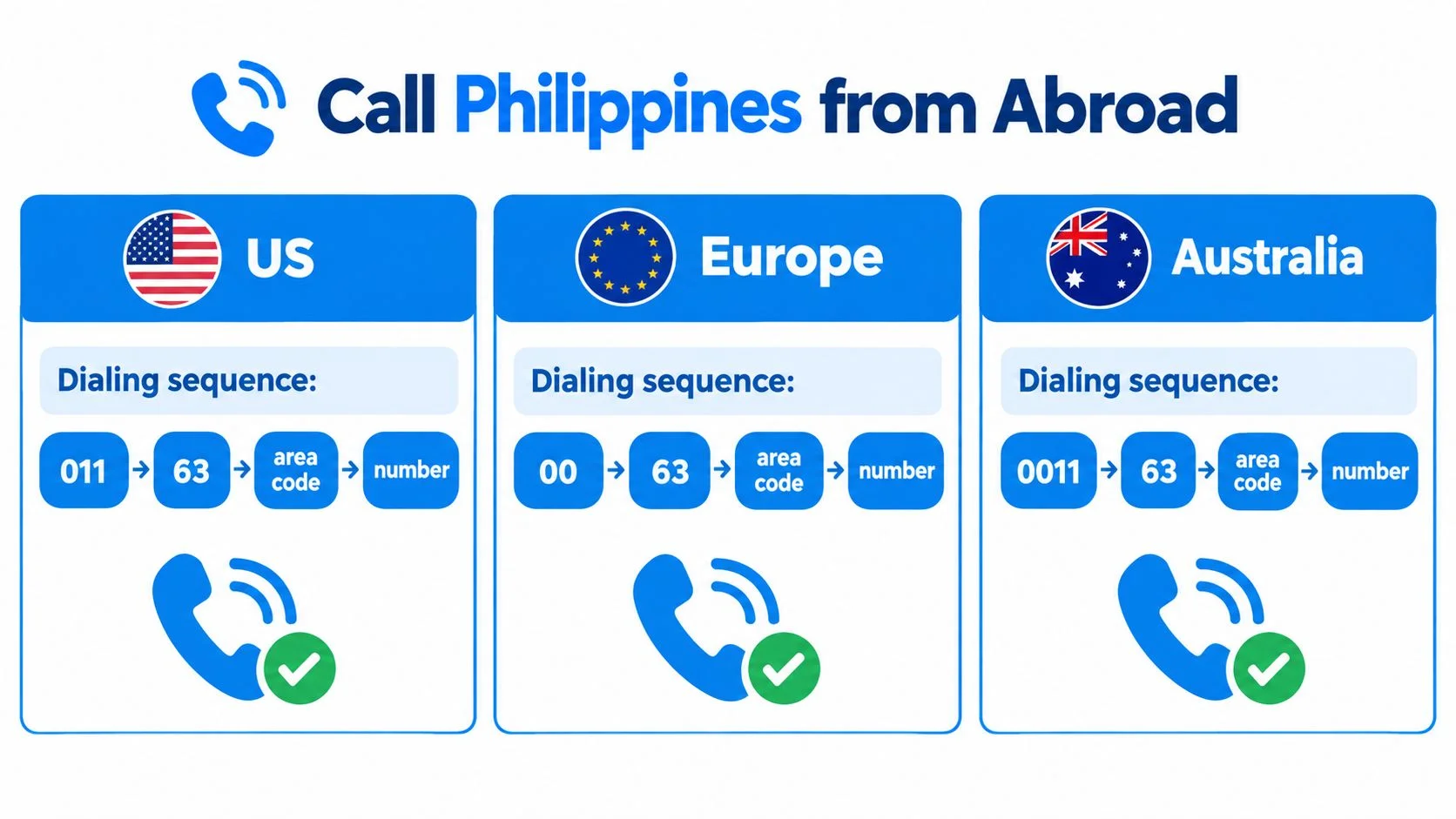
If you dial the Philippines wrong, your call can fail or route badly even when you have enough credit. The fix is simple. Use +63, then remove the domestic leading 0 from the Philippine number.
That single formatting step causes a lot of failed calls. A number written domestically as 0917 xxx xxxx should be entered internationally as +63 917 xxx xxxx, and a Cebu landline written as 032 411 xxxx should be entered as +63 32 411 xxxx (Philippine numbering format overview).

The dialing sequence that works
Use this pattern:
- From the US: 011, then 63, then the number without the leading 0
- From much of Europe: 00, then 63, then the number without the leading 0
- From Australia: 0011, then 63, then the number without the leading 0
If your platform accepts the plus format directly, skip the exit code and dial in E.164-style format with +63.
Two examples you should copy
- Philippine mobile: 0917 123 4567 becomes +63 917 123 4567
- Cebu landline: 032 411 1234 becomes +63 32 411 1234
A separate numbering guide also confirms the same rule: use +63 and remove the leading 0 from domestic format when dialing internationally (Philippines international dialing example).
For a quick walkthrough on the same process in plain language, this guide on how to call the Philippines is useful.
Here's a visual walkthrough if you want to see the sequence first:
Keep the zero and many platforms will reject the call, misread the destination, or send it through the wrong routing profile.
That mistake is common enough that it's worth checking every stored contact before you spend a cent.
Why the Number Type Changes Your Bill
The number type matters because not all Philippine calls are priced or routed the same way. A mobile number and a landline can sit under the same country code but still behave like different destinations for billing and call completion.
Operationally, telecom systems need to know whether you're calling a fixed line or a mobile line. One technical guide notes that Philippine landline area codes are typically 1 to 2 digits, while mobile destinations use 3-digit prefixes beginning with 9, and that this affects routing class, validation, and downstream handling (technical guide to Philippine number standards).
Why this matters before you dial
The destination type affects three things:
- Billing logic: Some products price mobiles and landlines differently.
- Call routing: The platform may select a different termination path.
- Call behavior: Validation and completion can differ if the number is misclassified.
That's why smart calling products should validate the destination before the call completes. If they don't, you can end up with failed calls, wrong-route attempts, or a surprise bill because the number was treated as a more expensive class.
Practical examples
Here's the decision logic I use:
If you have a choice between calling a household landline or a mobile, check the type first. Don't assume “Philippines” is one pricing bucket. It isn't.
Best move: Save your family contacts in international format and label them as mobile or landline in your address book.
That one habit cuts down on failed calls and cost surprises more than many realize.
When a Calling Card Is Still the Smarter Choice
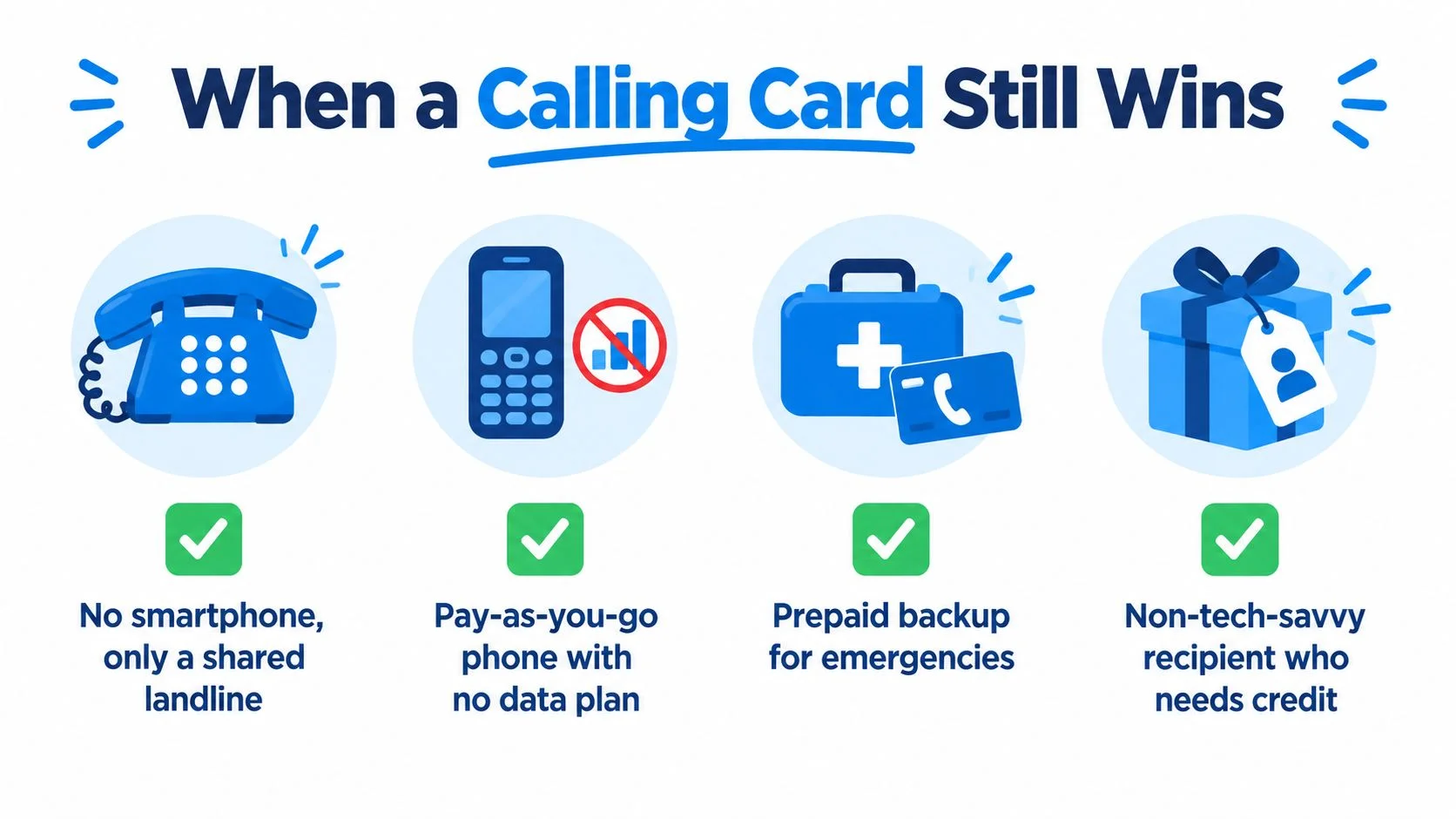
A calling card is still the better tool in a few specific situations. If your internet is weak, your device is basic, or you're calling from shared infrastructure, cards can still beat browser calling on reliability.
This is the part many modern guides skip because they want one universal answer. There isn't one. Some people still need an offline-first option.

The cases where cards still win
- Shared landline access: If you're using a household phone, office line, or public phone setup, a card works without needing a smartphone or laptop.
- Bad or expensive internet: If data is unstable, metered, or blocked, browser calling can turn into choppy frustration.
- Landline-first households at the receiving end: Some families still rely on a stable fixed line as the easiest reachable endpoint.
- Strict prepaid budgeting: A card can be a hard spending cap for someone who wants zero recurring commitment.
The trade-off is real
What you're buying here isn't elegance. You're buying reach.
A card lets you call without depending on browser compatibility, account setup on the recipient side, or stable data at your location. That's still useful. It's just not automatically economical once you examine the bill.
If you do have decent internet and want a direct regular-number call without the card ritual, one browser-based option is BubblyPhone. It works in a browser, connects to regular mobiles and landlines, and bills per minute with prepaid credit rather than a calling-card PIN flow.
That said, if your situation is offline, phone cards still deserve a place in your backup plan. Just treat them like a specialized tool, not the default answer for everyone.
Making Your Next Call the Right One
Here's the simplest decision path. Use a phone card only if your own calling setup is weak on internet or limited to a shared phone. If that's not your situation, start with browser-based calling and compare billed minutes after one test call.
I'd make the choice in three passes.
First, check your calling environment. If you've got stable internet and a browser, you already qualify for the simpler option. If you don't, a card may still be the practical fallback.
Second, identify the number you'll call most often. Mobile and landline calls don't behave the same, and that matters for both billing and routing. If you don't know what kind of number you're dialing, fix that before you buy anything.
Third, ignore the headline rate until you've checked the hidden billing rules. Look for:
- Maintenance fees: Especially if you call irregularly
- Connection charges: Especially if your calls are short
- Rounding policy: Especially if the platform bills above actual talk time
- Number-type pricing: Especially if you mostly call mobiles
The best calling option is the one you can price accurately before you dial.
My blunt recommendation is this: run one real-world test before committing to a bigger top-up or a stack of PIN credit. Make a short call, check the billed duration, and compare that bill to the actual conversation length. That tells you more than any glossy rate label ever will.
If the billing feels murky, move on. You're not shopping for nostalgia. You're shopping for a clean, repeatable way to reach family in the Philippines without getting nickeled and dimed.
If you want a cleaner way to call regular Philippine mobiles or landlines, try BubblyPhone. It works in any browser, the person you're calling needs no app or account, and credits start at $5 and never expire.