Cheap Domestic Calls Without a Monthly Plan (2026)
Pay-per-minute domestic calling for travellers, kids' tablets, data-only SIMs, and over-cap users. After Telstra +$5, Optus +$5, Vodafone +14% AU hikes — when BubblyPhone beats your local carrier for occasional domestic minutes.
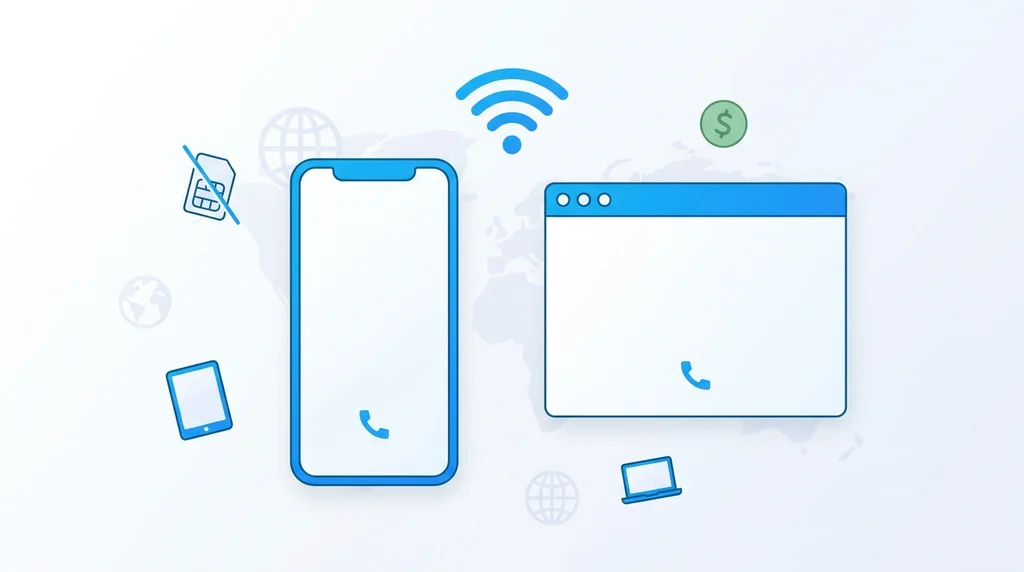
The cheapest domestic calls without a monthly plan are pay-per-minute calls over WiFi: BubblyPhone rings US and Canadian numbers from $0.025/min and UK numbers from $0.021/min, with no SIM. If you make fewer than 100 calling minutes a month, that beats a $40+ unlimited plan; if you already have unlimited calling, keep using it.
Most VoIP articles are about international diaspora calling. This one is about a quieter use case that doesn't get written about: paying per-minute for a domestic call inside your own country, without a monthly mobile plan. The classic targets for this are travellers who paused their home SIM, WiFi-only tablets, kids' phones with no plan, and adults who've hit their plan's call cap and don't want to pay overage rates. The 2024–2026 Australian and UK carrier price hikes have sharpened the case — Telstra raised prepaid +$5 on 5 May 2026, Optus added +$5/mo on 18 May 2026, Vodafone Australia hiked +14% on 15 April 2026, and the ACCC criticised the timing. If you make fewer than 100 outbound minutes a month, a $40+ unlimited plan is meaningfully overpaying.
⚡ Quick Answer
- You don't have a local SIM right now — travelling, between carriers, kid's tablet, second device
- Your carrier plan doesn't include outbound voice (data-only SIMs, eSIMs for travel, IoT plans)
- You've exceeded your monthly cap and your carrier charges expensive overage
- You want a non-local caller ID for privacy (job interviews, classifieds, anonymous reporting)
- You're calling premium-rate domestic numbers that even bundled plans exclude (1800s, 1900s, info lines, some 088s)
- You already have unlimited domestic calling (most postpaid plans in US, Canada, Australia, UK, most prepaid plans in India since 2021)
- You need emergency services (911, 999, 000, 112) — always use your local mobile
- You need to send texts to new contacts — BubblyPhone numbers can only receive texts and reply to them
- You need a local number outside the US — BubblyPhone numbers are US only ($3/month; calls ring in the browser or app, forward to your mobile, or go to voicemail)
📋 Table of Contents
- 5 Scenarios Where Domestic VoIP Wins in 2026
- How to Dial a Local Number From BubblyPhone
- Country-by-Country: When It's Worth It
- Australia: After the 2026 Carrier Hikes
- India: Why Domestic VoIP Loses on Per-Minute
- Sweden: The Verified Telia Per-Minute Math
- USA: T-Mobile PAYG vs Bundled Plans
- Philippines: When Out-of-Promo Hits ₱7.50/min
- Morocco: 1 DH Per Call (Per Call, Not Per Minute)
- WiFi-Only Devices & No-SIM Scenarios
- Tips for Domestic VoIP Calling
- Common Mistakes to Avoid
- Frequently Asked Questions
🎯 5 Scenarios Where Domestic VoIP Wins in 2026
Honest framing: for the average user with an active postpaid mobile plan in any major market, domestic VoIP doesn't save money on a per-minute basis. Almost every modern plan in the US, UK, India, Australia, Canada, and major EU markets bundles unlimited domestic minutes by default. So when does paying per-minute for a domestic call make sense?
1. You don't have a local SIM right now
You travel for a month, pause your home carrier, and pick up a local data-only eSIM for the trip. The data eSIM doesn't include outbound voice. Now you need to call your home country's doctor, bank, or aunt with a landline. BubblyPhone handles that without re-activating your home plan. This is the single biggest legitimate use case — many of BubblyPhone's heaviest “intra-country” users (Australians calling Australian numbers, Filipinos calling Philippine numbers) are actually expats or travellers in this exact situation.
2. You're on a data-only SIM
IoT plans, kids' tablets, second-phone data plans, work-issued eSIMs — many modern SIMs only include data. If you need to make an outbound voice call, BubblyPhone works over that same data connection. No need to add a voice plan.
3. You've exceeded your plan's call cap
Most prepaid plans in Australia, the UK, Sweden, and much of Europe have monthly call caps. Once you exceed them, you're billed at pay-per-use rates that are 10–30x more expensive than VoIP. Switching to BubblyPhone for the last week of the cycle avoids the gouge.
4. WiFi-only device, no SIM at all
Old iPads handed down to grandparents, work laptops, kids' phones, secondary tablets, gaming devices — anything with a browser and an internet connection. BubblyPhone runs in the browser, no app install, no SIM required.
5. You want a non-local caller ID
Classified ads, job interviews where you don't want to share your personal mobile, anonymous tips, business calls where you don't want to give out your real number. BubblyPhone calls land with a US-format caller ID by default — useful if you specifically don't want a local number associated with the call.
📞 How to Dial a Local Number From BubblyPhone
BubblyPhone routes calls through US-hosted infrastructure. From its perspective, every call is international — even a call to a phone on the same WiFi network as you. So always dial in international format:
- Calling a Sydney landline: +61 2 XXXX XXXX (drop the 0 from 02)
- Calling a Stockholm landline: +46 8 XXX XXX XX (drop the 0 from 08)
- Calling a Mumbai mobile: +91 98 XXXX XXXX (drop the 0)
- Calling a Manila mobile: +63 9XX XXX XXXX (drop the 0)
- Calling a US number: +1 212 XXX XXXX (no leading 0 to drop)
Typing the number the way you'd dial it domestically. 02 XXXX XXXX (Australian landline) is invalid from BubblyPhone — needs to be +61 2 XXXX XXXX. The leading 0 is a domestic trunk prefix; in international format you drop it. Same for every country.
🌍 Country-by-Country: When It's Worth It
Domestic VoIP economics are not the same everywhere. Some markets have moved to bundled-unlimited plans where the per-minute math doesn't work in VoIP's favour. Other markets still have meaningful per-minute pricing where VoIP wins clearly. Here's the verified May 2026 picture for the five most common BubblyPhone domestic-calling corridors.
🇦🇺 Australia: After the 2026 Carrier Hikes
Australian mobile carriers have moved to bundled-unlimited plans for postpaid customers, so per-minute comparisons don't apply to the average AU mobile user. The meaningful story is the recent price hikes:
- Telstra prepaid +$5 / postpaid +$4 on 5 May 2026 (second hike in 12 months; ACCC publicly criticised the timing)
- Optus +$5/mo postpaid on 18 May 2026
- Vodafone Australia +14% prepaid on 15 April 2026
- MVNOs (Belong, Boost, amaysim, Aldi Mobile) absorb most of the cost-conscious market
Where BubblyPhone fits in for Australian users:
- Travelling Australians who've paused their home carrier (Telstra/Optus/Vodafone offers pause-for-travel plans). BubblyPhone over WiFi avoids reactivating.
- Tourists in Australia on a Telstra Travel SIM (data-only) needing to call local hotels/businesses.
- Second-device users — a tablet on home WiFi, no SIM.
- Calling premium-rate numbers (190X services) that even unlimited plans charge per-minute.
Real BubblyPhone data shows the top-spending AU intra-country user is paying roughly $34/month combined (carrier plan + BubblyPhone) — mirroring the Belong Mobile 25GB plan price point. The implication: this user has a carrier plan but uses BubblyPhone anyway, most likely because they're abroad and their AU SIM is dormant, or they're on WiFi at home and the BubblyPhone caller ID experience suits a specific use case (privacy, parallel business line).
🇮🇳 India: Why Domestic VoIP Loses on Per-Minute
India effectively abolished domestic voice charges in 2021 when TRAI cut Interconnect Usage Charges (IUC) to zero. Jio, Airtel, and Vi (Vodafone Idea) all give unlimited domestic outbound voice on plans starting around ₹199/month (~$2.40). BSNL is even cheaper. For any active Indian SIM, per-minute VoIP is more expensive than your carrier plan — even at the most aggressive VoIP rates.
Carrier tariff context: India had ~10–25% tariff hikes in July 2024, with another ~10–20% expected by late 2025. Roughly 10 million users churned to BSNL as a result. The hikes don't change the conclusion — bundled plans still beat BubblyPhone on per-minute. Where BubblyPhone wins for Indian users:
- Indians abroad without an active Indian SIM — UK/Canada/US/Gulf/Australia residents calling Mumbai, Delhi, Bangalore numbers (this is the diaspora pattern, not the domestic-VoIP pattern, but it's where most Indian BubblyPhone usage actually sits)
- WiFi-only devices — no Indian SIM
- Privacy — calling without revealing your real Indian mobile number
🇸🇪 Sweden: The Verified Telia Per-Minute Math
Sweden is one of the markets where per-minute domestic calling is still publicly listed and meaningful. Verified Telia rates (May 2026):
- Telia off-net mobile (Mobilsamtal): SEK 1.50–2.60/min (~$0.14–$0.24/min)
- Telia to Swedish landline: SEK 0.60/min (~$0.055/min)
- Telenor Rörligt prepaid: SEK 0.69/min flat (~$0.063/min) — mobile or landline
- Comviq, Tele2, Halebop: similar structure, bundled allowances + per-minute overage
BubblyPhone's Sweden rate (see live rates) is competitive with Telia's landline-rate floor and meaningfully cheaper than off-net mobile pay-per-use. For Swedish users on plans with limited included minutes making frequent calls, the per-minute math actually works.
Real BubblyPhone data: one of our top spenders is Swedish and uses BubblyPhone for intra-Sweden calling — likely either travelling within Europe (where Swedish mobile roaming gets expensive) or making long calls to Swedish landlines from a secondary device.
🇺🇸 USA: T-Mobile PAYG vs Bundled Plans
Most US plans bundle unlimited domestic minutes. The only US carrier with a publicly listed per-minute rate is T-Mobile Pay-As-You-Go at $0.10/min for domestic calls (their minimal plan, popular for backup phones and basic feature phones). AT&T, Verizon, Mint, Visible, Google Fi all default to unlimited on any active plan.
AT&T raised international pay-per-use rates on 6 May 2026 — for outbound international calls without an add-on. Domestic remains unlimited on most plans.
Where BubblyPhone wins for US users:
- Americans abroad without a US roaming plan, calling US businesses (doctor offices, banks, tax accountants, anything that doesn't do WhatsApp)
- T-Mobile PAYG users who'd otherwise pay $0.10/min — BubblyPhone undercuts
- WiFi-only second devices — tablets, work laptops, kid's phones with no SIM
- Privacy — non-personal-mobile caller ID for online marketplace, classifieds, job interviews
🇵🇭 Philippines: When Out-of-Promo Hits ₱7.50/min
Verified Globe and Smart off-net / out-of-promo rates: ₱7.50/min (~$0.24/min) to other Philippine networks. The country's consumer mobile pattern is short-cycle promos (₱100/week, ₱749/30 days) that include unlimited on-net + some off-net minutes. When the promo expires — even by a few hours — rates revert to ₱7.50/min and a 30-minute call costs ₱225.
DITO Telecommunity entered the market in 2021 as the third operator. Sun Cellular was fully retired in April 2022 (no longer relevant).
Where BubblyPhone fits in for Filipino users: out-of-promo windows, when topping up a Globe/Smart promo isn't worth it for a single call. The bigger BubblyPhone pattern in the Philippines corridor is actually OFW expats (Saudi, UAE, Singapore, US) calling Manila, Cebu, Davao — covered in our diaspora corridor guides.
🇲🇦 Morocco: 1 DH Per Call (Per Call, Not Per Minute)
Morocco's Maroc Telecom Jawal prepaid offers an uncapped voice product priced at 1 DH per call (~$0.10) — per call, not per minute. So a 60-minute call costs 1 DH. This is unusual globally and makes Maroc Telecom one of the cheapest domestic-calling propositions in the world. For Moroccan users on this plan, the domestic-VoIP argument doesn't apply.
ANRT (Morocco's regulator) 2026 data: 5G now at 38% population penetration, voice and SMS volume declining as users shift to WhatsApp and data-based services.
Where BubblyPhone wins for Moroccan users: when calling from outside Morocco (where the Jawal 1-DH/call benefit doesn't apply), or when calling to/from devices without an active Maroc Telecom plan. Real data shows one of our top spenders is a Moroccan user calling within Morocco — likely abroad temporarily or on a non-Maroc-Telecom device.
📡 WiFi-Only Devices & No-SIM Scenarios
Beyond the per-minute math, the second-largest use case for BubblyPhone domestic calling is devices that aren't phones in the traditional sense:
- Hand-me-down iPads used by grandparents to occasionally call out from home WiFi
- Work laptops on hotel WiFi — business travellers calling colleagues without burning international-roaming voice
- Kid's phones with no mobile plan — old iPhone 6 on home WiFi, used for occasional calls to family
- Travel laptops — the “I'm on a 6-month travel year, my home carrier is paused” setup
- Second phones — dating apps, classified ads, anonymous reporting, where you want a different caller ID
- Conference call panels — cheap conference room IP phones that need outbound dialling without an enterprise PBX
💡 Tips for Domestic VoIP Calling
- Always dial in international format (+country code). BubblyPhone routes every call through US-hosted infrastructure — it doesn't know you're physically calling a number in the same city.
- Drop the leading 0. Australian 02 → +61 2, UK 020 → +44 20, Indian 0 → +91. Forgetting this is the #1 reason calls fail.
- Use WiFi when you can. Cellular data works, but WiFi gives better latency and audio quality.
- Top up enough. Minimum is $5. Top up $10–$20 in one go — you avoid repeated payment friction and have a buffer for emergencies.
- Don't use BubblyPhone for emergencies. 911, 999, 000, 112, 110 — always use your local mobile carrier. BubblyPhone doesn't route to local emergency dispatch.
- Test your caller ID expectation. Calls land with a US-format caller ID by default. Some local businesses may decline to answer if they're used to local numbers. For high-stakes calls (banks, government), consider whether this matters.
- For Swedish users on Telia, compare the actual SEK 1.50–2.60/min off-net mobile vs your BubblyPhone rate — the math often favours BubblyPhone for long calls.
- For Filipino users out of promo, the math against ₱7.50/min off-net is clear in BubblyPhone's favour.
❌ Common Mistakes to Avoid
- Dialling in domestic format. 02 XXXX XXXX (Sydney) instead of +61 2 XXXX XXXX won't connect.
- Assuming BubblyPhone replaces your domestic mobile. It doesn't. You still need a local mobile for SMS, emergency services, banking 2FA codes, and app-verification flows.
- Trying to use it for emergency calls. 911 / 999 / 000 etc. only work via your local mobile carrier.
- Forgetting it works from any browser. The desktop browser experience is equally functional — sometimes better for long calls because you can keep notes in another tab.
- Overestimating the per-minute savings vs your bundled plan. If you have unlimited domestic minutes on your carrier (most postpaid plans in US/CA/AU/UK/IN), BubblyPhone doesn't save money on per-minute. It only wins on the no-SIM / paused-SIM / overage / caller-ID-privacy scenarios.
Try BubblyPhone for domestic calls
Pay-as-you-go from $5. No SIM required. Works in any browser, on any device. Whether you're abroad calling home, on a WiFi-only device, or between carrier plans — see live rates for your country.
Start Calling❓ Frequently Asked Questions
Can I use BubblyPhone to call a number in my own country?
Is BubblyPhone cheaper than my local mobile carrier?
Do I need a SIM card to use BubblyPhone?
Can I call emergency services (911, 999, 000) from BubblyPhone?
What caller ID shows up when I call from BubblyPhone?
What about SMS? Can I send a text message domestically?
Why did Telstra/Optus/Vodafone all raise prices in 2026?
Is India really cheap enough that domestic VoIP doesn't make sense?
Why is BubblyPhone calling a UAE number expensive when other corridors are cheap?
Are there any countries where BubblyPhone doesn't work for domestic calls?
Related Resources
BubblyPhone Rates
Per-minute rates for every country, no subscription, no contract
Calling Without a SIM Card
The WiFi-only-device use case in depth
WiFi Calling Apps
Comparison of browser- and app-based VoIP services
Free International Calls
When app-to-app options are cheaper than direct dial
Free Call Online Options
Free signup minutes + free in-app options
Start Calling
Sign up, top up from $5, start dialing in under 60 seconds